
Moving a piece of construction equipment from one job to the next sounds simple until you factor in the size, weight, and value of what is on the trailer. A single wheel loader or excavator can be worth as much as a house, and the trip exposes it to road salt, debris, weather, and the constant motion of a long haul. The challenge is getting that machine to the construction site in the same condition it left.
This guide walks through how heavy machinery moves, what threatens it along the way, and how to protect your equipment from the loading ramp to the final destination.
What Makes Shipping Construction Equipment Different
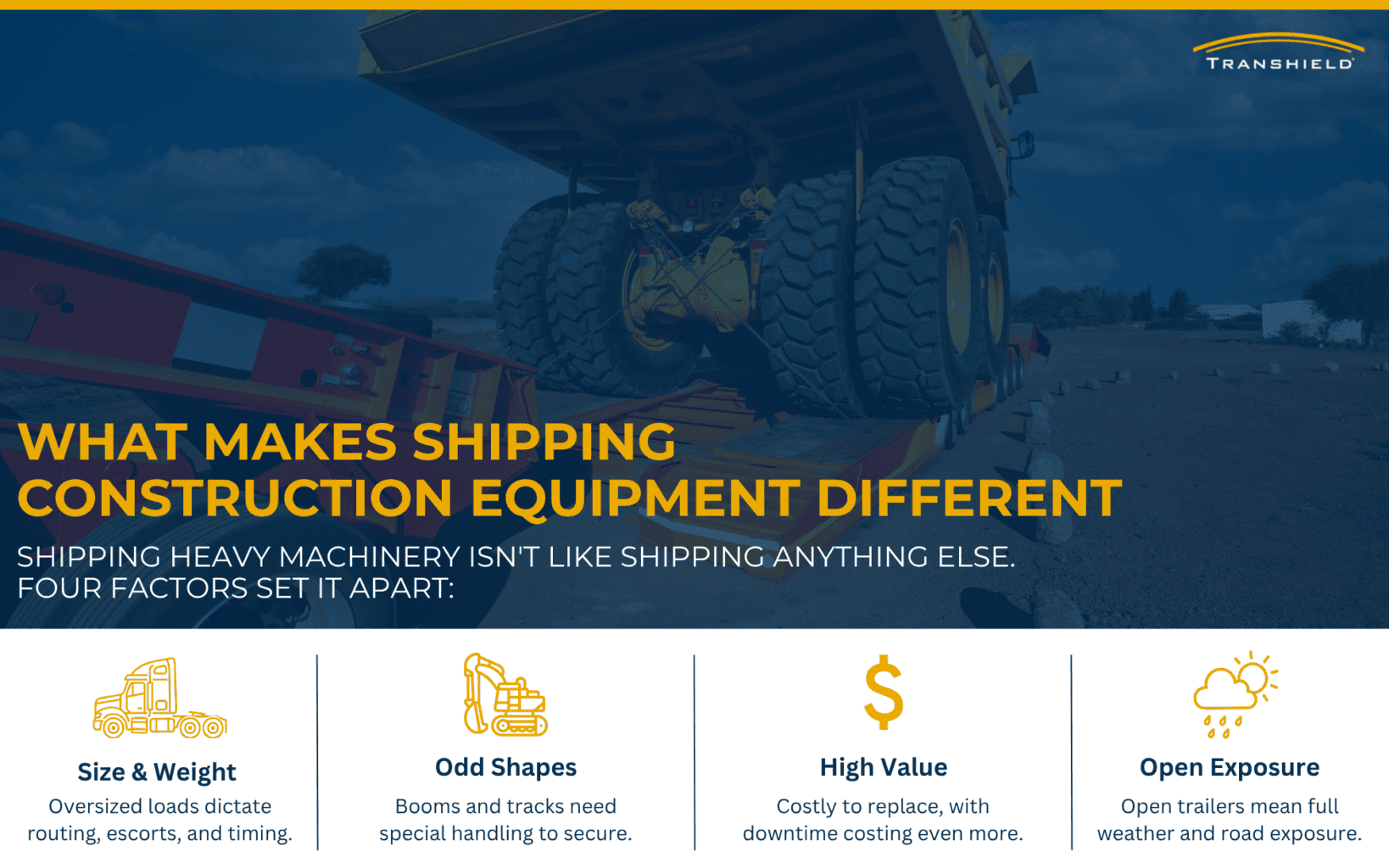
Hauling a sedan and hauling a dump truck are not the same job. Heavy equipment transport comes with unique challenges that shape every decision, from the trailer you book to the route you take.
A few factors set construction equipment shipping apart:
- Size and weight: Much of this machinery qualifies as an oversized load, which affects routing, escorts, and timing.
- Odd shapes: Booms, blades, and tracks do not fit standard loading and securing methods, so they call for special handling.
- High value: Replacing damaged this equipment is expensive, and downtime on a construction project costs even more.
- Exposure: Most machines ride on open trailers, fully exposed to weather and road conditions for the entire trip.
Understanding these factors up front leads to better planning and fewer surprises on shipping day.
How Heavy Machinery Ships
The right trailer depends on the height, weight, and dimensions of your machine. Matching equipment to the correct trailer keeps the load legal and stable.
| Trailer Type | Best For |
| Flatbed trailer | Smaller equipment like skid steers, within standard height limits |
| Step deck | Taller machines that exceed flatbed height limits |
| Lowboy trailers | Tall, heavy machinery that needs a low lower deck to stay under height limits |
| Removable gooseneck (RGN) | Equipment that drives on and off, like wheel loaders and dozers |
Heavier and taller loads usually move on lowboy trailers or a removable gooseneck because the low lower deck keeps the total height legal. For very large machines, the load may cross into oversize load territory, which brings permits and routing into the picture.
Permits, Planning, and Logistics
Heavy haul moves take coordination. An oversized load often needs necessary permits from each state it passes through, and routes have to account for bridges, overpasses, and weight limits.
Careful planning covers several pieces:
- Permits and routing: Oversize load permits, escort requirements, and approved routes vary across the United States.
- Choosing a transport provider: A shipping company with extensive experience in machinery transport will know how to secure your load and handle the paperwork.
- Insurance coverage: Confirm the value of your equipment is covered in transit before it leaves the yard.
- Scheduling: Build in time for inspections, loading, and any weather delays.
For international moves, a freight forwarder can coordinate container shipping and the handoff at the destination port. Either way, the goal stays the same: equipment that arrives ready to work.
Common Risks to Equipment in Transit
The moment machinery rolls onto a trailer, the conditions get harsher. Highway speeds, road salt, and constant motion turn everyday exposure into real risk. Knowing these risks helps you plan the right protection.
| Risk | Where It Comes From | Result |
| Road salt and spray | Treated highways, wet roads | Corrosion on metal surfaces |
| Wind-driven debris | Open trailers at highway speed | Chips, scratches, glass damage |
| Moisture and rain | Open-air transport | Rust and water intrusion in cabs and components |
| Temperature swings | Long hauls across regions | Condensation inside enclosures |
| Vibration and shifting | Rough roads, hard braking | Loosened fasteners, contact damage |
On a long haul, the risks stack up rather than arrive one at a time. A single route might start in rain, cross salted highways, and finish in a hard overnight freeze.
Protecting Machinery During Transport
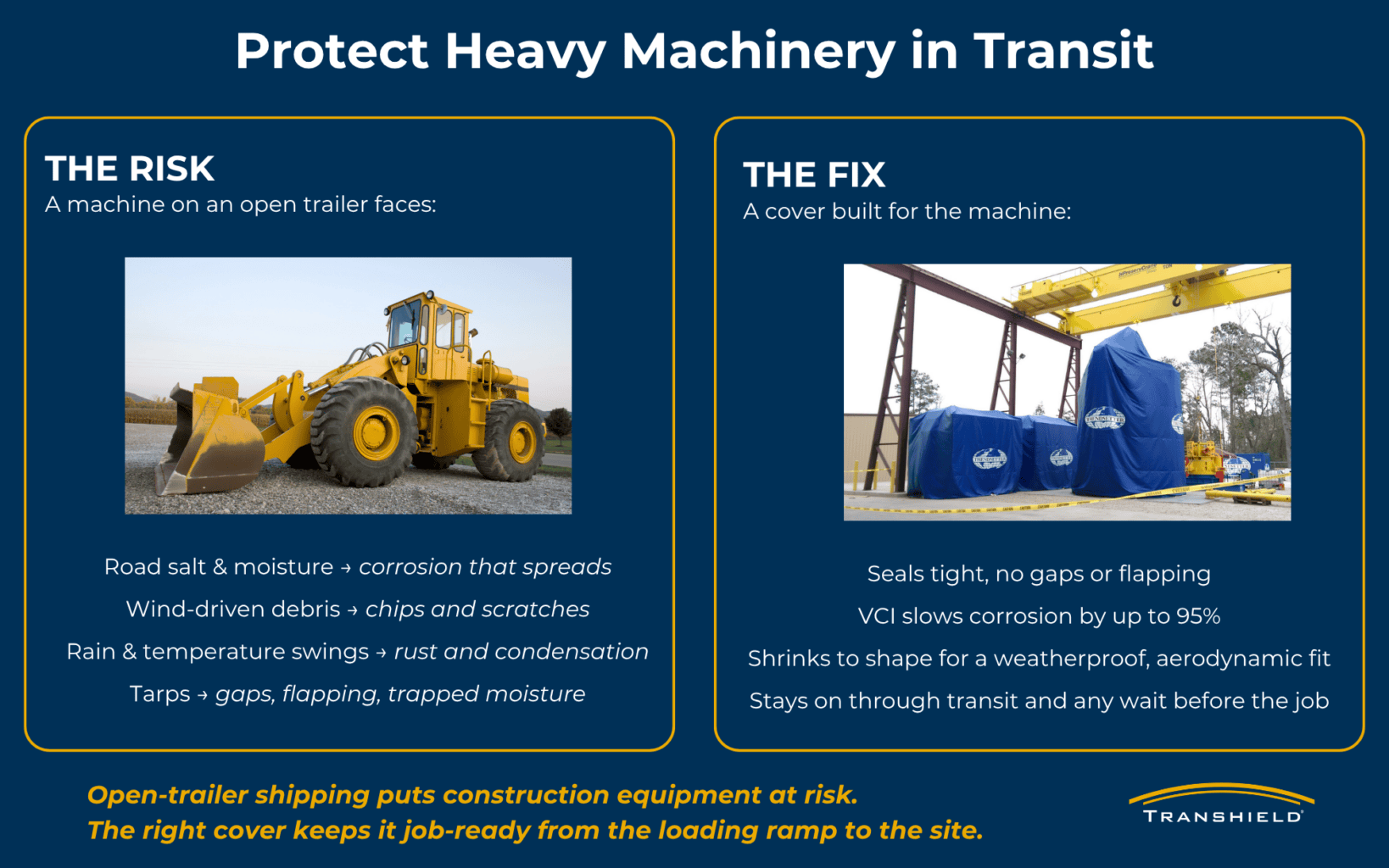
This is where a lot of avoidable damage happens, and where the right cover earns its keep. Equipment strapped to an open flatbed takes the full force of the road for hundreds or thousands of miles.
Tie-downs and proper loading keep the machine stable, but they leave every surface exposed to rain, road salt, and flying debris. A protective cover is what closes that gap, shielding the equipment from the elements for the whole trip, which is why it belongs in your shipping plan from the start rather than as an afterthought.
Why Custom Covers Beat Tarps
Generic tarps are cheap, but they leave gaps, flap loose at highway speed, and trap moisture against metal. A cover built for your specific machine fits snugly, stays put, and seals out the elements. Shrinkable covers heat-shrink to the shape of the equipment for a tight, aerodynamic fit that helps repel rain and snow on the move.
Corrosion Starts on the Road
Physical damage like a chipped panel is easy to catch at unload. Corrosion is the one that quietly adds up. Road salt and moisture can begin rusting exposed metal fast, sometimes before the machine even reaches its destination, and it keeps spreading the longer it goes unprotected.
For shipping, a cover containing Vapor Corrosion Inhibitor (VCI) additives is the right call. VCI works by maintaining a concentration of protective molecules in the space around the metal, reaching recessed areas that may be uncoated and exposed.
| Stage | What Happens |
| Release | VCI molecules vaporize from the source material |
| Migration | These molecules travel through the enclosed space |
| Adhesion | VCI vapors bond with metal surfaces upon contact |
| Protection | A molecular layer forms, blocking moisture and oxygen |
This approach slows the corrosion process by up to 95% in testing, and the protection lasts as long as the cover stays in place.
Do Not Uncover Too Soon
Equipment does not always go straight to work when it arrives. If a machine will sit at the construction site or a dealer yard before it is needed, leave the cover on. The same protection that handled the road keeps guarding against moisture and corrosion through the wait.
Prepare Equipment Before It Ships
A little prep before loading goes a long way toward equipment arriving in perfect condition.
- Clean it. Wash off dirt, grease, and debris that trap moisture and hide existing wear.
- Document condition. Photograph each machine before it ships. This record matters for insurance and warranty claims.
- Secure loose parts. Lower or lock booms, blades, and attachments, and secure anything that could come loose.
- Check fluids. Address leaks and follow manufacturer guidance for transport.
- Cover it. Fit a protective cover designed for the machine before it leaves the yard.
How Transhield Helps Protect Your Shipment
Transhield has spent over 30 years developing protective solutions for industrial, manufacturing, and commercial applications across the United States. Our custom covers use a three-layer system with a patented adhesive that emits VCIs:
- Outer layer: A UV-resistant polyethylene film that blocks sunlight and repels water.
- Middle layer: A hot-melt adhesive that carries VCI chemistry, releasing molecules that slow corrosion.
- Inner layer: A soft, non-woven material that pulls moisture away from surfaces and guards against scratches.
Each cover is designed for your specific equipment and engineered with the utmost care, so there are limited gaps where moisture, dust, or debris can enter. From a single skid steer to a fleet of heavy machinery, the right cover keeps your assets protected from the loading ramp to the job site, no matter how far the haul.
Construction equipment shipping puts your machinery through a lot, and the right protection keeps the road from leaving its mark. With ISO 9001:2015 certification and a 97.4% customer retention rate, Transhield can help you ship with confidence.
Ready to protect your equipment in transit? Contact Transhield today to discuss custom cover solutions for your next shipment.