
Corrosion costs money. Left unchecked, it damages metal surfaces, shortens equipment life, and leads to expensive repairs. For manufacturers, fleet managers, and logistics teams moving valuable assets or storing them for extended periods, preventing rust and oxidation is a constant challenge.
Vapor corrosion inhibitors (also called volatile corrosion inhibitors) offer a practical solution. Unlike traditional coatings that require direct application to every surface, VCI technology works through the air to protect metal components in enclosed spaces.
How Vapor Corrosion Inhibitors Work
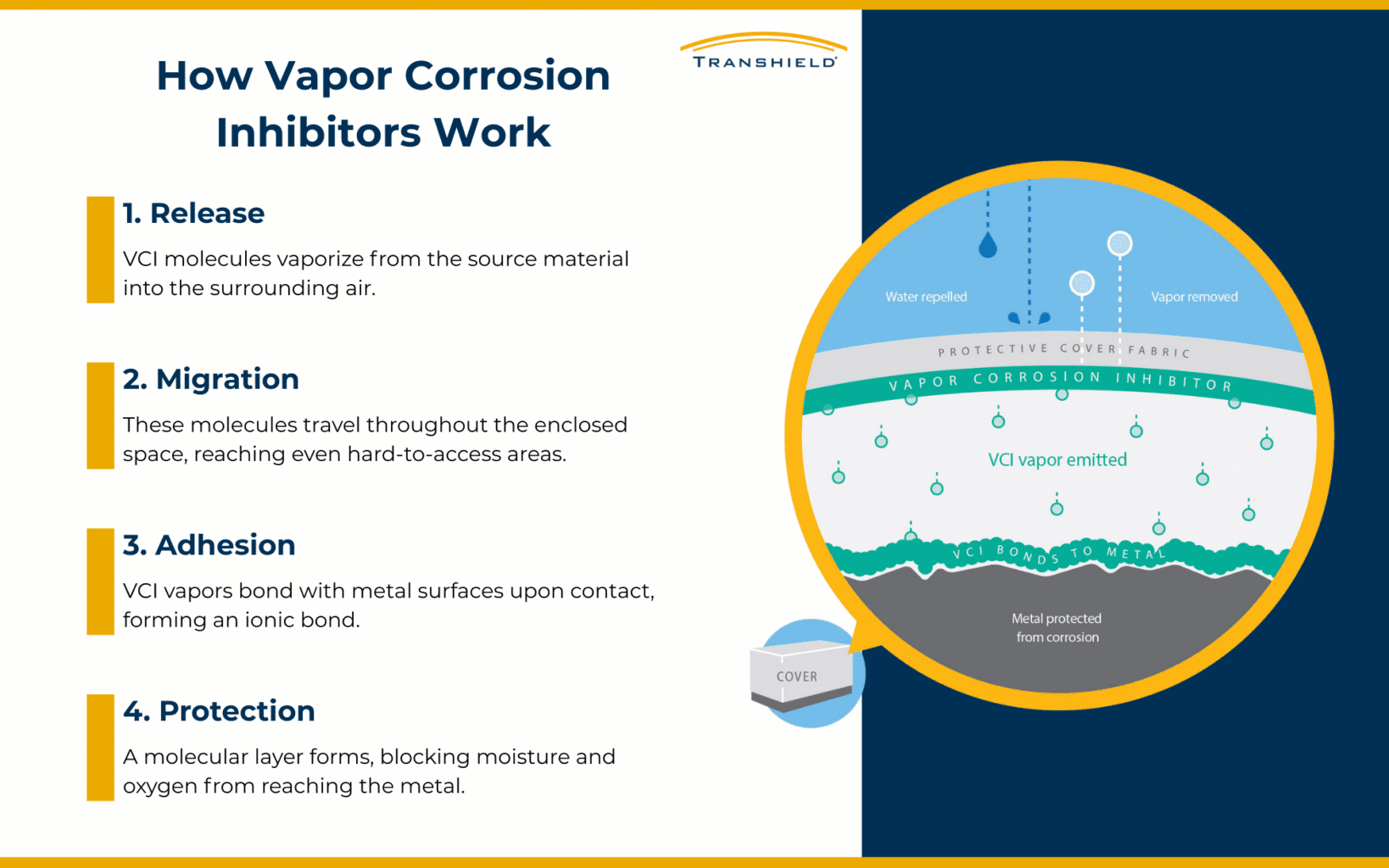
A corrosion inhibitor is a chemical compound that prevents or significantly reduces corrosion without reacting with the surrounding environment. What makes vapor corrosion inhibitors different from liquid coatings or greases is how they reach the metal surface.
In solid form at room temperature, VCI molecules have enough vapor pressure to become airborne. Once released, VCI molecules carry an ionic charge that attracts them to metal surfaces, similar to a magnet. These molecules form an invisible protective layer, typically only 5 to 7 molecules thick, that creates a barrier between the metal and corrosive elements like oxygen, moisture, chlorides, and airborne pollutants. This layer works by rendering the metal non-polar, disrupting the formation of anode and cathode regions where corrosion would otherwise begin.
The process works like this:
| Stage | What Happens |
| Release | VCI molecules vaporize from the source material |
| Migration | These molecules travel through the enclosed space |
| Adhesion | VCI vapors bond with metal surfaces upon contact |
| Protection | A molecular layer forms, blocking moisture and oxygen |
This vapor delivery is what sets volatile corrosion inhibitors apart from traditional corrosion prevention methods. The molecules can reach areas that would be difficult or impossible to coat directly, including recessed areas, internal cavities, and complex geometries. Whether you’re protecting a single metal item or an entire storage container full of parts, VCI provides consistent coverage.
Why VCI Technology Works Well for Storage and Transport
Equipment faces unique corrosion risks during storage and transit. Temperature swings cause condensation. Road salt and sea spray attack exposed surfaces. Humidity fluctuates as equipment moves through different climates. VCI technology addresses these challenges in several ways.
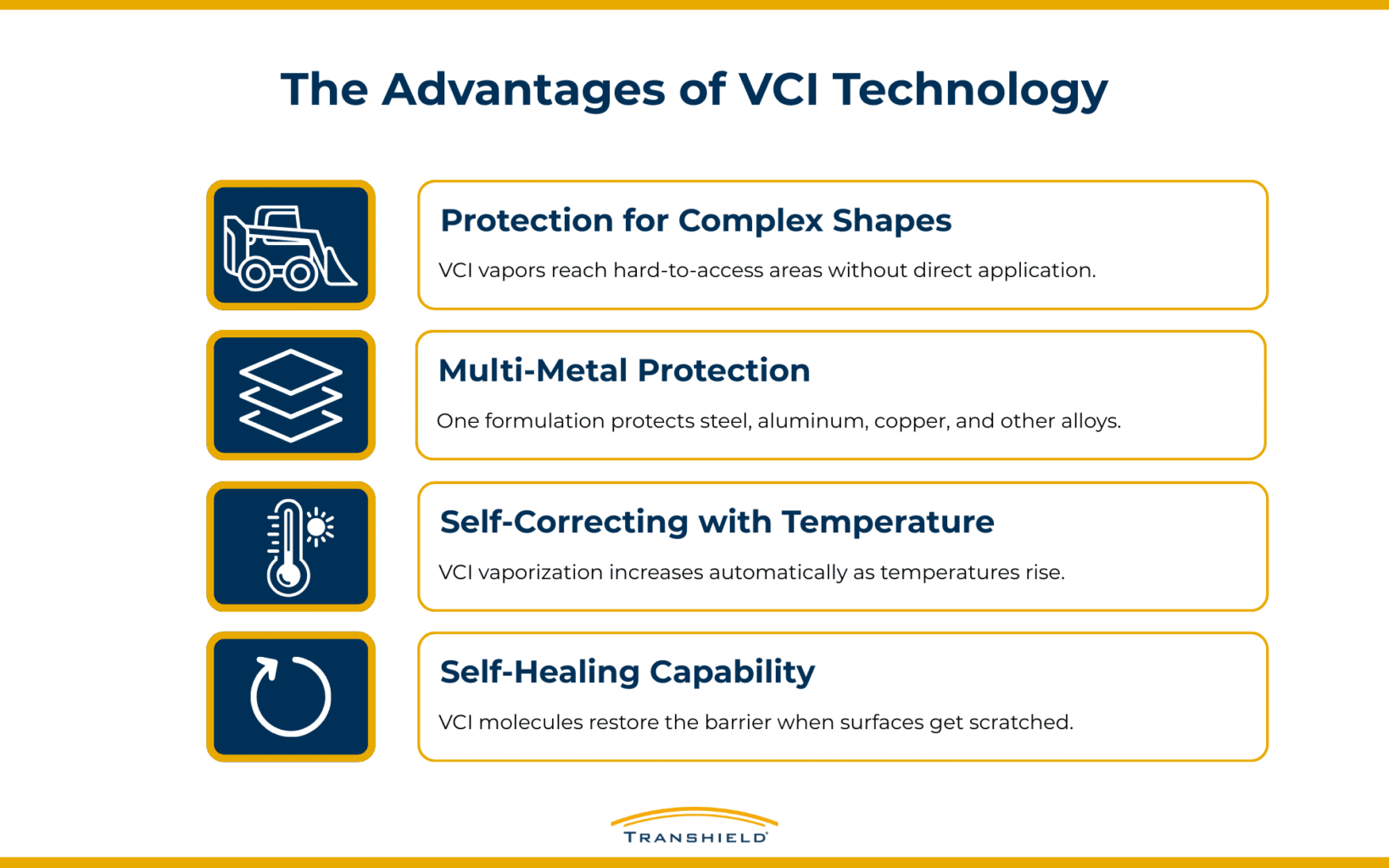
Protection for Complex Shapes
Heavy machinery, industrial equipment, and vehicles have intricate designs with hard-to-reach areas. VCI molecules in vapor form can penetrate these complex geometries without requiring direct contact application. Every metal part within the enclosed space receives protection, regardless of its shape or location.
Multi-Metal Protection
Equipment often contains multiple types of metal. Ferrous metals like steel and iron, aluminum components, copper wiring, and other alloys may all be present in a single piece of machinery. Modern VCI formulations can protect a variety of metals simultaneously, eliminating the need for multiple specialized treatments.
Self-Correcting with Temperature
The rate of corrosion generally increases as the temperature rises. Fortunately, higher temperatures also increase the rate of VCI vaporization. This creates a self-correcting system where protection automatically increases when conditions become more corrosive.
Self-Healing Capability
If the protective layer gets scratched or disturbed, VCI molecules in the surrounding space are naturally attracted to the exposed bare metal. They settle on the damaged area and restore the protective barrier, providing continuous corrosion prevention throughout storage or transit.
VCI Products and Delivery Methods
VCI technology can be incorporated into various packaging materials and protective products. Common VCI products include:
VCI film and VCI bags are plastic materials infused with corrosion inhibitors. When wrapped around equipment or used to line a storage container, they release protective vapors into the enclosed space. VCI packaging like this works well for smaller metal parts and components.
VCI paper uses kraft paper treated with corrosion-inhibiting compounds. It can wrap individual metal items or line boxes and crates, releasing VCI molecules that protect the enclosed contents.
Covers containing VCI additives integrate the technology directly into protective fabric. This approach combines the physical protection of a cover with the chemical protection of vapor corrosion inhibitors, making it ideal for larger equipment stored and shipped in outdoor environments.
How Transhield Uses VCI Technology
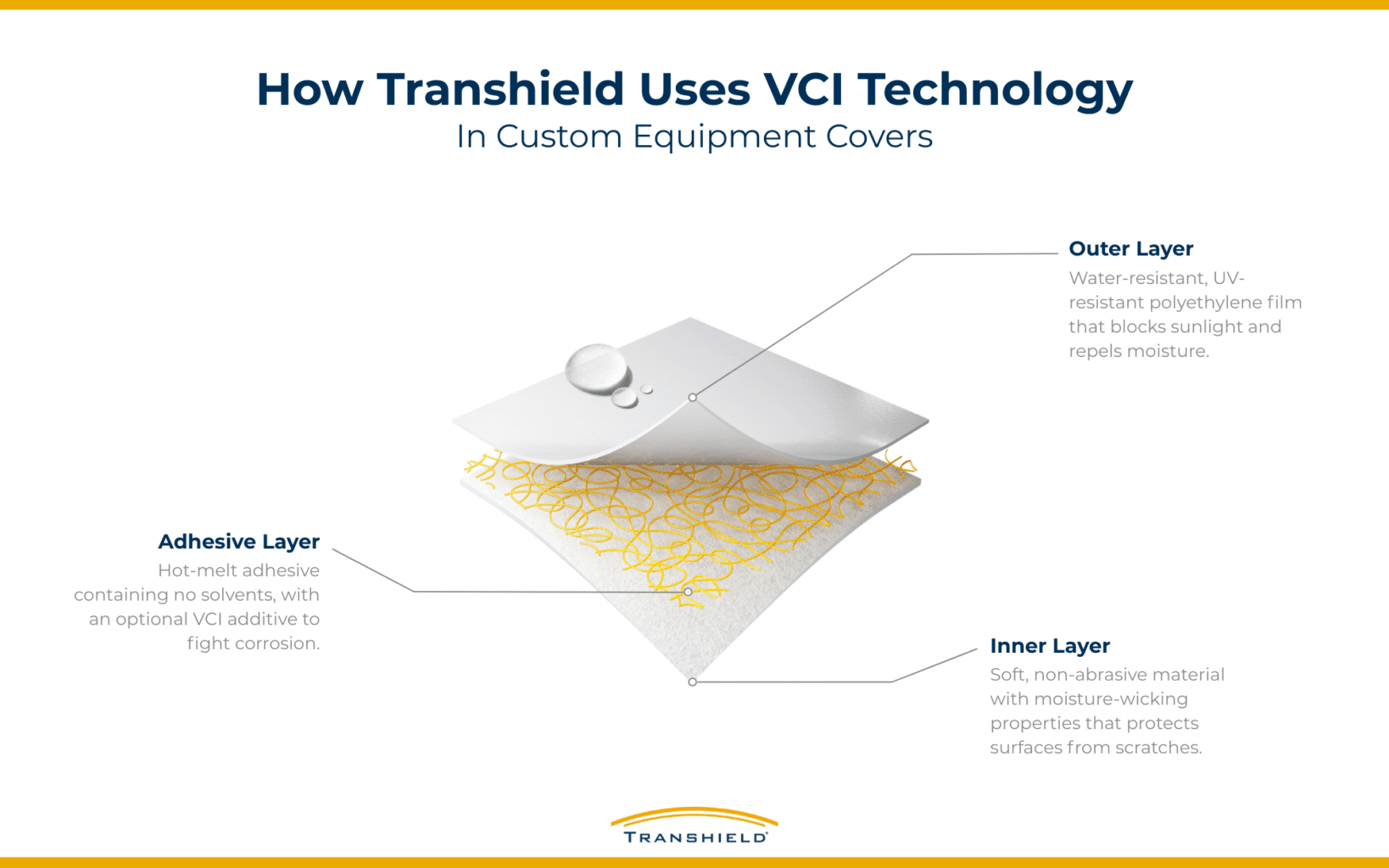
At Transhield, we have developed a three-layer protective cover system that includes optional VCI technology. This patented approach embeds the corrosion inhibitor within the adhesive layer of the cover material, creating an efficient delivery system for extended protection.
Here’s how the three layers work together:
Outer layer: A UV-resistant polyethylene film that blocks sunlight and repels water.
Middle layer: A hot-melt adhesive that can include VCI chemistry. The adhesive holds the VCI away from direct contact with the metal, allowing the molecules to vaporize before reaching the surface for optimal delivery.
Inner layer: A soft, non-woven material that wicks moisture away from equipment surfaces while preventing scratches. This porous layer holds the VCI away from direct metal contact, allowing it to vaporize before reaching the surface for optimal application.
When the cover is heat-shrunk, the process heats the adhesive layer and accelerates VCI emission, charging the enclosed environment with protective vapors immediately.
In testing, Transhield covers with VCI technology have reduced corrosion by up to 95%, even in high humidity environments. The protection lasts as long as the cover remains in place, making it effective for both short-term transit and long-term storage.
Practical Considerations for VCI Effectiveness
Enclosed spaces matter. VCI works by maintaining a concentration of protective molecules in the space around the metal. For the technology to work properly, the space needs to be reasonably enclosed. Gaps or poor seals allow the VCI vapors to escape and reduce VCI effectiveness.
Vapor pressure balance is key. A practical VCI solution has an optimal vapor pressure. If it’s too low, the inhibitor takes too long to reach effective concentrations. If it’s too high, the VCI depletes quickly. Quality VCI products blend multiple formulations to provide protection over the short, medium, and long term.
Surface preparation still helps. VCI provides outstanding protection, but it works best when combined with good practices. Cleaning equipment before storage removes contaminants that can accelerate corrosion.
Coverage capacity varies. Different VCI products protect different volumes. When selecting a VCI solution, you should consider the cubic foot capacity of the enclosed space to ensure adequate protection.
Choosing the Right Protection
Corrosion prevention isn’t one-size-fits-all. The right approach depends on what you’re protecting, how long it will be stored, and the environmental conditions it will face.
For equipment that needs protection during shipping or storage, volatile corrosion inhibitors offer effective corrosion protection that reaches every metal surface without requiring direct application. When integrated into custom protective covers, VCI technology combines corrosion-inhibiting action with physical protection against UV, moisture, and debris.
At Transhield, we have spent over 30 years developing protective solutions for industrial, military, and commercial applications. Our covers with VCI technology are designed to fit your specific equipment, providing comprehensive corrosion protection that keeps valuable assets in factory-fresh condition.
Ready to protect your equipment? Contact Transhield today to discuss custom cover solutions for your situation.