
Long storage periods and cross-country hauls put equipment through a lot. Rust, paint damage, and weather exposure get most of the attention, and for good reason. However, the glass on equipment isn’t something to overlook. Delamination during storage or transit can lead to warranty claims, rework, and replacement costs before a unit is ever sold.
This guide walks through what glass delamination is, why it happens during long-term storage and transportation, how to spot it early, and what you can do to prevent it.
What Is Glass Delamination?
Glass delamination is the separation of layers within laminated glass. Laminated glass is made through a manufacturing process that bonds two or more sheets of glass to a plastic interlayer, usually polyvinyl butyral (PVB) or, in some designs, ethylene vinyl acetate (EVA). This construction shows up anywhere safety, soundproofing, or structural strength matter: windshields, cab windows on heavy equipment, skylights, operator enclosures, commercial vehicle glass, and more. Any glass product built this way is a candidate for delamination under the wrong conditions.
When the bond between the glass surface and the interlayer starts to break down, the layers begin to separate. Once delamination sets in, the damage cannot be reversed. The only fix is full glass replacement.
How to Identify Glass Delamination
Regular visual inspections will not save a panel that has already started delaminating, but they can catch delamination issues before a unit ships and reveal whether your storage conditions are putting other inventory at risk. Here is what to look for:
| Sign | What It Means |
| Cloudy or hazy edges | Moisture has reached the interlayer |
| Bubbles between glass layers | Bond failure has already started |
| Yellow or amber tint | UV degradation of the interlayer |
| Silvery or rainbow shimmer | Early-stage separation |
| Cracks running from the edge inward | Advanced delamination |
| Thin flakes or fragments pulling from the interlayer | Late-stage failure |
Inspect stored equipment on a set schedule. Monthly checks work for short-term storage; quarterly checks work for long-term.
What Causes Glass Delamination on Equipment?

The delamination process usually starts at the edges of a laminated panel and works inward. The bond between the glass and the interlayer is vulnerable to a specific set of conditions, and those conditions show up constantly during storage and transport. Here are the major risk factors.
UV radiation
Prolonged sunlight is the biggest delamination risk. UV rays break down the PVB or EVA interlayer and weaken the adhesion between the plastic and the glass. Equipment parked outside long-term is exposed around the clock.
Moisture
Water is the second major culprit. When moisture works its way into the edge of a laminated panel, it reaches the interior surface of the glass-to-interlayer bond and attacks the interlayer from the inside. Rain, snow, condensation, and humidity all contribute, and the damage tends to creep inward from the edges.
Temperature extremes and thermal cycling
Laminated glass expands and contracts with temperature. Storage temperature swings, hot days followed by cold nights, and seasonal changes all put repeated stress on the bond. A high temperature environment alone can soften the interlayer. A lower temperature environment is generally kinder to the glass, but only if moisture is controlled. The real damage usually comes from constant cycling between hot and cold.
Edge exposure
Laminated glass is most vulnerable at its edges, where the interlayer sits closest to the outside environment. Chips, seal damage, or poor trim let moisture and UV attack the bond directly.
Long storage duration
Delamination is rarely fast. It develops over months or years of cumulative exposure. Time spent in a yard, on a flatbed, at a port, or moving between storage sites all adds up, and the bond keeps degrading the whole time.
Why This Matters for Manufacturers and Distributors
Cloudy windshields or hazy cab glass compromise the factory-fresh appearance that buyers expect from new equipment. The consequences land in a few specific ways:
- Warranty claims. Delaminated glass on a newly delivered unit can trigger warranty disputes and replacement costs.
- Product recalls and rework. In serious cases, entire batches may need glass replacement before they can be shipped.
- Reduced product quality perception. Buyers walking a lot will skip units that look weathered, even if the mechanical condition is perfect.
- Hard replacement cost. A single piece of equipment glass on a large machine can run hundreds to thousands of dollars to replace, not counting labor.
- Shorter useful shelf life. Glass that starts delaminating during storage rarely lasts as long once the equipment is in service.
Unlike a scratch in paint, glass delamination cannot be polished out or touched up. The glass has to come out and be fully replaced.
How to Prevent Glass Delamination During Storage and Transit

Prevention comes down to managing the three factors that cause the problem: UV, moisture, and temperature swings.
Control UV exposure
Block direct sunlight wherever possible. Indoor storage is ideal, but for most B2B operations storing large volumes of equipment, covered or wrapped outdoor storage is the realistic option. UV-blocking covers drastically cut the dose of radiation that reaches the glass.
Manage moisture
Equipment should be dry before it is covered or wrapped. Covers need to shed water while also allowing trapped humidity to escape. A sealed-but-wet environment is worse than an uncovered one, because the moisture has nowhere to go.
Reduce thermal stress
Storing equipment out of direct sun moderates the day-night temperature swings that stress the glass-to-interlayer bond. Direct sunlight heats exposed surfaces well beyond ambient air temperatures, which makes the thermal cycle even more extreme. Shade, indoor storage, or a cover over the unit all help flatten those swings.
Inspect and maintain seals
The rubber gaskets and trim around laminated glass are the first line of defense. Keep them clean, check them for cracks, and replace them when they fail. Damaged seals let moisture and UV reach the interlayer directly, which is often what starts the delamination process in the first place.
How Transhield Covers Address Glass Delamination
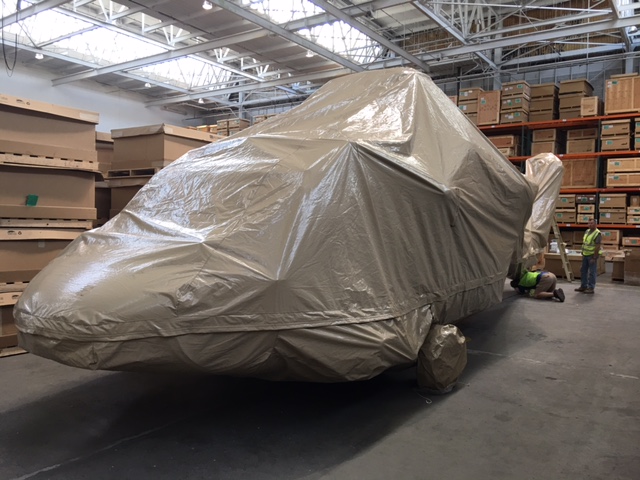
Transhield custom equipment covers are built for the exact storage conditions that cause glass delamination. A three-layer system helps manage moisture, temperature, and UV at the same time.
- UV shielding. The outer polyethylene film significantly reduces UV exposure on the glass surface beneath it, slowing interlayer breakdown and preserving surface durability.
- Moisture control. The soft, non-woven inner layer wicks moisture away from surfaces and moves it outward in vapor form, preventing the condensation that feeds delamination at the glass edge.
- Snug, custom fit. Because each cover is designed for a specific piece of equipment, there are no flapping gaps where sunlight or rain can reach the windshield or cab glass.
- Corrosion protection in the same package. Covers containing optional VCI additives protect the metal components under the same cover that shields the glass, so one solution handles multiple risk factors at once.
In recent years, equipment has grown more complex and storage periods have stretched longer. This combination has made glass delamination a bigger line item than it used to be. Manufacturers and distributors who address it during storage and transit protect both product quality and the bottom line.
Protect Your Equipment Investment
Glass delamination is one of those problems that stays invisible until it becomes expensive. The right combination of reliable custom covers, regular inspections, and sensible storage conditions is usually enough to keep glass delamination out of your warranty claims and recall reports.
At Transhield, we have spent years building custom protective covers for manufacturers, distributors, and fleet operators across the country. Our covers are designed to fit your specific equipment and protect against the full range of storage and transit hazards, from UV and moisture to corrosion and glass delamination.
Ready to protect your equipment from top to bottom? Contact Transhield today to discuss custom cover solutions for your fleet.