
Rust starts the moment iron or steel is exposed to moisture and oxygen. For manufacturers, fleet managers, and logistics teams, atmospheric corrosion during storage and transportation is more than a cosmetic issue. It compromises equipment performance, drives up maintenance costs, and can void warranties before a product ever reaches its end user.
The good news is that rust is predictable and preventable. Understanding what triggers it and how to block it gives you a clear path to keeping every metal surface in factory-fresh condition.
Understanding Rust
What Causes Rust
Rust is a specific type of atmospheric corrosion that affects iron and steel. When metal comes in contact with water and oxygen, a chemical reaction called oxidation occurs. The main ingredient in that reaction is moisture; without it, rust can’t form.
| Ingredient | Role in Rust Formation |
| Iron or steel | The base metal that reacts |
| Water/moisture | Acts as the catalyst for the chemical reaction |
| Oxygen | Combines with iron in the presence of water to form iron oxide |
Remove any one of these three, and rust can’t form. That’s the foundation of every rust prevention strategy.
Which Metals Are Most at Risk?
Not all metal rusts at the same rate. Knowing which materials need the most rust protection helps you focus your efforts.
- Steel and iron — the most vulnerable; exposed steel begins showing rust within days in high humidity
- Cast iron — highly susceptible due to its porous structure; cast iron surfaces corrode quickly without a protective layer or coating
- Stainless steel — more resistant thanks to its chromium content, but not immune, especially around salt water or when the surface is scratched or damaged
- Galvanized steel — the zinc coating provides initial rust protection, but once that layer is scratched or worn through during handling or transit, the underlying steel corrodes like any other
What Speeds Up Rust?
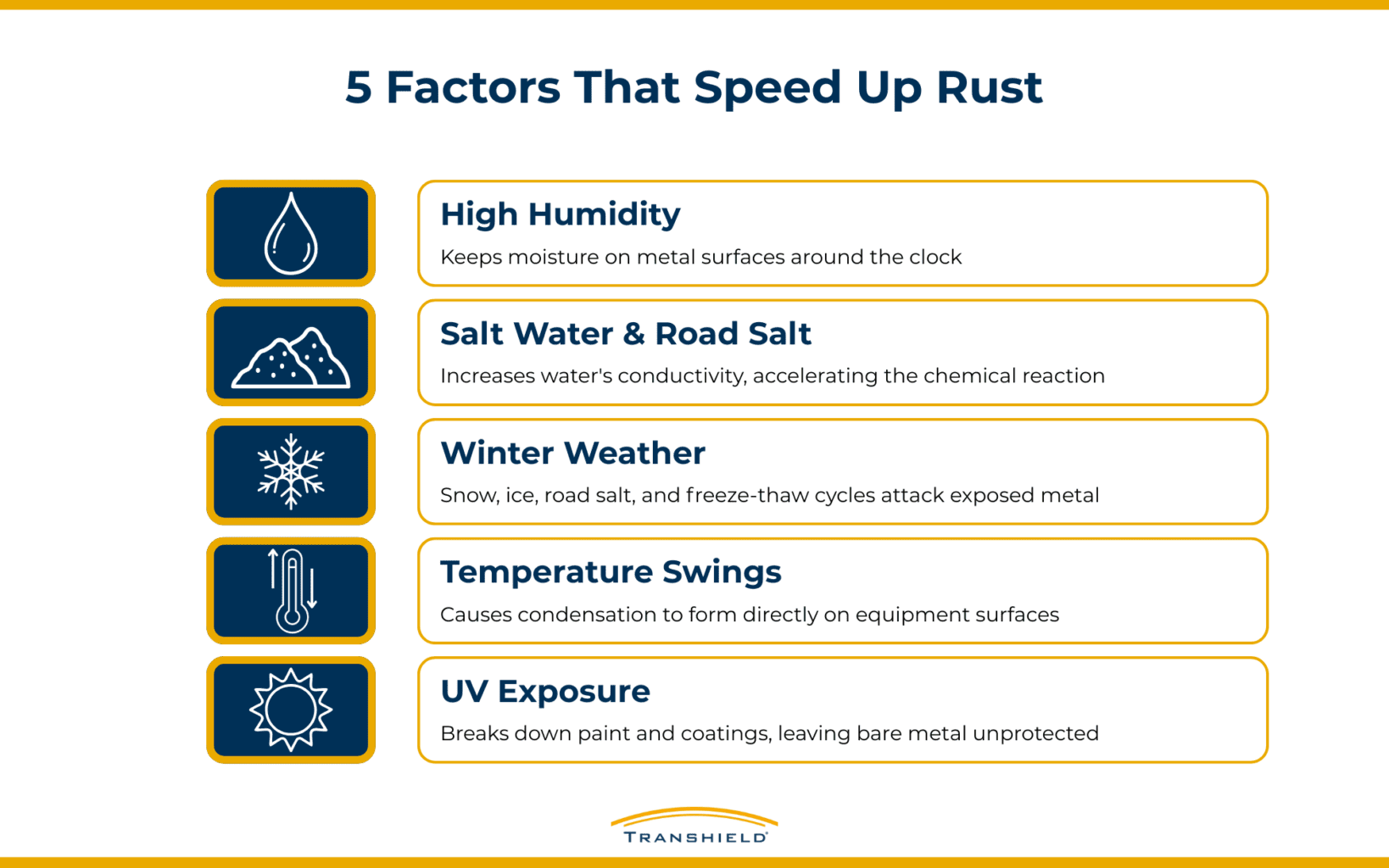
- High humidity keeps moisture on metal surfaces around the clock
- Salt water and road salt increase water’s conductivity, making the chemical reaction happen faster
- Winter weather brings snow, ice, road salt, and freeze-thaw cycles that are especially aggressive on exposed steel and iron under painted surfaces
- Temperature swings cause condensation, depositing water directly onto equipment, even
- UV exposure breaks down paint and coatings over time, leaving bare metal exposed to the elements
Why Storage and Transit Are High-Risk
During storage and transportation, equipment faces many of these risks at once:
- Outdoor storage exposes metal to rain, humidity, and temperature changes for weeks or months
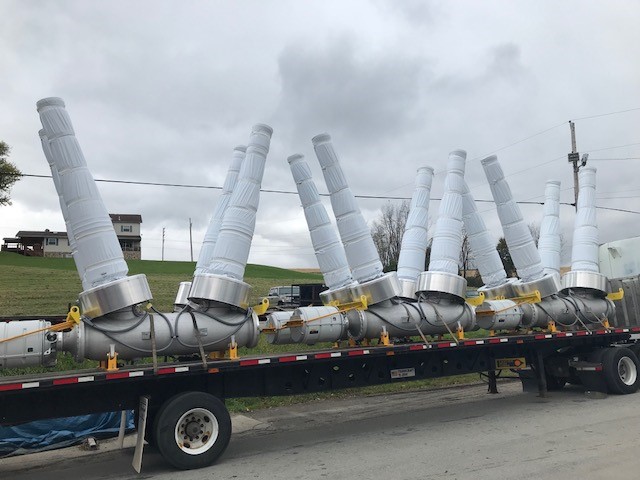
- Transit on open trailers adds road salt, sea spray, and wind-driven debris
- Equipment sitting idle for any reasonable time gives even minor moisture exposure the chance to develop into visible rust
- Boat engines, engine parts, and heavy machinery stored in coastal or humid environments face accelerated atmospheric corrosion
Why Rust Costs More Than You Think
Surface rust might seem minor, but it spreads fast. Once the protective layer of paint or coating is damaged, the underlying metal corrodes quickly.
Where Rust Does the Most Damage
- Engine parts and hydraulic systems — even light surface rust affects performance and safety
- Structural steel and frames — rust spreads underneath coatings and weakens integrity
- Painted surfaces — rust bubbles under paint, causing large sections to flake off
- Machine tools and precision components — rust on fittings and moving parts leads to seized or damaged equipment
The Financial Impact
- Warranty claims on equipment delivered with rust damage
- Payments delays if the equipment is not commissioned on time
- Costly rework, refinishing, and repair before delivery
- Project delays while waiting on replacements
- Lost customer confidence when equipment doesn’t arrive looking new
How to Prevent Rust on Equipment
Effective rust prevention creates a barrier between the metal surface and the moisture and oxygen that cause oxidation. Here are the most practical methods, in the order you should apply them.
Step 1: Clean Equipment Before Storage or Transit
Dirt, grease, salt, and road grime trap moisture against metal and speed up rust formation. Thorough cleaning gives every other protection method a clean foundation to work from.
- Wipe everything down with a clean cloth to clear remaining residue
- Pay attention to joints, seams, and crevices where debris and water collect
Step 2: Inspect and Maintain Protective Coatings
With clean surfaces, you can properly assess and repair the coatings that serve as the first line of defense against rust.
- Inspect all painted and coated surfaces for chips, scratches, and worn spots
- Apply a fresh coat of primer to any areas where bare steel or iron is exposed
- Touch up paint on damaged sections to restore the protective barrier
- Check edges, corners, and contact points where coating wears fastest; even small gaps become starting points for rust
Step 3: Control Moisture in the Storage Environment
- Climate-controlled indoor storage offers the best protection from humidity and temperature swings, but is expensive to build, operate and isn’t always practical for large fleets
- A garage or warehouse helps, but still requires attention to humidity and condensation
- Outdoor storage demands protective covers to keep water, snow, and UV exposure off equipment, especially heading into winter
Wherever equipment is stored, minimizing direct contact with moisture is the priority.
Step 4: Use Protective Covers with Vapor Corrosion Inhibitor (VCI) Technology
This is where everything comes together. The right protection depends on the size and complexity of the equipment. Here’s how to match the method to what you’re protecting.
For Smaller Items and Tools
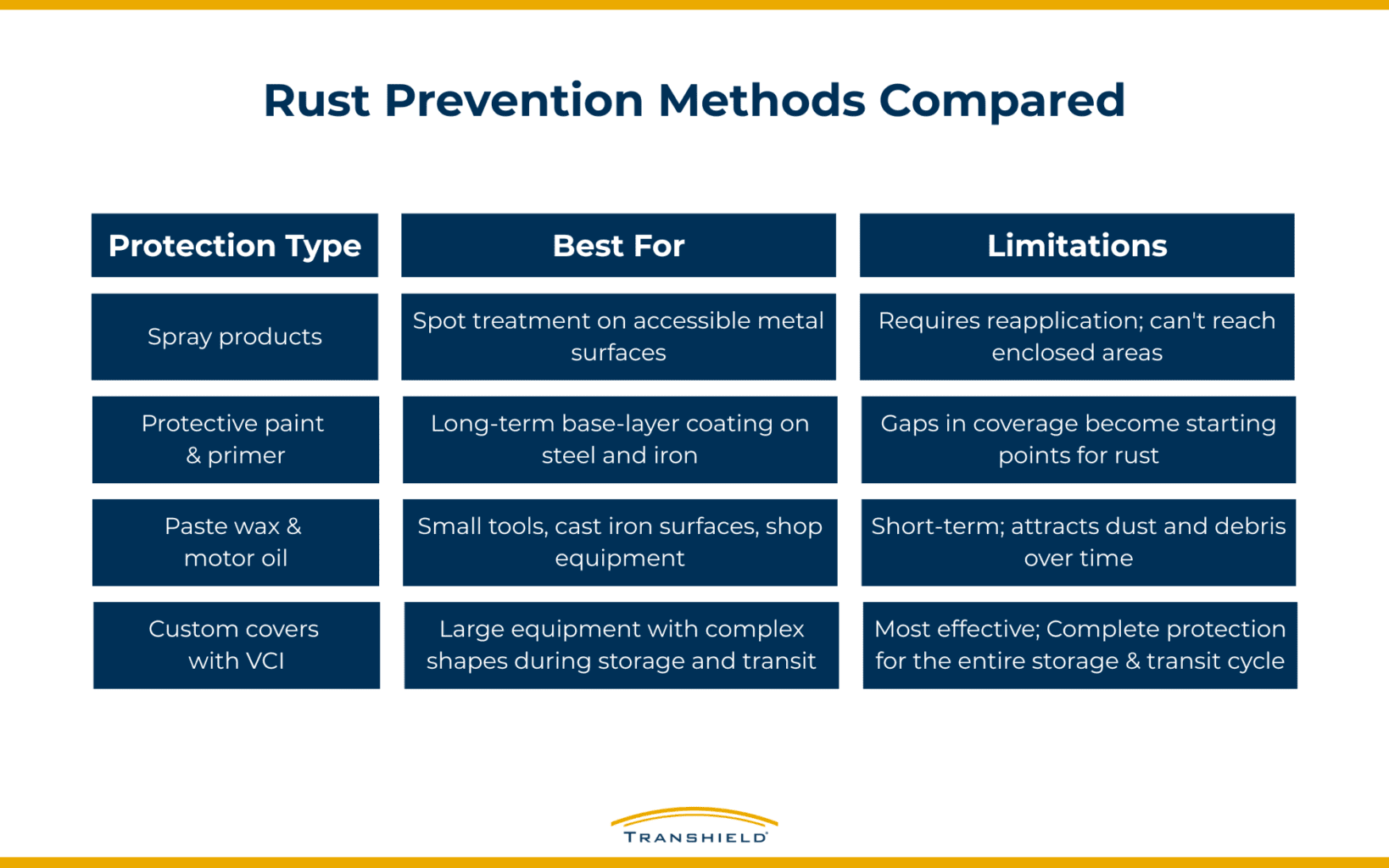
- A spray-on rust inhibitor from any hardware store provides short-term protection for accessible surfaces
- Motor oil or paste wax creates a basic barrier on small metal parts, hand tools, and cast iron surfaces
- These products work well for shop tool storage, but require regular reapplication
For Large Equipment in Storage and Transit
Vapor corrosion inhibitors (VCIs) paired with custom-fit protective covers are the most effective option.
How VCIs work:
- VCI molecules vaporize from a source material (the cover) and travel through the enclosed space surrounding the equipment
- These molecules bond to metal surfaces on contact, forming an invisible protective layer
- The protection reaches internal cavities, engine parts, recessed components, and complex geometries, all without direct application to every surface
Why covers matter for VCI:
- Custom-fit covers create the enclosed environment VCIs need to maintain the right concentration of protective molecules
- They also shield equipment from rain, snow, UV exposure, and other environmental factors that accelerate rust
- Less gaps means no entry points for moisture, dust, or pests
Why Generic Tarps Fall Short
- Trap moisture underneath, creating the exact conditions rust needs
- Leave gaps where water, dust, and pests enter
- Don’t manage humidity inside the covered space
- Offer no corrosion-inhibiting chemistry
Custom-fit covers with VCI chemistry address multiple rust factors at once.
How Transhield Covers Prevent Rust
Transhield’s custom equipment covers are built to block the conditions that cause rust, not just keep rain off.
The Three-Layer System
- Outer layer: UV-resistant polyethylene film that repels water and blocks sunlight
- Middle layer: A hot-melt adhesive with VCI additives, releasing rust-inhibiting molecules into the space around the equipment to block moisture and oxygen from reaching metal surfaces
- Inner layer: A soft, non-woven material that wicks moisture away from equipment while preventing scratches on painted finishes
Transhield covers containing VCI additives have reduced corrosion by up to 95% in testing. The rust protection lasts as long as the cover stays in place, making it effective for both short-term transit and long-term storage.
Features Built for Storage and Transit
- Custom fit for your specific equipment — 5 sided or 6 sided cover design eliminating gaps where moisture, salt, or debris can reach the metal.
- Shrinkable fabric that heat-shrinks to create a snug, aerodynamic fit during transportation and releases the VCI into the cover for rapid protection.
- Optional vents and zipper doors for access and airflow during long-term storage
- Secure fastening systems that keep covers in place on the road and in winter wind
Keep Rust from Costing You Money
Rust is predictable. It needs iron, water, and oxygen. Take away any one of those and the reaction stops. A combination of clean metal surfaces, maintained coatings, controlled storage environments, and custom covers with VCI additives gives your equipment the best chance of staying rust-free through storage and transit.
Transhield has spent over 30 years developing protective cover solutions for industrial, military, and commercial equipment. With a 97.4% customer retention rate and ISO 9001:2015 certification, we have the experience to help you find the right rust protection for your specific application.
Ready to prevent rust on your equipment? Contact Transhield today to discuss custom cover solutions.