
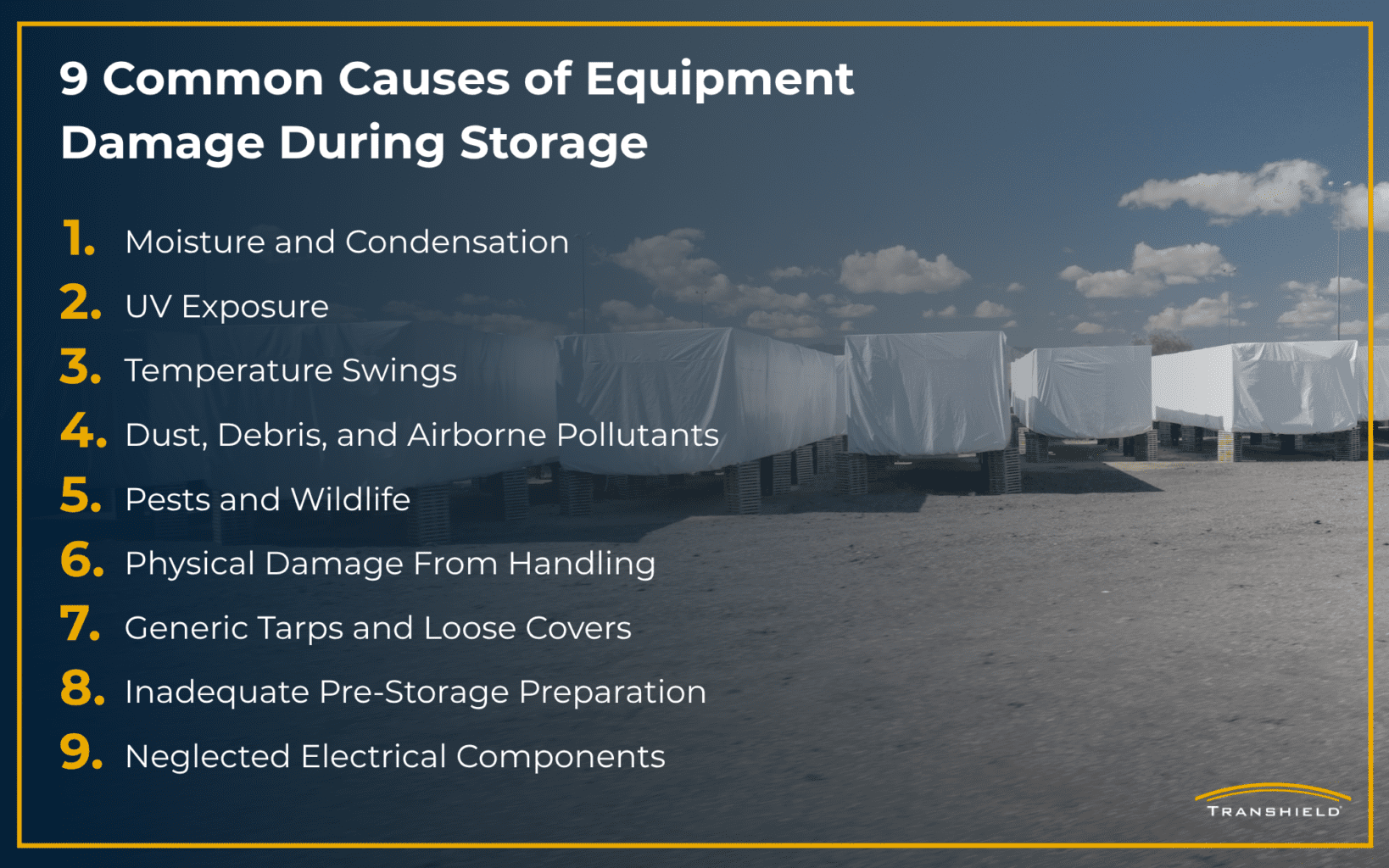
Equipment damage during storage is one of the quietest sources of loss in any operation. Machines sitting on a lot or in a warehouse can lose value week by week without anyone noticing until the next inspection, shipment, or sale. The good news is that most of that damage traces back to the same handful of causes, and every one of them is preventable once you know what to watch for.
This guide walks through the most common causes of equipment damage during storage, why each type of damage happens, and practical steps to avoid them.
1. Moisture and Condensation
Moisture is the single biggest damage mechanism during storage. It fuels corrosion on metal surfaces, warps wood components, and creates ideal conditions for mold and mildew. The tricky part is that moisture doesn’t only come from rain. Condensation forms whenever warmer, humid space meets cooler metal surfaces, which happens during overnight temperature drops and seasonal shifts. The property damage that follows is gradual, which is why it often goes unnoticed until it’s severe.
How to avoid it:
- Store equipment on dry, well-drained ground
- Use breathable covers that wick moisture away from surfaces instead of trapping it
- Use covers containing VCI additives to slow corrosion on metal surfaces
- Avoid generic plastic tarps that seal humidity against your equipment
2. UV Exposure
Sunlight does more damage to stored equipment than most people expect. UV rays fade and chalk paint, crack rubber tires and hoses, make plastic components brittle, and cause glass delamination. Manufacturers build UV stabilizers like carbon black and titanium dioxide into paints and plastics, but those additives only slow the breakdown. Over months of continuous outdoor storage, UV-related wear and tear adds up to real refurbishment and replacement cost before the equipment is ever used.
How to avoid it:
- Store equipment indoors when volume and space allow
- Use UV-blocking custom covers instead of basic tarps, which break down quickly under sunlight and leave gaps
- Rotate equipment positions in your facilities if some spots get more direct sun than others
3. Temperature Swings
Wide temperature changes cause metal to expand and contract, stress seals, and trigger condensation inside enclosed spaces. Hot and cold cycles also accelerate fluid breakdown inside engines and hydraulic systems, which can lead to mechanical failure or overall equipment failure once the unit returns to service.
How to avoid it:
- Store sensitive equipment in climate-controlled facilities when possible
- Use insulating, breathable covers for outdoor storage
- Drain or top off fluids according to manufacturer guidance before long-term storage
- Keep equipment out of direct sun where surface temperatures can spike
4. Dust, Debris, and Airborne Pollutants
Dust settles into moving parts, clogs filters, and holds moisture against surfaces. Airborne pollutants like sulfur compounds, coastal salt, and chemical residues speed up corrosion on exposed metal and electrical components. The results are accelerated normal wear on assets that should still look factory-fresh.
| Contaminant | Main Risk |
| Fine dust | Abrasion, clogged filters, trapped moisture |
| Road salt | Accelerated corrosion on metal surfaces |
| Industrial pollutants | Pitting, discoloration, rubber degradation |
| Airborne particulates | Paint etching, contaminated interiors |
How to avoid it:
- Clean equipment thoroughly before storage to remove existing contaminants
- Use covers that fully enclose equipment with limited gaps
- Keep storage areas swept and clear of loose debris
5. Pests and Wildlife
Rodents chew through wiring, hoses, and upholstery. Birds nest in engines and exhaust systems. Insects lay eggs in seals and crevices. A single damaged wire harness can easily push replacement cost into the thousands, and that hit lands directly on the manufacturer or distributor before the unit ever ships. Nesting inside equipment can also create a safety hazard and risk of injury when operators later start the machine.
How to avoid it:
- Seal all openings, including exhausts, intakes, and cabins
- Use covers that fit tight to the equipment with no entry points
- Keep storage yards free of food sources and standing water
- Build regular inspection into your maintenance routine to catch nesting activity early
6. Physical Damage from Handling
Equipment shifts during transport and gets bumped during yard operations. Scratches, dents, and dings start as cosmetic issues but turn into corrosion sites and rework costs before the unit ships. Operator error during loading, unloading, and moving equipment in and out of a manufacturing site or storage yard is a leading source of physical damage. Improper support, like letting a machine sit on flat tires or unsupported axles, also causes longer-term structural issues.
How to avoid it:
- Use dedicated pathways and marked storage zones to reduce accident risk
- Keep tires properly inflated or use jack stands for very long storage
- Train yard staff on safe handling distances and basic safety protocols
- Pad contact points between stacked items so tools and machines don’t rub against each other
7. Generic Tarps and Loose Covers
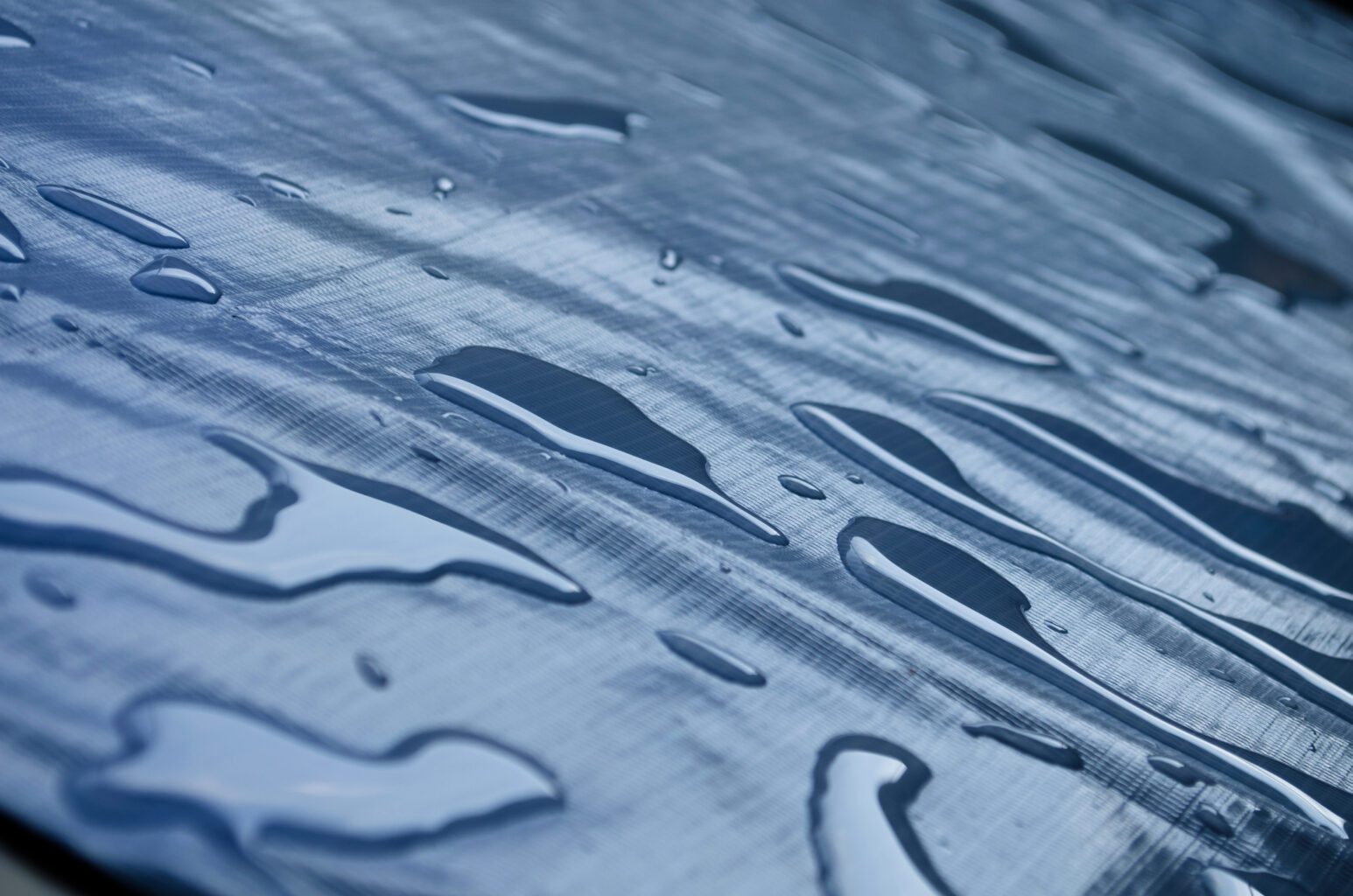
This is one of the most overlooked causes of equipment damage during storage. Generic tarps seem like cheap insurance, but they often create more damage than they prevent. They trap moisture against surfaces, blow loose in wind, rub against paint, and leave gaps for water and pests. Operations that rely on basic tarps tend to see the same damage patterns month after month, driving up rework costs and shipment delays.
How to avoid it:
- Invest in custom-fit covers designed for your specific machinery or vehicle
- Look for covers with anti-condensating inner layers that wick moisture outward
- Choose covers with UV resistance and secure fastening systems
- For corrosion-sensitive assets, use covers containing VCI additives
This is where Transhield’s approach stands apart. Our covers use a three-layer system with patented adhesive that emits VCIs, combining physical protection with active corrosion prevention. The outer UV-resistant film blocks sunlight and repels water, the middle adhesive layer carries VCI chemistry that slows corrosion by up to 95%, and the soft inner non-woven wicks moisture away from painted surfaces. Because each cover is custom-designed to fit a specific piece of equipment, there are limited gaps for water, dust, or pests to exploit.
8. Inadequate Pre-Storage Preparation
Equipment put into storage without proper prep deteriorates faster no matter what protection you add around it. Leftover dirt, fluids past their service life, and uncovered bare metal all speed up damage from the moment the unit sits down.
Best practices before storage:
- Clean all surfaces to remove dirt, grease, and contaminants
- Change fluids before long-term storage
- Touch up paint and seal any exposed bare metal per supplier instructions
- Document the condition of each item so you have a baseline for future inspection
9. Neglected Electrical Components
Electrical equipment is particularly sensitive to moisture and pests. Corroded connectors, chewed wiring, and drained batteries are common issues found when machinery comes out of storage. These issues can cascade into larger equipment failure the first time the unit is powered back up.
How to avoid it:
- Disconnect batteries or use battery maintainers for long-term storage
- Apply dielectric grease to connectors and exposed electrical components per the manufacturer’s recommendations
- Store control modules and sensitive electronics in dry, sealed locations
- Protect wire harnesses with covers that block pest access
Protect Your Investment Before Damage Starts
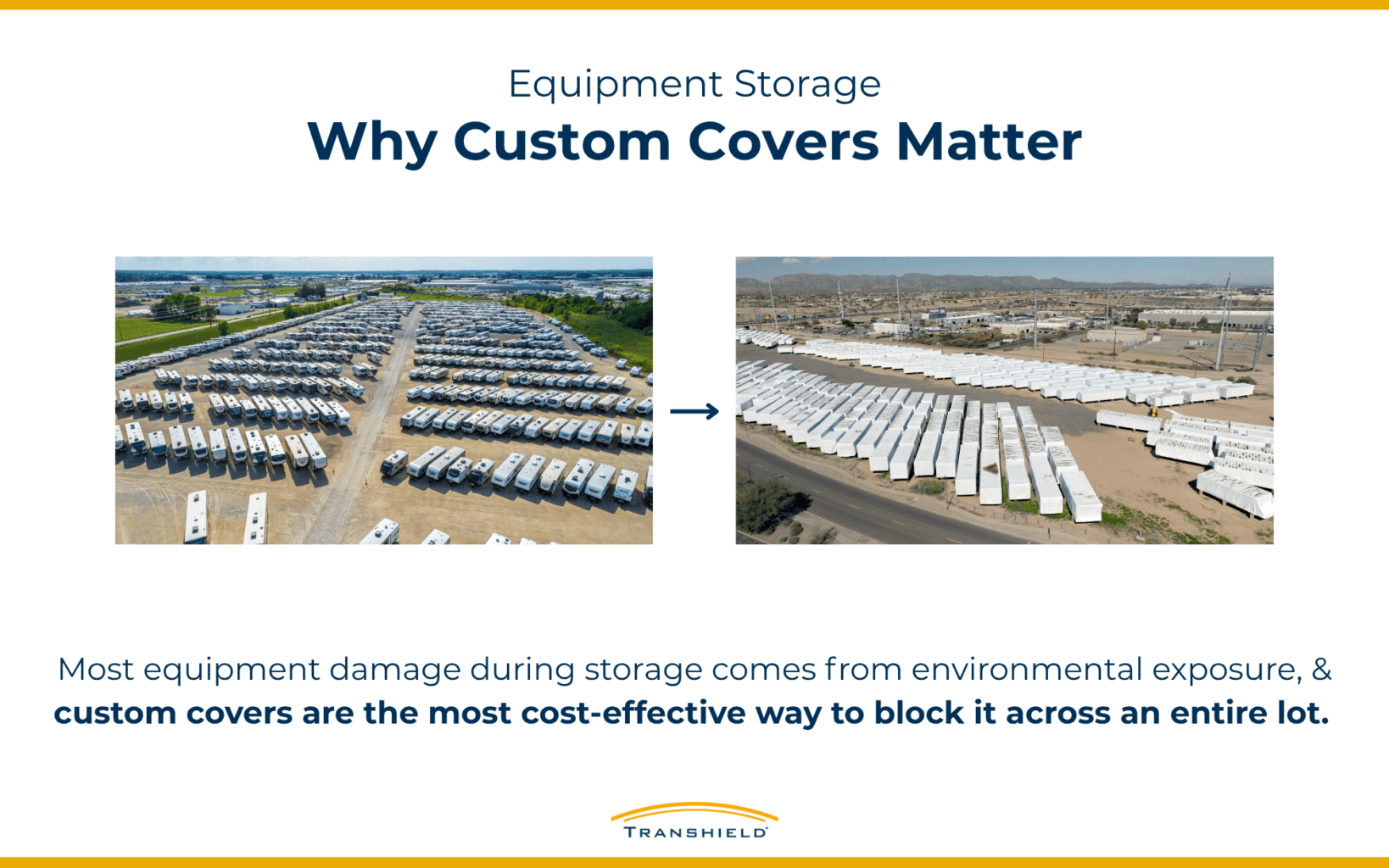
Most equipment damage during storage is preventable. The causes are predictable: moisture, UV exposure, temperature swings, contaminants, pests, operator error, poor covers, skipped prep, and electrical neglect. Addressing each type of damage with the right protection keeps your assets in the condition your customers expect and saves your operation from costly repairs, rework, and frustrated customers.
Transhield has spent decades helping manufacturers, distributors, and equipment dealers protect high-value equipment during storage and transit. Our custom protective covers handle the environmental side of equipment protection, blocking moisture, UV, dust, and pests in a single fit-to-spec solution; pair with good prep and handling practices to protect equipment from start to finish.
Contact Transhield today to talk through a custom cover for your equipment.