
When heavy equipment sits outside, the sun does more damage than most people realize. UV rays slowly break down paint, rubber, glass, and plastic components, leading to costly repairs, warranty issues, and equipment that looks worn before it ever gets used.
For manufacturers, distributors and fleet owners and managers storing dozens or hundreds of units at a time, the stakes are higher. A single cracked plastic panel is a small fix, but a yard full of faded, brittle inventory is a real hit to margins.
This guide breaks down how UV radiation damages stored equipment, the real cost of that damage for manufacturers and distributors, and the protection options that actually work at scale.
What UV Rays Actually Do to Equipment
The sun emits different types of UV radiation, but the two that matter most for stored equipment are UVA and UVB rays. UVA is the most common type of UV reaching the ground. It’s less intense than UVB but builds up damage over time through constant exposure. UVB is less abundant but carries more energy per photon, which means it breaks chemical bonds faster and does more damage per unit of exposure.
When UV light hits a material, it transfers energy that can break chemical bonds within the material’s structure. Over time, this breakdown weakens the material and changes its properties. The result is equipment that fades, cracks, becomes brittle, or loses strength. The longer equipment sits exposed, the more significant the cumulative UV degradation becomes.
How UV Damages the Materials on Stored Equipment
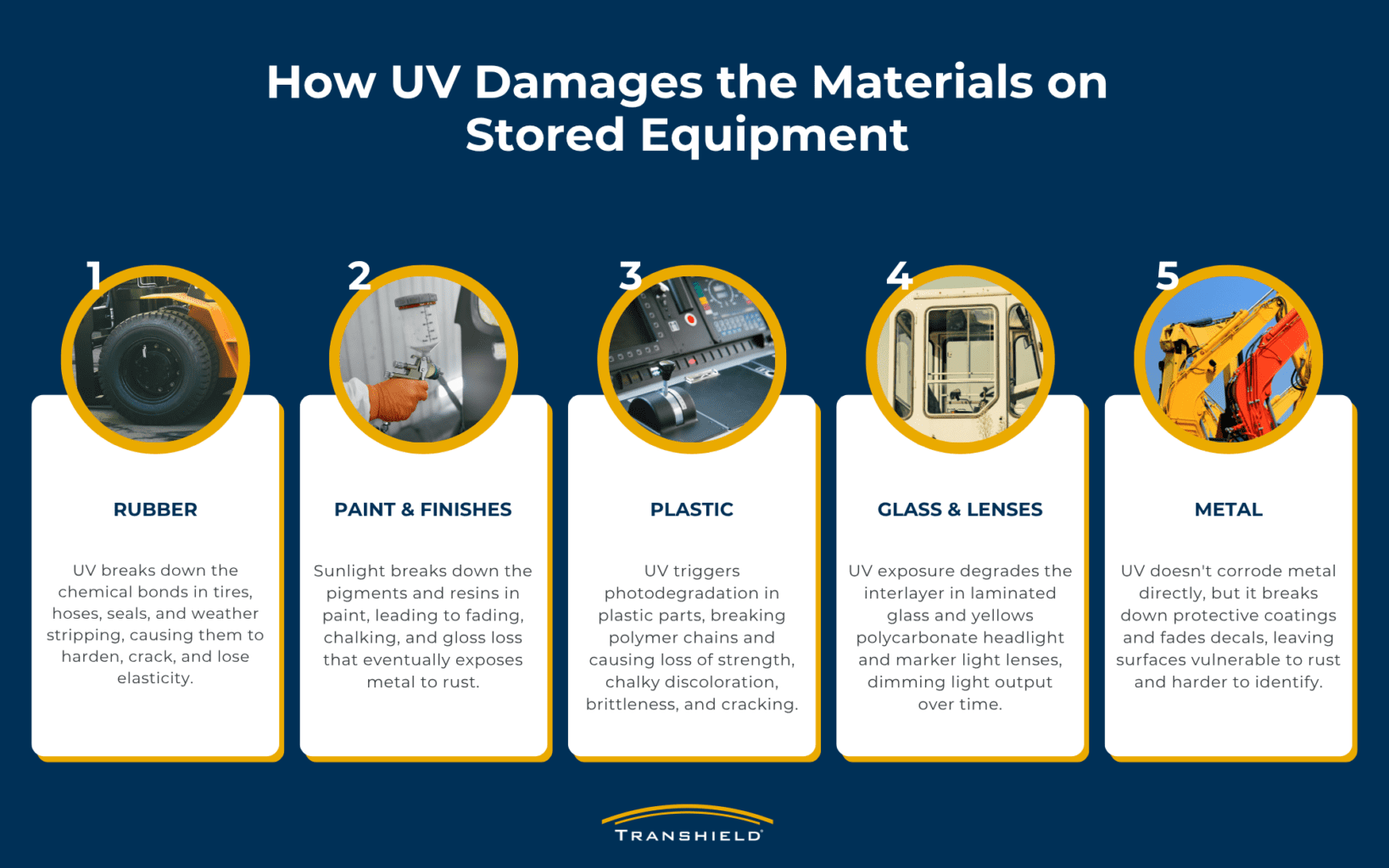
Heavy equipment is built from a mix of materials, and most of them are vulnerable to UV damage in some form. Some break down faster than others, but over time, sunlight wears on nearly every exposed surface. Here’s how UV affects the materials that matter most.
Rubber Components
Rubber is one of the most UV-sensitive materials on heavy equipment. Tires, seals, gaskets, hoses, weather stripping, and wiring insulation all rely on rubber’s flexibility; UV radiation attacks that flexibility directly. The chemical bonds that give rubber its stretch break down under sunlight, causing the material to harden, crack, and lose elasticity.
For stored equipment, rubber damage often shows up as:
- Tires with sidewall cracks and dry rot
- Hydraulic hoses that split or develop slow leaks
- Seals and gaskets that harden and let moisture in
- Weather stripping that peels or separates
Once rubber components fail, they don’t bounce back. Damaged parts have to be replaced before the unit can be sold or put to service, adding rework costs and delays to the delivery timeline.
Paint and Finishes
Paint is usually the first place UV damage shows up visually. Sunlight breaks down the pigments and resins in paint, causing fading, chalking, and loss of gloss. Equipment that sat in a storage yard for six months can look years older than it actually is. Even a matte finish can’t stop the underlying breakdown.
Paint damage isn’t just cosmetic either. Once the paint layer chalks or cracks, the metal underneath may be exposed to moisture and corrosion. What starts as a faded panel can end in rust that needs sandblasting and refinishing before the equipment looks factory-fresh again.
Plastic Components
Plastic is used all over heavy equipment: control panels, fuel tanks, light lenses, body panels, wiring covers, and countless small parts. Like rubber and paint, plastic material is a polymer that breaks down under UV exposure through a process called photodegradation.
When UV radiation hits a plastic surface, it transfers enough energy to break the chemical bonds holding the polymer chains together. As those bonds break, the plastic loses tensile strength along with its overall mechanical strength, meaning it pulls apart more easily under load. The surface also develops chalky discoloration, becomes brittle, and cracks under stress. Impact strength and overall impact resistance drop along with it.
Glass and Lenses
Windshields and windows can experience delamination with UV exposure. The plastic interlayer inside laminated glass degrades, leading to cloudy or peeling edges. Headlight and marker light lenses, often made from polycarbonate, yellow and cloud up from UV exposure as well, which dims light output over time.
Metal Surfaces
UV rays don’t directly corrode metal, but the heat they generate accelerates other forms of damage. Protective coatings and primers on metal break down faster under UV exposure, leaving the surface more vulnerable to rust and oxidation. UV also fades decals, labels, and serial number plates, making equipment harder to identify and track.
The Cost of UV Damage for B2B Storage
For manufacturers and distributors managing large inventories of equipment, UV damage adds up quickly:
- Warranty claims increase when equipment looks worn before delivery
- Selling prices drop on units with faded paint or cracked plastic
- Rework costs climb when parts need replacement before shipping
- Customer complaints rise when equipment doesn’t arrive in factory-fresh condition
Unprotected outdoor storage can turn new equipment into something that looks like a returned product in a matter of months.
How to Protect Stored Equipment from UV Damage
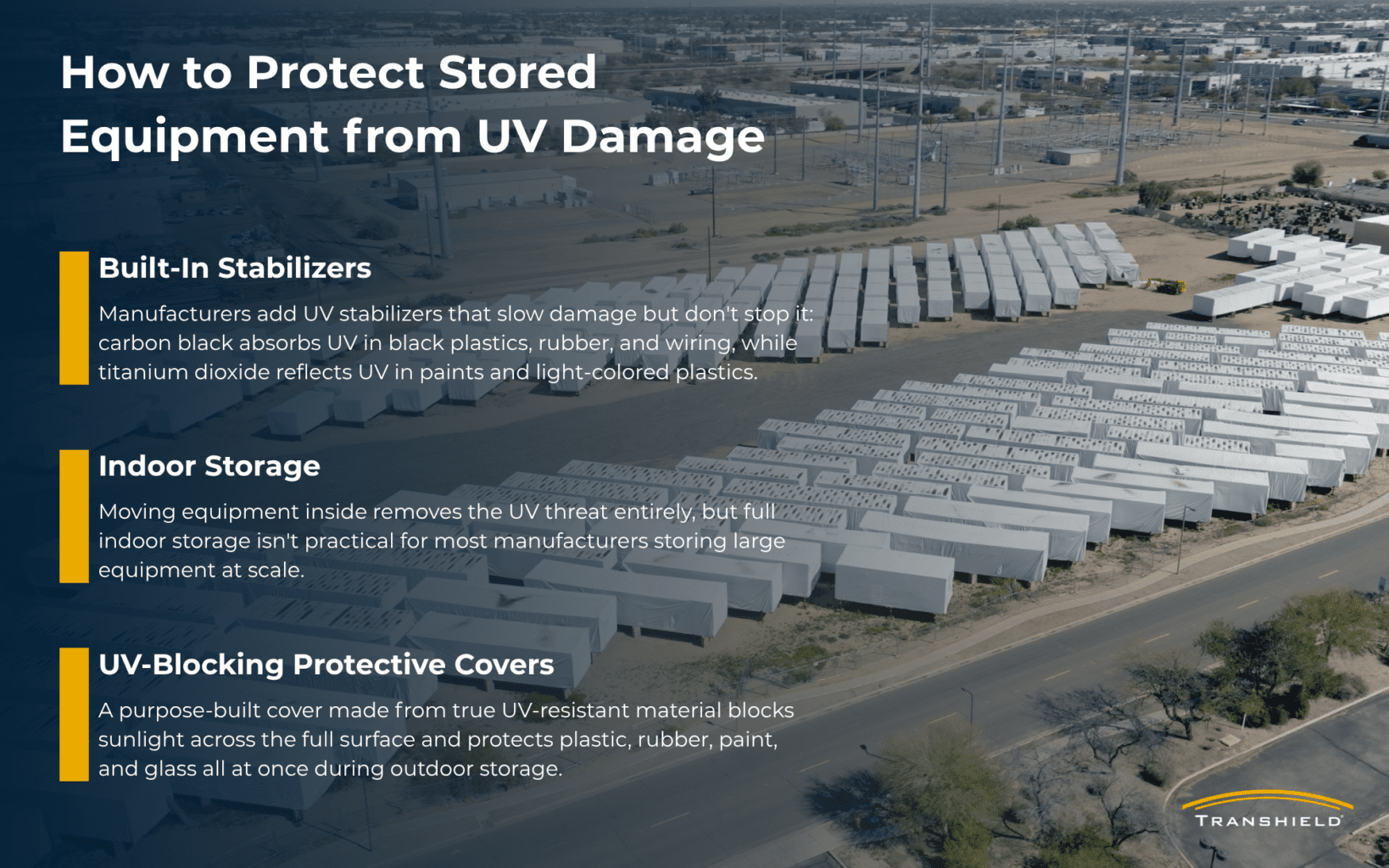
Heavy equipment already carries some built-in UV protection. Manufacturers add UV stabilizers to the materials most exposed to sunlight, slowing the rate of damage on plastic parts, rubber components, and painted surfaces.
| Pigments | Where It’s Used | How It Works |
| Carbon black | Black plastic parts, rubber hoses, tires, wire insulation | Absorbs UV light and dissipates it as heat |
| Titanium dioxide | Exterior paint systems and some light-colored plastics | Reflects UV rays and acts as a UV shield for the resin underneath |
These pigments are built into plastics during injection molding or into paints during formulation to give materials some basic UV resistance. They help, but they’re designed to slow UV damage, not stop it. For inventory sitting through months or years of continuous exposure to sunlight, additional protection is needed. The right approach depends on how much equipment you’re storing, how long it will sit, and where it’s kept.
Indoor Storage
Moving equipment inside removes the UV threat entirely. For most manufacturers and distributors, though, full indoor storage isn’t practical. Space is limited and expensive, especially for large equipment at high volumes.
UV-Blocking Protective Covers
Custom protective covers offer a practical solution for outdoor storage at scale. The right cover blocks UV rays before they reach the equipment, protecting plastic parts, rubber, paint, and glass all at once.
Not every cover delivers real UV protection, though. Basic tarps degrade quickly under sunlight and can leave gaps that let UV light through. Choosing the right material is what separates a purpose-built cover from a tarp. A true UV-resistant material blocks sunlight consistently across the full surface and holds up through years of outdoor use.
How Transhield Protects Equipment from UV Damage
Transhield has spent years building custom equipment covers for manufacturers, distributors, and government customers who need to keep equipment in factory-fresh condition during storage and transport.
Our covers use a three-layer system with UV protection built into all three layers:
- Outer layer: A polyethylene film that is engineered with anti-oxidants and UV interceptors; along with pigments that blocks sunlight and repels water, extending the usable life of the equipment and the cover itself.
- Middle layer: A hot-melt adhesive that can include optional Vapor Corrosion Inhibitor technology to slow corrosion on metal surfaces; also includes additives to limit UV damage.
- Inner layer: A soft, non-woven material that protects painted surfaces and wicks moisture away, that uses fibers inherently more resistant to UV light.
The outer film significantly reduces UV rays reaching the equipment. That means less fading, less cracking on rubber components, slower paint breakdown, and reduced risk of glass delamination. For manufacturers storing hundreds of units at a time, this level of protection keeps inventory looking new, reduces warranty issues at delivery, and supports long-term durability across the fleet.
Because each cover is custom-designed for the specific application, there are limited gaps where UV light can sneak through. Features like vents, zipper doors, and ratchet fasteners can even be added to fit the way equipment is handled and inspected.
Protect Your Equipment from the Sun
UV damage is slow, quiet, and expensive. For manufacturers and distributors storing equipment outdoors, it’s also preventable.
The right protection keeps plastic components, rubber parts, paint, and glass in the condition your customers expect, whether the equipment is headed to a dealer, a job site, or an end user. Transhield’s custom covers are designed for outdoor use at scale, giving B2B operations a practical way to protect entire inventories from UV exposure and other environmental threats.
Looking for the perfect solution to protect your inventory from UV damage? Contact Transhield today to discuss custom cover solutions for your storage needs.