
Short answer: Farm equipment storage is how machinery is protected between manufacturing and sale. For pre-sale inventory, effective storage shields units from corrosion, UV exposure, moisture, and pests at every stage.
Farm equipment can spend months in storage before it ever reaches a buyer. Between the production line and the dealer lot, inventory moves through staging yards, transit, distribution centers, and open storage. Each stage adds time in the elements. Pre-sale storage gets less attention than post-sale storage, but it affects everyone in the supply chain. Equipment that looks worn before it’s purchased can lead to markdowns, warranty claims, higher insurance costs, and lost buyer confidence.
This guide covers what damages farm machinery between manufacturing and the dealer lot, the storage options available at each stage, and how to keep inventory in factory-fresh condition until it sells.
The Pre-Sale Journey: Where Damage Happens
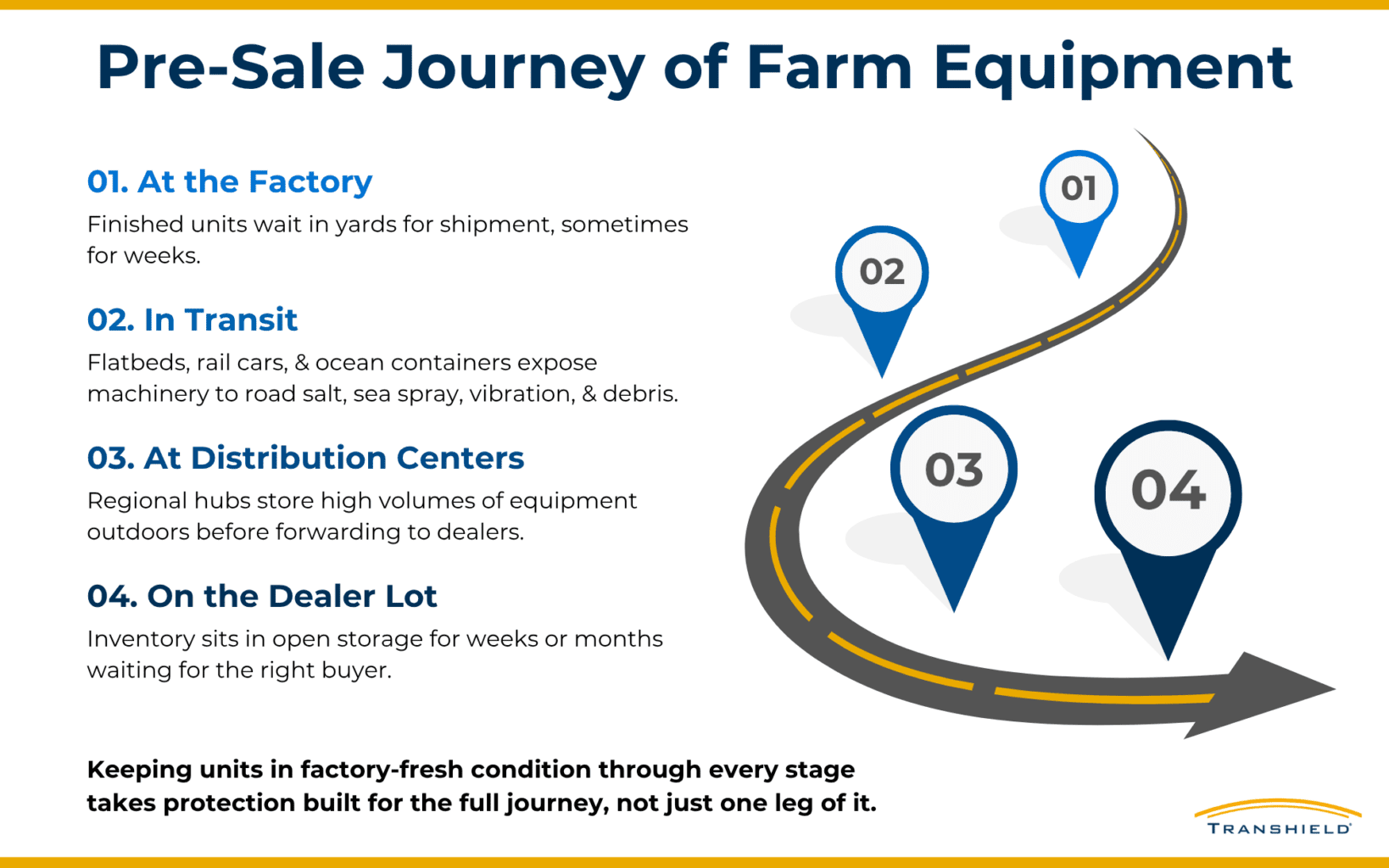
Farm equipment doesn’t go directly from assembly to a buyer. It passes through several stages, each with its own storage risks:
- At the factory: Finished units wait in staging yards for shipment. Depending on production volume and demand, some sit for weeks.
- In transit: Flatbeds, rail cars, and ocean containers expose machinery to road salt, sea spray, vibration, and debris.
- At distribution centers: Regional hubs often store large volumes of equipment outdoors before forwarding it to dealers.
- On the dealer lot: Once it arrives, inventory may sit in open farm storage for months waiting for the right buyer.
Each handoff adds time outside. A tractor that rolled off the line in March might not sell until November. That’s most of a calendar year spent exposed to the elements.
What’s Actually Damaging Your Inventory
A few threats cause the majority of pre-sale damage. Knowing what they are helps you plan around them.
Corrosion
Metal components exposed to moisture and oxygen start corroding quickly. Humid climates, coastal areas, and winter road salt all speed up the process.
Pre-sale inventory is especially vulnerable because equipment often sits stationary for long periods. That gives corrosion time to develop on brake discs, linkages, hydraulic cylinders, and any bare metal surface.
UV Exposure
Sun damage fades paint, breaks down rubber seals and hoses, and delaminates glass over time.
Equipment that spent six months under direct sun looks visibly older than identical units stored inside, even when the mechanical condition is the same.
Water Intrusion
Rain, snow, and condensation create problems beyond surface damage.
Water that finds its way into cabs, engine compartments, and electrical systems can cause mold, corrosion, and shorts that aren’t discovered until a buyer takes delivery.
Dust and Debris
Open lots collect dust, pollen, tree sap, and bird droppings. These contaminants etch paint, clog vents, and create extra prep work before a unit can be sold.
Pests
Rodents nest in engine compartments. Insects build hives in exhaust stacks. Birds leave droppings and sometimes full nests in places you wouldn’t think to check.
A piece of farm machinery sitting outdoors for months becomes attractive real estate for wildlife.
Common Pre-Sale Storage Options
Most manufacturers and dealers default to some mix of the following, though each comes with real tradeoffs:
| Storage Option | Pros | Cons |
| Indoor warehouse or conventional building | Full protection from weather and UV; reduced pest exposure | High cost per square foot; limited space for large machinery |
| Covered outdoor (steel building or fabric structures) | Blocks rain and direct sun | Still exposed to humidity, wind-driven moisture, dust |
| Farm buildings (storage shed, farm shed, metal equipment shed) | Lower-cost cover for smaller fleets | Overhead door size can limit what fits; still traps humidity |
| Open lot | Maximum capacity, lowest facility cost | Full exposure to harsh weather, UV, and pests |
| Tarps over open storage | Cheap and available | Traps moisture, blows loose, leaves entry points for water and pests |
The limits show up fast at real inventory volumes. Indoor storage for every unit isn’t realistic when a dealership has 200 tractors on hand or a manufacturer has hundreds of combines staged for seasonal shipping. A pre-engineered steel building or farm equipment storage shed can cover part of the fleet, but rarely all of it.
What Good Pre-Sale Storage Actually Requires
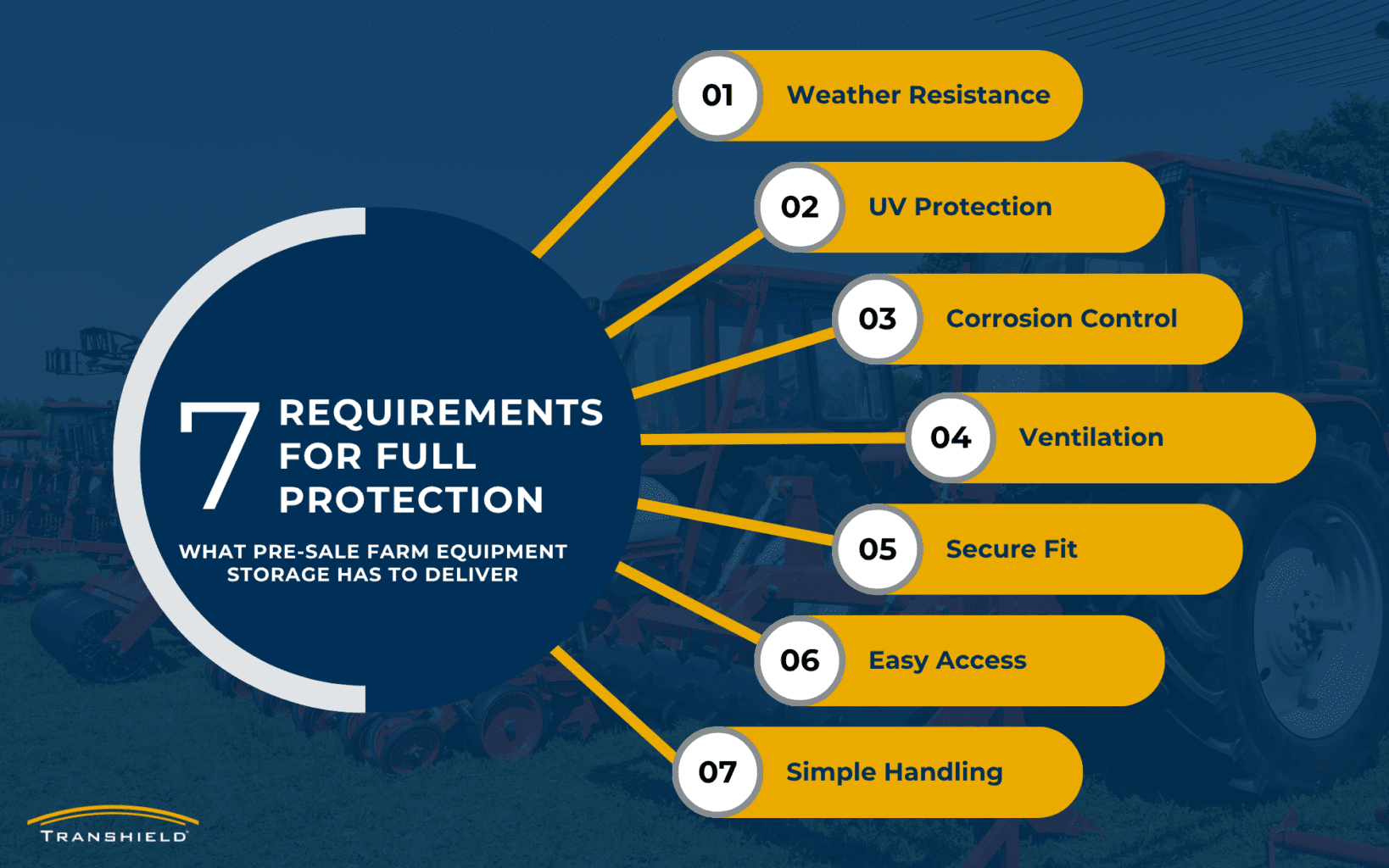
Protecting valuable equipment before the sale means solving for several things at once:
- Weather resistance against rain, snow, sleet, and wind-driven moisture
- UV protection to preserve paint, rubber, and plastic components
- Corrosion control for exposed metal parts
- Ventilation so trapped humidity can escape instead of condensing inside
- Secure fit that limits entry points for water, dust, and pests
- Easy machinery access so lot crews can show units to buyers without major teardown
- Simple handling so crews can apply and remove protection quickly
The storage options covered earlier each handle part of this list, but nothing in the usual lineup covers the full set. Partial protection isn’t the same as full protection; One gap is all it takes for damage to reach the equipment.
Custom Covers as a Pre-Sale Storage Solution
For farm equipment waiting to sell, custom protective covers address the full set of storage challenges without requiring a new equipment storage building or machinery storage facility.
A well-designed cover keeps weather, UV, pests, and debris away from the equipment. It also allows quick machinery access when a buyer wants a closer look.
How Transhield Protects
Transhield has spent years developing covers for heavy equipment and farm machinery in pre-sale, transit, and long-term storage applications. Our approach combines a three-layer system with patented adhesive that emits Vapor Corrosion Inhibitors (VCIs) to slow corrosion on metal surfaces.
Here’s how the three layers work:
- Outer layer: UV-resistant polyethylene film that blocks sunlight and repels water
- Middle layer: Hot-melt adhesive with VCI chemistry that releases corrosion-inhibiting molecules into the space around the equipment
- Inner layer: Soft, non-woven material that wicks moisture away from painted surfaces and prevents scratching
Covers containing VCI additives can reduce corrosion by up to 95%, while the soft interior protects Class A painted surfaces. This matters for pre-sale inventory where a flawless appearance drives buyer confidence.
Built Around Your Specific Equipment
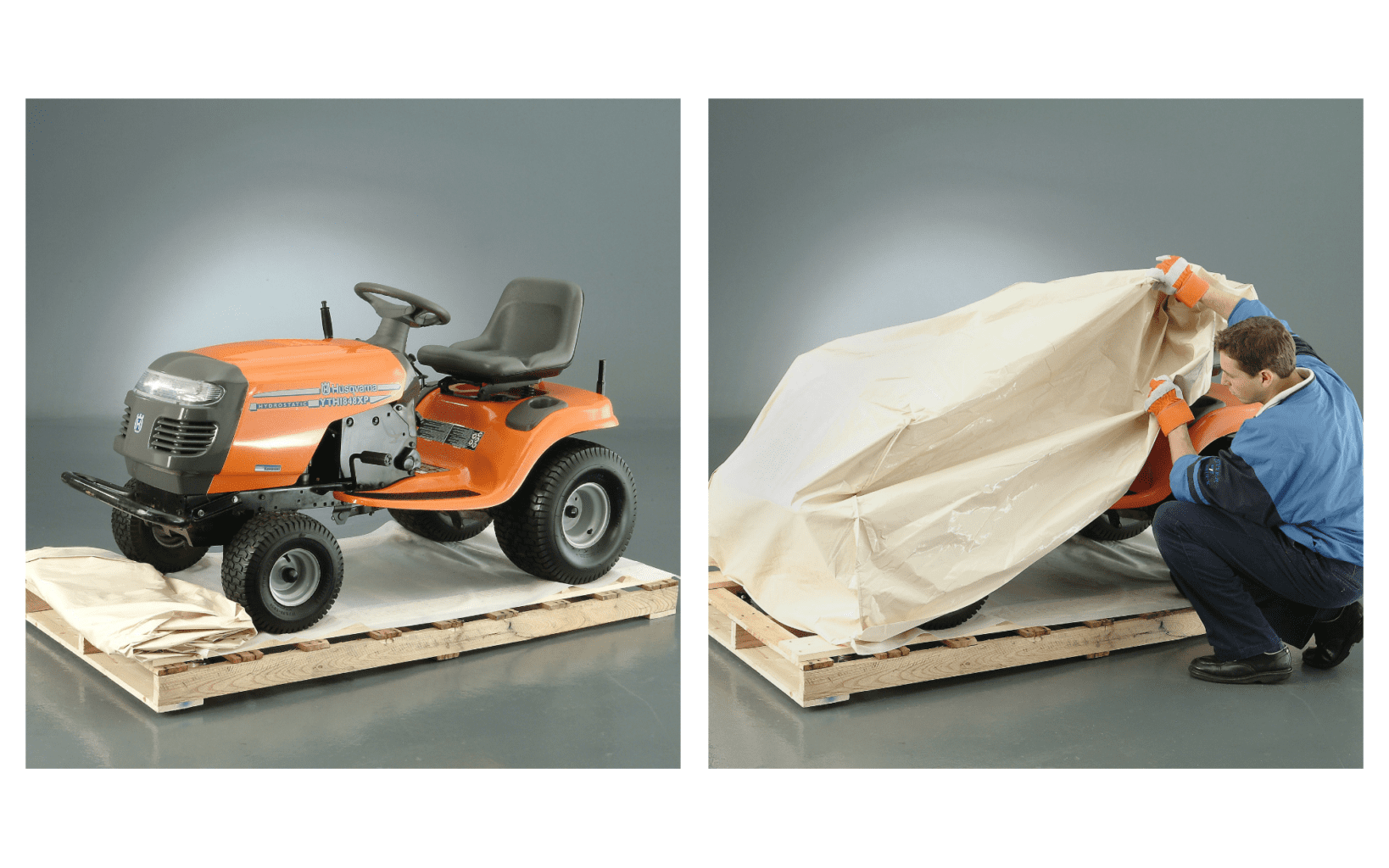
Custom covers can also be built with:
- Fabric that heat-shrinks to a snug fit, sealing out wind-driven moisture and preventing snow and water from pooling on top
- Zipper doors and vents for inspections and ventilation
- Hook-and-loop fasteners and ratchet straps that keep the cover secure through wind and weather
- Custom design for any type of equipment, from compact tractors to large machinery like combines, sprayers, planters, and harvesters
Because each cover is built for the specific unit it protects, there are limited gaps where moisture, dust, or pests can enter. On open lots where units sit for months, that gap-free fit is what keeps damage from setting in. As an added benefit, the same cover continues protecting the equipment when it eventually ships to its final destination.
Planning for Future Storage Needs
Pre-sale farm equipment storage isn’t a single problem with a single solution. It’s a chain of storage and transit stages, each one adding wear if equipment isn’t protected. The difference between a factory-fresh unit at the point of sale and a weathered one usually comes down to how well inventory was covered at each step.
At Transhield, we work with farm equipment manufacturers, distributors, and dealers to build protection into every stage. Our custom covers fit the specific needs of your current fleet and scale with your future storage needs as volumes grow.
Ready to keep your farm machinery inventory in factory-fresh condition from the line to the lot? Contact Transhield today to talk through a custom cover solution for your operation.