
Moving heavy equipment and heavy machinery from one location to another involves more than just booking a truck. Between the logistics of loading, securing, and routing an oversized load, there are plenty of opportunities for things to go wrong. Proper preparation is what separates an equipment shipment that arrives in factory-fresh condition from one that arrives damaged, corroded, or delayed.
This guide covers what you need to know to ship heavy equipment safely and protect your machines throughout the process.
Plan Before You Ship
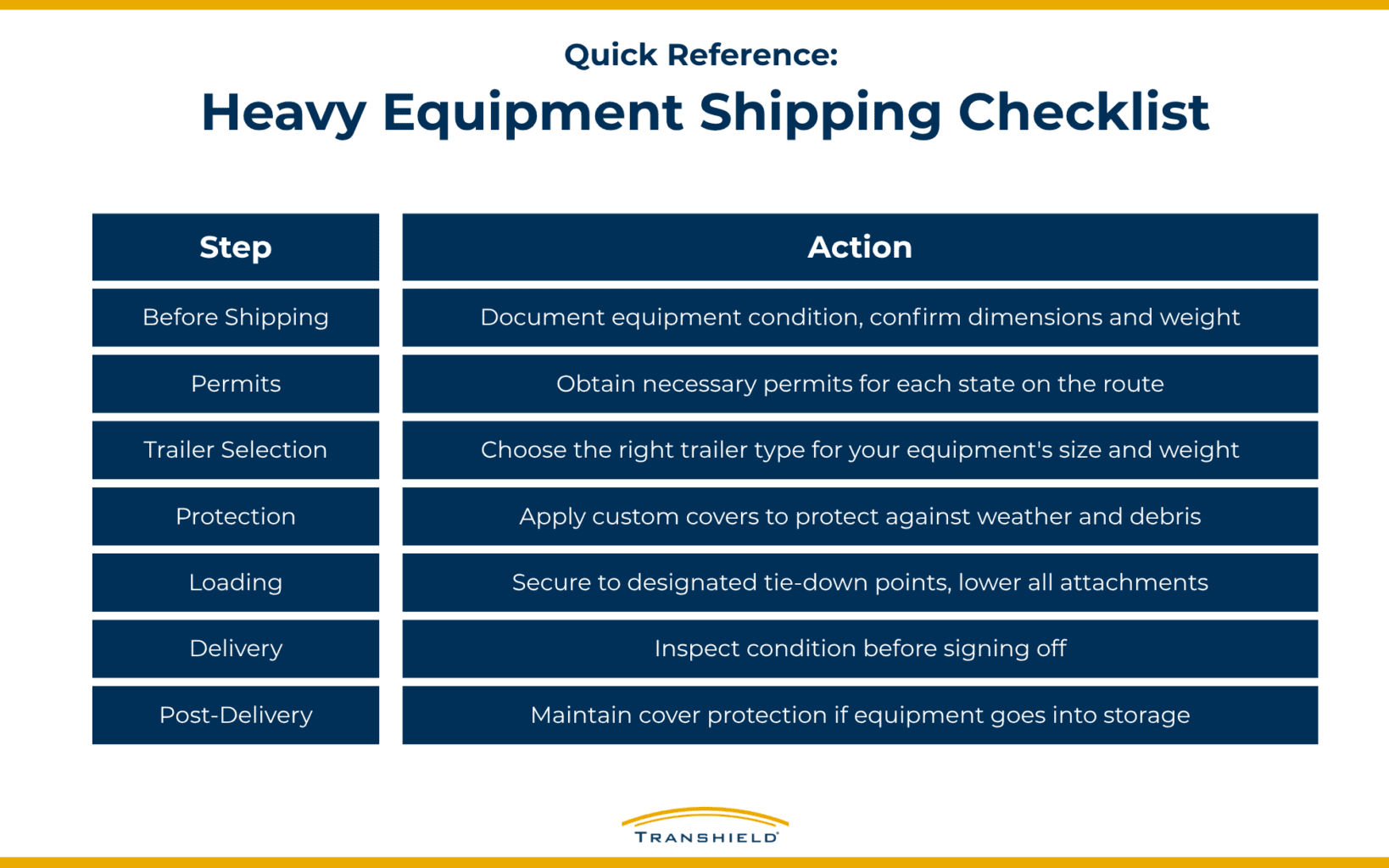
Heavy equipment shipping requires careful planning before anything gets loaded onto a transport vehicle. Skipping this step leads to last-minute complications, added costs, and unnecessary risk. The best practices listed below apply whether you’re moving a single machine or coordinating a multi-unit shipment:
- Know your equipment’s dimensions and weight.
Dimensions and total weight determine what kind of trailer you need, whether you need special routing, and what permits apply. Oversize loads have specific regulatory requirements that vary by state and may require escort vehicles, travel restrictions by time of day, or advance notification to state agencies.
- Understand permit requirements.
Shipping heavy equipment across state lines almost always requires permits. Necessary permits are issued at the state level, so a multi-state route means coordinating permits for each state along the way. An experienced shipping company handles this, but you should know what’s involved so nothing catches you off guard.
- Choose your route carefully.
Height restrictions, bridge weight limits, and seasonal road restrictions all affect routing decisions. Your transport provider should identify any restrictions before the shipment moves.
The first step in executing this plan is finding the right shipping company.
Work with a Qualified Shipping Company
Not every freight carrier handles heavy hauling or equipment hauling at scale. Look for a shipping company with specific experience in heavy equipment transportation.
What to look for in a transport provider:
- Established track record with the type of equipment you’re shipping
- In-house permitting experience for oversized and dimensional loads
- Properly rated and maintained trailers
- Clear communication on scheduling, routing, and real time tracking
- Knowledge of the safety standards and regulations that apply to your shipment
Ask about their experience with your specific type of equipment. Agricultural equipment, construction equipment, industrial equipment, and other heavy machinery all have different transport requirements. A company with relevant experience will flag potential issues early and help you avoid additional costs down the road.
Choose the Right Trailer
Trailer selection is one of the most important decisions in heavy equipment transport. The wrong trailer creates safety hazards and can make loading and unloading far more difficult than it needs to be.
| Trailer Type | Best For |
| Flatbed trailer | Standard heavy equipment with lower height clearance |
| Conestoga trailer | Equipment needing coverage from the elements without sacrificing crane or forklift access |
| Step deck (step-deck trailer) | Taller equipment that would exceed height limits on a flatbed |
| Lowboy trailer | Very tall or heavy equipment; lower deck height allows for more vertical clearance |
| RGN (Removable Gooseneck) | Large construction equipment that drives or rolls on for easy loading |
A lowboy trailer is often the right choice for large construction equipment like excavators or bulldozers because the lower deck keeps overall height within legal limits. Step deck trailers work well for equipment that’s too tall for a flatbed but doesn’t require the ground-level loading of an RGN. Discuss your equipment’s specs with your shipping company to confirm the right fit before booking.
Protect Against Weather and Environmental Damage
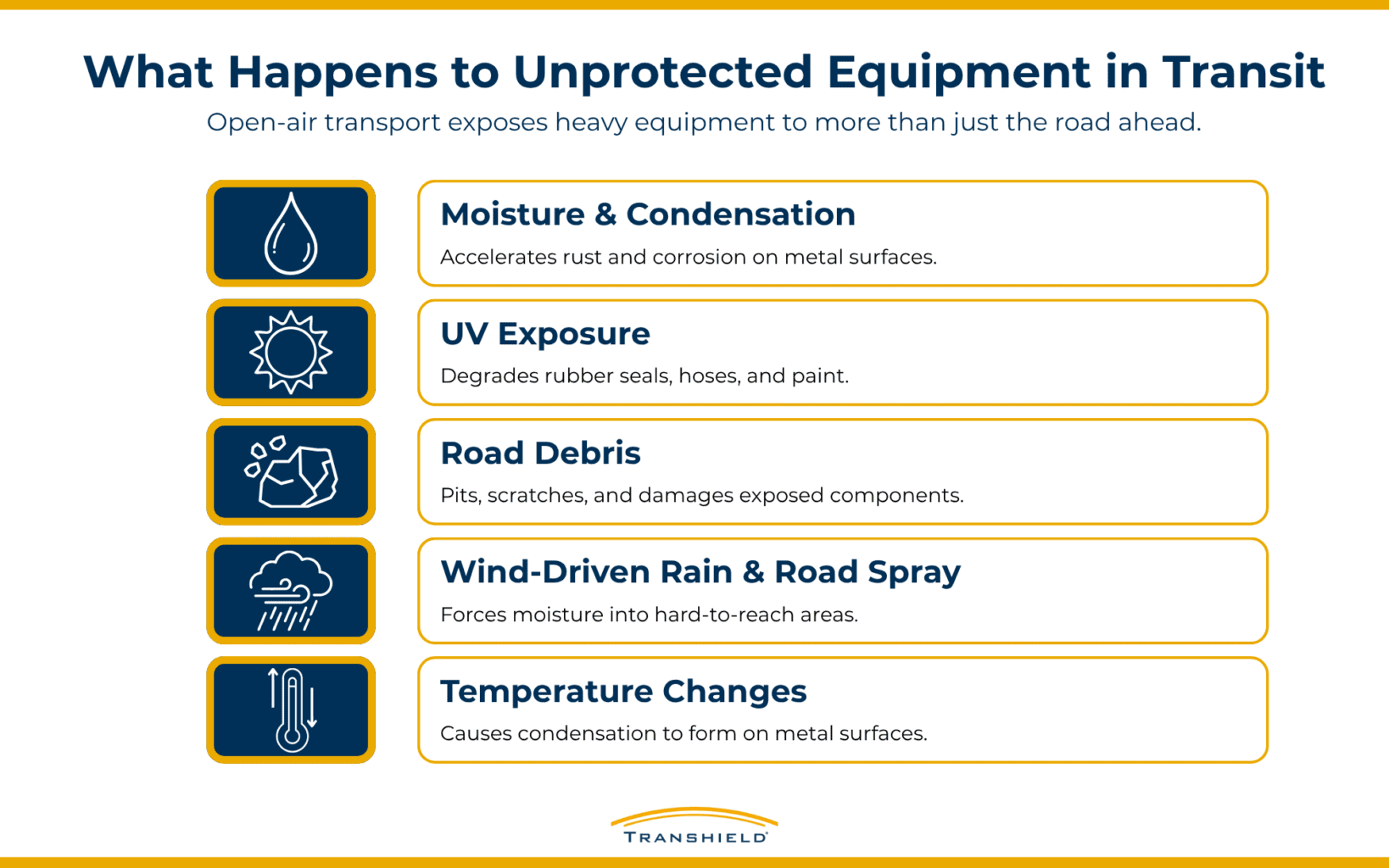
Getting equipment to its destination on time is only half the job. Getting it there in the same condition it left is the other half. Open-air transport on a flatbed or lowboy exposes equipment to road debris, moisture, UV rays, temperature swings, and airborne corrosives. These conditions cause real damage that adds up fast.
What Can Happen in Transit
- Moisture and condensation lead to rust and corrosion on metal surfaces, including hydraulic fittings, exposed cylinders, and electrical connections
- UV exposure breaks down rubber seals, hoses, and painted surfaces
- Road debris can pit and scratch surfaces or damage sensitive components
- Wind-driven rain and road spray introduce moisture into areas that are hard to dry out afterward
- Temperature changes cause condensation to form on metal surfaces, especially during overnight stops
Why Covers Matter
Tarps are the most common way to protect equipment in transit, but they fall short in several ways. Generic tarps trap moisture underneath, creating conditions that accelerate corrosion rather than prevent it. They don’t fit snugly, which allows wind, water, and debris to easily get in through gaps. In high winds, they can shift or come off entirely, leaving equipment fully exposed.
Custom protective covers solve these problems. At Transhield, we design each cover to fit your specific equipment precisely, minimizing gaps, pooling, and stress points that off-the-shelf options leave behind.
Our patented three-layer system combines:
- An outer UV-resistant polyethylene film that blocks sunlight and repels water
- A middle hot-melt adhesive layer with VCI chemistry to fight corrosion from the inside out
- A soft, non-woven inner layer that wicks moisture away from surfaces and protects painted finishes
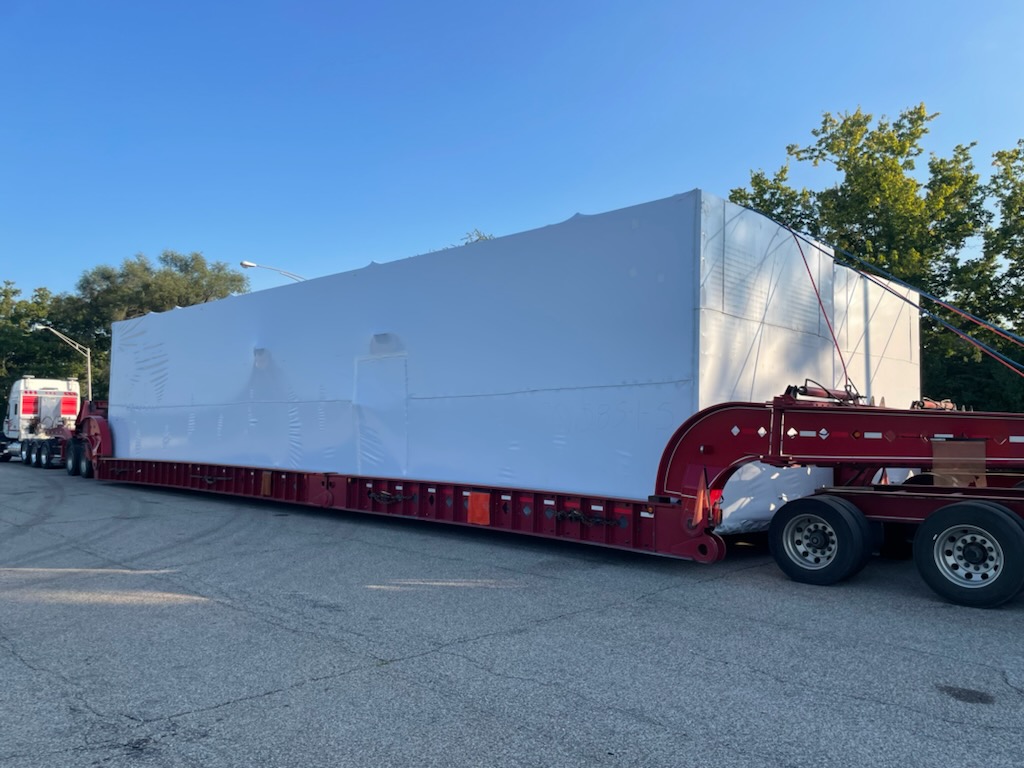
Transhield’s shrinkable fabric covers heat-shrink to shape for an aerodynamic, snug fit. This prevents wind from getting underneath during highway transit and keeps rain and snow out throughout the shipment.
VCI Technology for Corrosion Prevention
If your equipment has significant metal exposure or will be in transit for an extended period, covers containing VCI additives provide an extra layer of defense. Vapor corrosion inhibitors work by releasing molecules into the enclosed space under the cover. These molecules travel through the space and bond with metal surfaces, forming an invisible protective layer that blocks moisture and oxygen. In testing, Transhield’s VCI-equipped covers have reduced corrosion by up to 95%.
This matters especially for equipment spending time in high-humidity environments, near coastal areas, or in transit during winter when road salt is in the air.
Once your equipment is covered and ready, proper loading and securement are the next priority.
Loading and Securing Heavy Equipment
Proper loading is where many equipment shipments run into trouble. Heavy duty machinery that shifts during transit can damage itself, damage the trailer, and create serious safety hazards on the road.
Prepare the Equipment
Before loading, do a full walkthrough of the machine. Document its condition with photos. Remove or secure any loose attachments, tools, or accessories. Lower booms, buckets, and other moving parts to their lowest position to reduce height and lower the center of gravity. Drain excess fuel if required by your shipping company or by regulation.
Use the Right Tie-Down Points
Every piece of heavy equipment has designated tie-down points built into the frame. Using the wrong attachment points can damage the equipment or fail under the stress of transit. Confirm tie-down point locations before loading begins and make sure the crew securing the load knows where they are.
Follow Load Securement Standards
Federal regulations set minimum requirements for how heavy loads must be secured. These include minimum working load limits for tie-down equipment, chain requirements by equipment weight, and front, rear, and side securement rules. A reputable heavy equipment shipping company follows these safety standards, but it’s worth confirming their process before you hand over your equipment.
After Delivery: Don’t Skip the Inspection
Once the equipment arrives, inspect it before signing off on delivery. Compare its condition against the photos you took before loading. Check for any signs of moisture intrusion, surface damage, or shifting that may have occurred in transit.
If equipment will go directly into storage rather than service, keep your protective covers in place. Removing them prematurely exposes equipment to the same environmental hazards all over again. Long-term storage after transit is common for construction equipment and agricultural equipment, and maintaining cover integrity during that period is just as important as protecting the machine during the move itself.
Ship With Confidence
Heavy equipment shipping is manageable with the right preparation and the right partners. Taking the time to plan your shipment, choose the right equipment, and protect your machines during transit keeps your investment intact and your projects on schedule.
Transhield has spent over 30 years developing protective cover solutions for industrial, commercial, and military applications. Our custom covers are designed to fit your specific equipment and built to handle the demands of heavy equipment transport. With a 97.4% customer retention rate and ISO 9001:2015 certification, we’re ready to help you ship with confidence.
Contact Transhield today to discuss protective cover solutions for your next heavy equipment shipment.