
A new finish does more than look good. It shields metal from rust, keeps equipment in the factory-fresh condition customers expect on delivery, and protects the reputation behind every unit you ship. But hauling construction equipment, agricultural equipment, and other heavy machinery hundreds or thousands of miles across state lines puts that finish at serious risk. Chips, scratches, faded paint, and early corrosion start as small problems and turn into expensive repairs.
This guide walks through what causes finish damage during heavy equipment transportation, how to prevent it, and what to look for in a protection plan that actually works on the road.
What Causes Finish Damage During Long-Distance Transport?
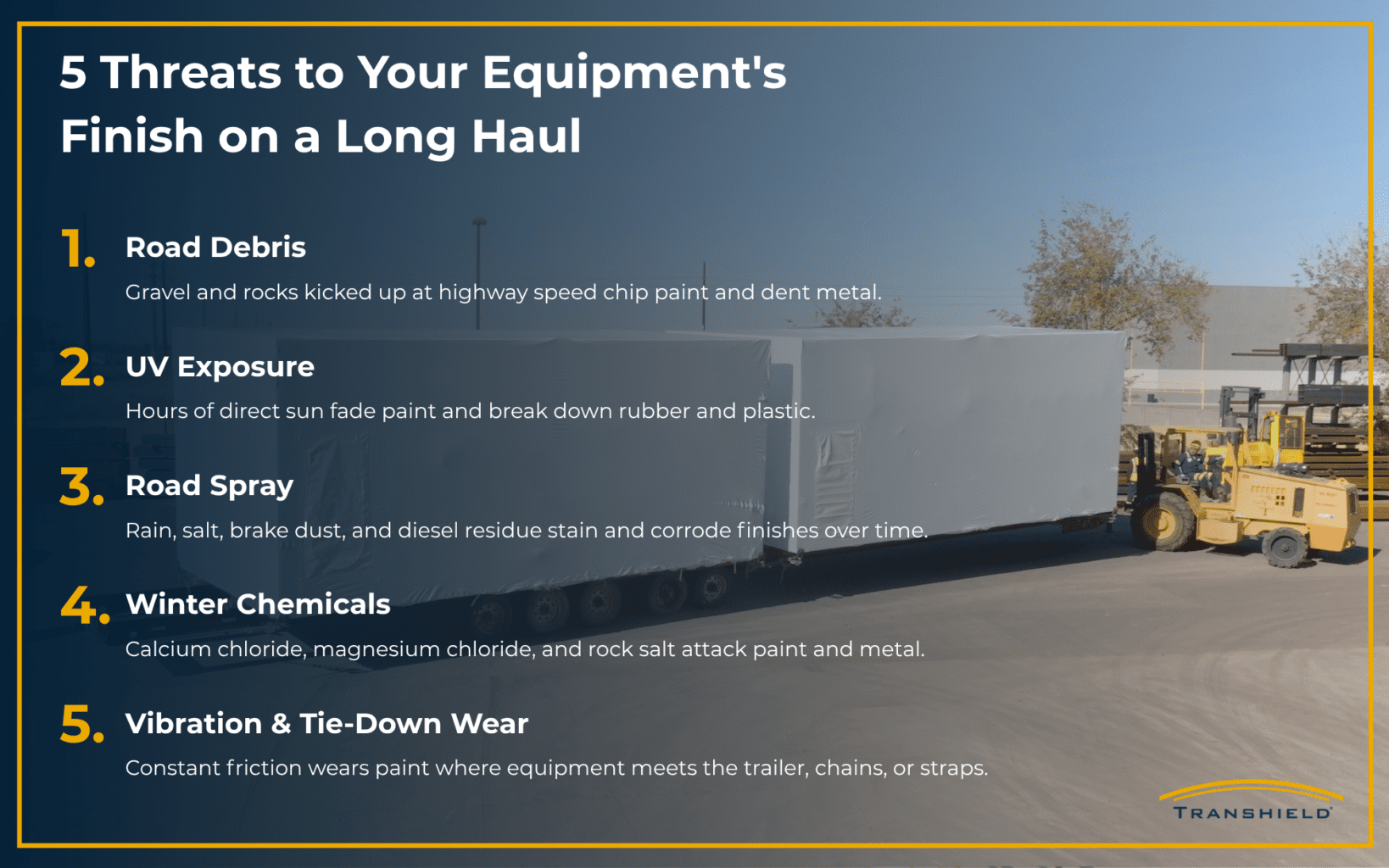
Finish damage rarely comes from one big event. It’s usually the result of smaller hits that add up over the course of a long haul. Understanding each threat helps you plan around it.
Road Debris and Flying Objects
Pebbles, gravel, and dirt kicked up by other vehicles are a constant risk. At highway speeds, even small debris can chip paint, dent sheet metal, or crack glass. Equipment riding on flatbed trailers takes this punishment head-on for every mile of the trip.
UV Exposure
Extended sun exposure breaks down paint, fades color, and accelerates rubber and plastic degradation. A multi-day haul through sunny regions means hours of uninterrupted UV, and the damage adds up over the length of the trip.
Weather and Precipitation
Rain, sleet, snow, and hail all cause surface issues, but water itself is only part of the problem. What’s mixed in with it makes things worse. Road spray carries salt, industrial fallout, brake dust, and diesel residue that accelerate corrosion on exposed metal and can stain finishes over time, especially where paint is already chipped or thin.
Chemical Contact
Road chemicals are especially tough on finishes. Calcium chloride, magnesium chloride, and traditional rock salt all attack metal and paint. Equipment moving through winter conditions pick these chemicals up from road spray on highways where these treatments have been applied.
Vibration and Tie-Down Wear
Long hauls mean constant vibration. Any point where the equipment touches the trailer deck, chains, straps, or ratchets becomes a friction spot, and paint can wear down to bare metal over the course of the trip. Loading can cause similar damage when hardware is dropped, dragged, or cinched down against finished surfaces without padding.
Pre-Transport Preparation
Good protection starts before the equipment ever rolls onto the trailer.
1. Clean the Equipment Thoroughly
Dirt, grease, and debris can trap moisture and create abrasion points under any protective covering. Wash and dry all surfaces before loading, paying attention to seams, joints, and recessed areas where residue tends to collect.
2. Inspect and Document Condition
Photograph every side of the equipment before it leaves the facility. This documents the factory-fresh condition at the moment of departure and gives you clear evidence if damage turns up at the final destination. Strong pre-shipment records also support warranty and insurance claims and help resolve disputes with the shipping company or transport provider.
3. Touch Up Exposed Metal
If inspection turns up any bare metal (weld points, cut edges, or minor scuffs from staging), follow your paint or primer supplier’s instructions for touch-ups before the equipment ships. Exposed steel corrodes quickly once moisture reaches it, and handling these spots up front keeps small issues from turning into bigger ones in transit.
4. Protect Attachment Points
Areas where chains, straps, or ratchets will contact the finish are high-risk zones. A properly designed protective cover is the first line of defense, with a soft inner layer that keeps hardware from touching paint directly. For high-pressure tie-down points, soft padding, rubber mats, or corner protectors add another layer of protection where straps are cinched down hard.
Protective Covers: The Difference Maker
Tarps and generic wraps are the old way of doing things. They flap in the wind, leave gaps, and trap moisture underneath, accelerating corrosion. For long-distance heavy equipment transport, custom covers built for the specific machine deliver far better results.
A well-designed cover addresses multiple threats at once:
| Threat | How a Quality Cover Helps |
| Road debris | Absorbs impact before it reaches painted surfaces |
| UV rays | Blocks sunlight that breaks down paint and rubber |
| Rain and snow | Sheds water and prevents pooling on surfaces |
| Road salt and chemicals | Creates a barrier between contaminants and metal |
| Dust and airborne pollutants | Seals out particles that scratch and etch finishes |
| Condensation | Wicks moisture away instead of trapping it |
What to Look for in a Transport Cover
Not all covers are created equal. When choosing protection for heavy equipment shipping, look for these features:
- Custom fit: A cover designed for your specific equipment leaves limited gaps where debris or moisture can enter.
- Soft inner layer: A non-woven interior protects painted surfaces from scratching and etching during vibration.
- Shrinkable construction: Heat-shrinkable fabric creates a tight, aerodynamic fit that won’t flap or loosen at highway speeds.
- Water resistance: Sheds rain, snow, and road spray while keeping interiors dry.
- UV blocking: Shields paint, rubber, and glass from sun damage over long hauls.
- Secure fastening: Ratchets, hook-and-loop closures, and reinforced tie-down points hold the cover in place through wind and weather.
At Transhield, we build custom covers around every one of these features, sized and engineered for each specific piece of equipment you need shipped.
Corrosion Protection for Long Hauls
Finish damage and corrosion often go hand in hand. Scratches and chips expose bare metal, and once moisture reaches that surface, rust follows. For long-distance hauls, especially those crossing multiple climates or including storage time at the final destination, covers containing VCI additives add another layer of defense.
Vapor corrosion inhibitors release molecules that settle on metal surfaces and form an invisible barrier against moisture and oxygen. The protection reaches recessed areas, hydraulic systems, and other hard-to-cover components that a physical barrier alone can’t fully shield. In testing, Transhield covers containing VCI additives slowed corrosion by up to 95% compared to unprotected equipment.
Smart Loading and Route Considerations
Even the best cover benefits from smart handling on the road.
- Work with experienced heavy haulers. Logistics professionals who specialize in heavy load transport know how to secure equipment without damaging it.
- Review tie-down procedures. Proper loading keeps the machine stable without over-tightening straps against finished surfaces.
- Plan routes carefully. Well-maintained highways reduce vibration and debris exposure compared with construction zones or poorly surfaced stretches.
- Coordinate escort vehicles when required. For oversize load shipments, escorts help manage clearances and reduce the risk of contact damage from obstacles along the route.
- Confirm safety protocols with your transport provider. Clear communication about cover handling, loading procedures, and inspection points protects both the equipment and everyone involved.
Why This Matters for Your Bottom Line
Finish damage on equipment carries real costs. It drives up warranty claims, delays customer acceptance, damages brand reputation, and throws off project deadlines. A piece of machinery that arrives at a dealer or job site with chipped paint and surface rust tells a story no one wants to hear, and fixing it after the fact costs far more than preventing it up front.
Transhield has spent years in the transport industry, helping manufacturers, logistics professionals, and fleet managers protect industrial equipment, construction machinery, and other specialized units during heavy hauling and long-term storage. Our custom covers use a three-layer system with patented adhesive that emits VCIs, combining physical protection with corrosion-fighting technology built for the unique challenges of long-distance transport.
Ready to protect your next shipment from start to finish? Contact Transhield today to discuss custom cover solutions for your equipment.