
 min read


RV Transit Protection: A Fiberglass Cover Solution
Equipment Protection
RV manufacturers work hard to build quality products. RV dealers and their customers expect every new recreational vehicle, fifth wheel, Class A, and Class C alike, to arrive in perfect condition and ready for the road. Over-the-road shipping often gets in the way. Delicate fiberglass front caps endure thousands of miles of wind, debris, and rough weather on the way to their destination, and many RV builders struggle to prevent chips, cracks, and blemishes along the route.
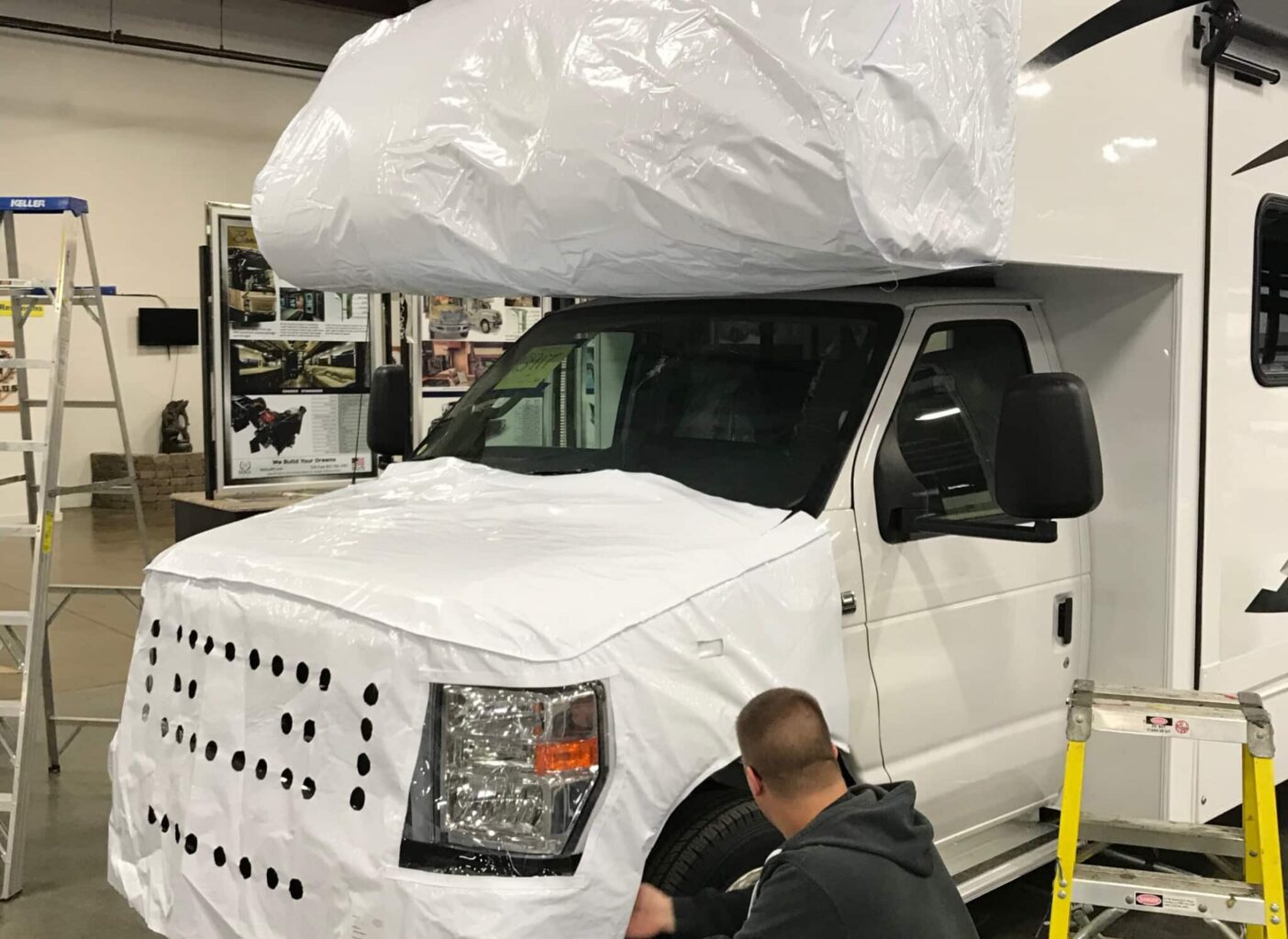
This guide covers why fiberglass takes damage in transit, what that damage costs manufacturers and dealers, and how a custom transit cover solves the problem.
Why RV Fiberglass Gets Damaged in Transit
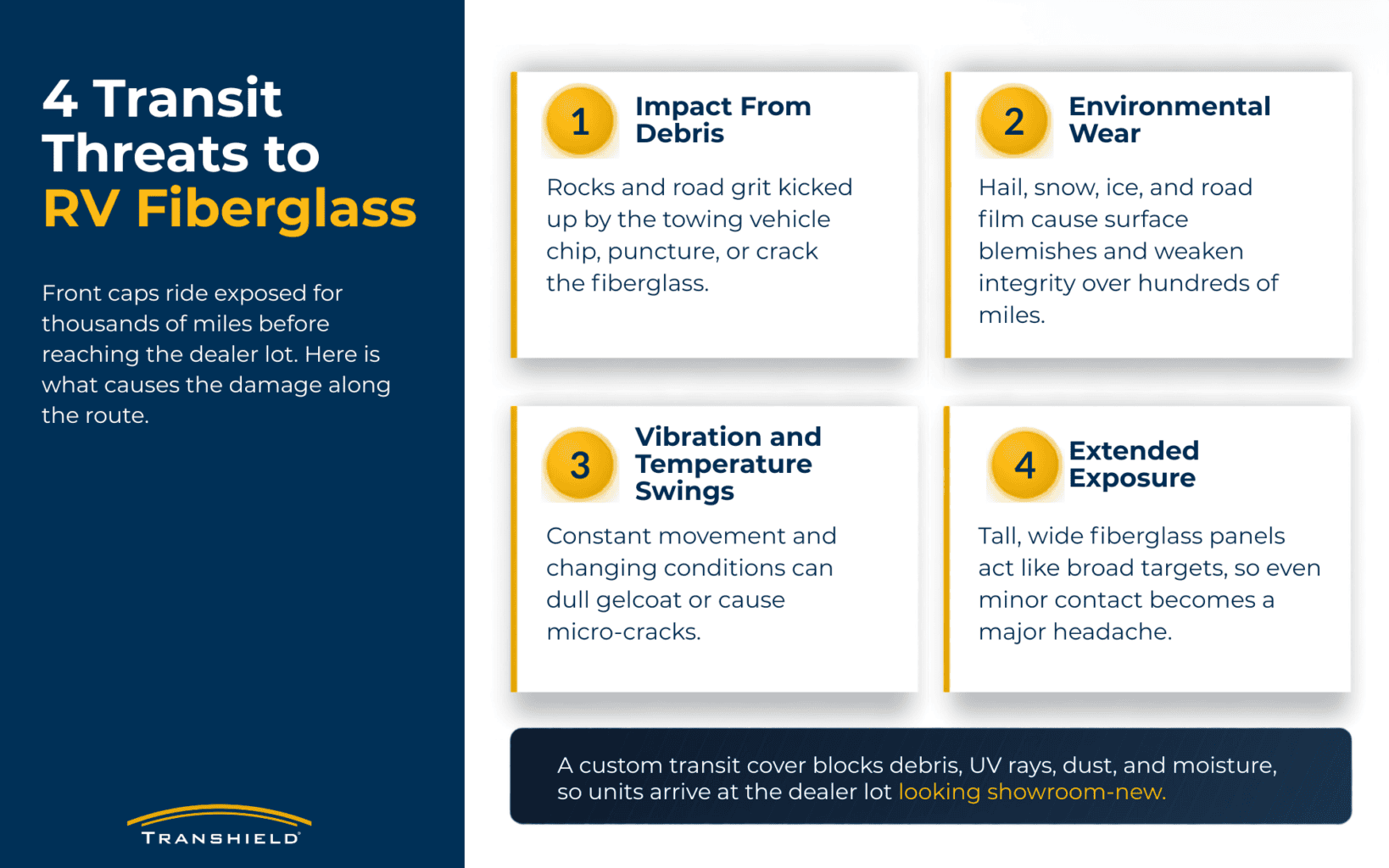
In the past, many manufacturers shipped RV front caps uncovered, accepting the risk of damage and absorbing the costly repairs and warranty claims that followed. Fiberglass panels are usually tall and exposed, which makes them magnets for rocks kicked up by the towing vehicle, along with hail, snow, ice, and grime that accumulates over long hauls. Because a front cap is one large, uninterrupted surface, even minor contact tends to leave a mark.
The problem applies across the product line. Towable RVs like travel trailers, 5th wheels, and toy haulers ride directly behind a towing vehicle that throws road debris straight at the front cap. Class A and Class C motorhomes are often driven rather than flat-bedded, so their fiberglass surfaces face the same risk of dings and cracks. The damage is not always sudden either. Constant vibration and swings in temperature over a long haul can dull the gelcoat or open up micro-cracks that only show later. Even a factory-applied ceramic coating protects the finish against grime and UV, not against a rock at highway speed.
For a longer list of the most damaging elements to watch for, see this resource: 5 most harmful elements to your equipment.
What Transit Damage Costs Manufacturers and Dealers
A cracked front cap is more than a cosmetic issue. The hidden costs of replacement parts, extra labor, shipping, and delayed deliveries add up quickly and threaten both your bottom line and customer satisfaction.
There is a downstream cost too. When a unit arrives damaged, the RV dealer either sends it back, repairs it on site, or sells it at a discount. Each option cuts into the margin and delays the sale. If the damage isn’t caught until the RV owner takes delivery, the manufacturer covers the warranty claim and the repair bills, and ownership starts with a repair instead of a road trip.
The strongest RV protection strategy starts at the plant, before the unit ships. A transit protection plan costs far less than repairing fiberglass afterward.
The Benefits of RV Transit Protection Covers
A well-designed transit cover gives manufacturers a simple form of coverage against the most common causes of shipping damage:
- Blocks UV damage to gelcoat and fiberglass
- Reduces impact from rocks and road debris
- Keeps dust and moisture out during travel
- Cuts warranty claims tied to transit damage
- Adds financial protection against repair and rework costs
- Delivers units that look showroom-new on arrival
Transhield’s Experience Protecting Fiberglass Components
For years, Transhield has helped RV and boat manufacturers protect fiberglass components with custom-fit, shrinkable covers. The approach is simple by design. No more worrying about whether your product will arrive safely, or dreading the call from a dealer reporting damage and demanding a replacement or repair. We understand the pain of costly warranty claims and disappointed customers, and we built our RV transit covers to prevent both.
How Transhield RV Transit Covers Work
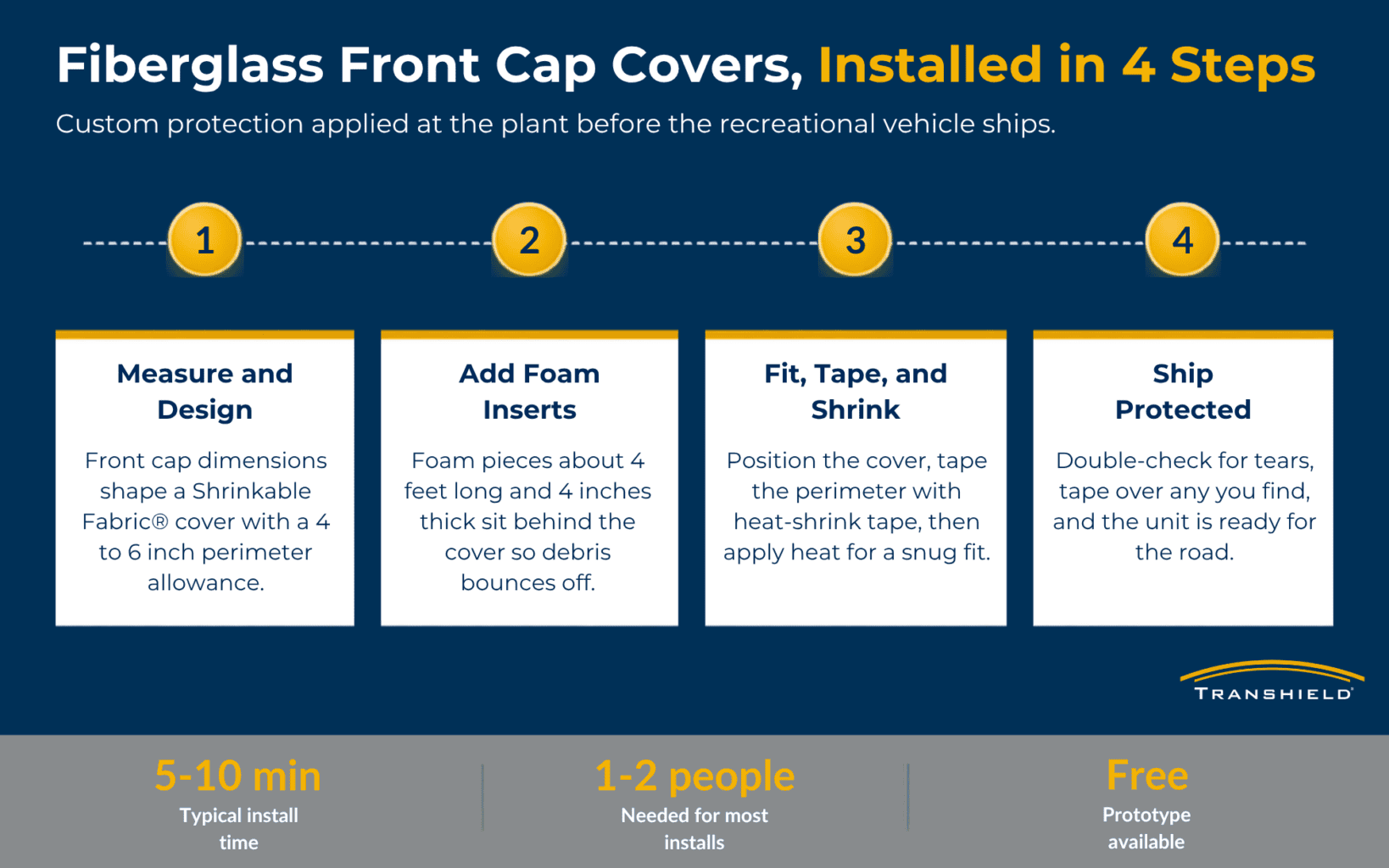
The process runs in four steps.
Step 1: Proper Cover Design
Transhield starts by measuring the front cap’s dimensions. From these measurements, we fabricate a piece of our Shrinkable Fabric®, usually leaving an additional 4 to 6 inches of allowance along the perimeter. This extra material creates a secure fit tailored to your specific model, and the process works the same for a fifth wheel front cap as it does for a Class A.
Step 2: Integrated Foam Protection
To guard against impact damage, we pre-install foam pieces, about 4 feet long and 4 inches thick, behind the cover. These foam inserts create a trampoline effect, causing rocks and debris to bounce off rather than chip away at the fiberglass. The number and placement of foam pieces can be customized based on the size and shape of your front cap.
Step 3: Careful Installation
Once the cover arrives, unbox it only when you are ready to install so you avoid introducing dust or debris. Position it over the front cap and secure it at the top or corners with tape. Make any needed adjustments, then tape around the entire perimeter using heat-shrink tape or TransTape® for a snug fit. Apply heat to shrink the cover to the cap’s contours, forming a tight protective layer without scratching. Double-check for tears and tape them over if needed.
Step 4: Quick, Cost-Effective Application
Installation typically takes 5 to 10 minutes and requires only one or two people, far less time and expense than repairing damaged fiberglass. If you are hesitant, Transhield can provide a prototype for free so you can see the fit and finish on your own product line.
Protection That Continues After the Truck Stops
Transit is rarely the end of the journey. Many units sit in a storage yard or on a dealer lot for weeks before they sell, and pulling the cover off on arrival leaves the fiberglass exposed all over again. A Transhield cover can stay in place through that storage period.
The soft, non-woven interior layer prevents etching and scratching on finished surfaces while wicking moisture away from the unit, so condensation does not build up underneath. The UV-resistant outer layer keeps blocking sun exposure on the lot the same way it did on the highway. One protection package carries the unit through shipping and storage until a new owner drives it home.
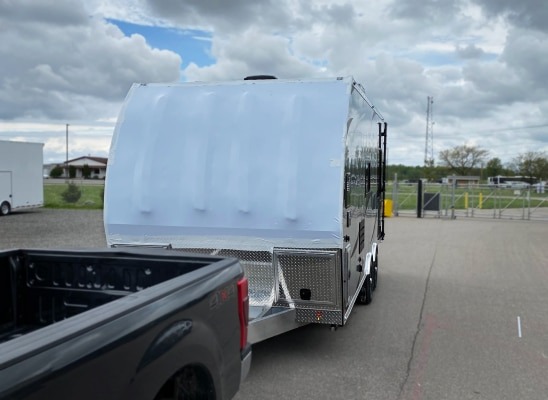
Fewer Claims, Better Deliveries
When your recreational vehicles roll out protected, the results show up quickly: fewer warranty claims, less time spent on repair bills, and fewer unhappy phone calls from dealers and customers. Products arrive looking showroom-new, which strengthens your brand’s reputation and gives your dealer network confidence in every delivery. That is real peace of mind for everyone in the supply chain.
If transit damage has been driving up your warranty costs, a custom cover is a proven, cost-effective fix.Contact Transhield to request a free prototype, or browse our selection of RV covers to see the options for your product line.


