
At a Glance: UV rays slowly break down an RV’s exterior, fading paint, cracking rubber seals, dry-rotting tires, and degrading the roof. Across a fleet sitting on open lots or moving on transport trailers, that damage multiplies fast and can trigger warranty claims before a sale. The most practical fleet-scale defense is a custom fit cover with UV-resistant, breathable fabric that shields the whole unit during storage and transport.
Sunlight is one of the toughest forces an RV faces, and it never takes a day off. The tricky part is how quietly it works. A few weeks of sun exposure leaves no obvious mark, so the damage rarely registers until paint has dulled or a seal has gone brittle.
For a single owner, that slow fade is a minor annoyance. For a manufacturer, distributor, or dealer responsible for dozens or hundreds of units, it is a recurring cost that lands before a single RV reaches a customer. This guide covers how UV rays affect recreational vehicles, why fleet protection calls for a different approach, and how to keep every unit looking factory-fresh during transport and storage.
How UV Rays Damage an RV’s Exterior
UV radiation is the invisible part of the sun’s rays that carries enough energy to break materials down at the molecular level. On an RV, those rays attack paint, rubber, and plastics from the surface inward, weakening them with every hour of exposure. The damage is gradual, which is part of the problem. By the time it shows, the harm is already done.
Here is how harmful UV rays affect the main components of an RV:
| Component | What UV Exposure Does |
| RV roof | Rubber and TPO membranes dry out, chalk, and crack, opening the door to leaks |
| Paint and decals | Sun exposure causes fading, oxidation, and the chalky look of premature aging |
| Rubber seals | UV damage dries and hardens the rubber seals around windows, doors, and storage compartments |
| RV tires | Sidewalls dry-rot and crack from sun and heat, even on tires with low mileage |
| Plastics and trim | Lenses, vents, and fender skirts yellow, turn brittle, and crack |
Direct exposure also pairs with other elements. Black streaks form when dirt and runoff combine with sun-baked surfaces, and once oxidation sets in, those marks are harder to remove. Heat speeds up the whole process, so an RV sitting on a sunny lot for months ages faster than mileage alone would suggest.
Why Fleet UV Protection Is a Different Challenge
Protecting one RV in a driveway is simple. Protecting a fleet during transport and storage is another matter. Recreational vehicles, including travel trailers, fifth wheels, and toy haulers, often sit exposed on open lots or travel long distances on open trailers before they are ever sold. A few factors make sun protection harder to manage at this scale:
- Volume: Sun damage that looks minor on one unit becomes a costly pattern across an entire inventory.
- Time in storage: Units can wait weeks or months between production and delivery, all under direct sun exposure.
- Transport: Moving down the highway adds road grime, debris, rain, and wind on top of UV radiation.
- Warranty exposure: Faded paint or cracked seals on a new unit can trigger warranty claims and chip away at buyer confidence.
For operations at this scale, sun protection is part of protecting product value, not just appearance.
Common Ways to Protect RVs From UV Damage
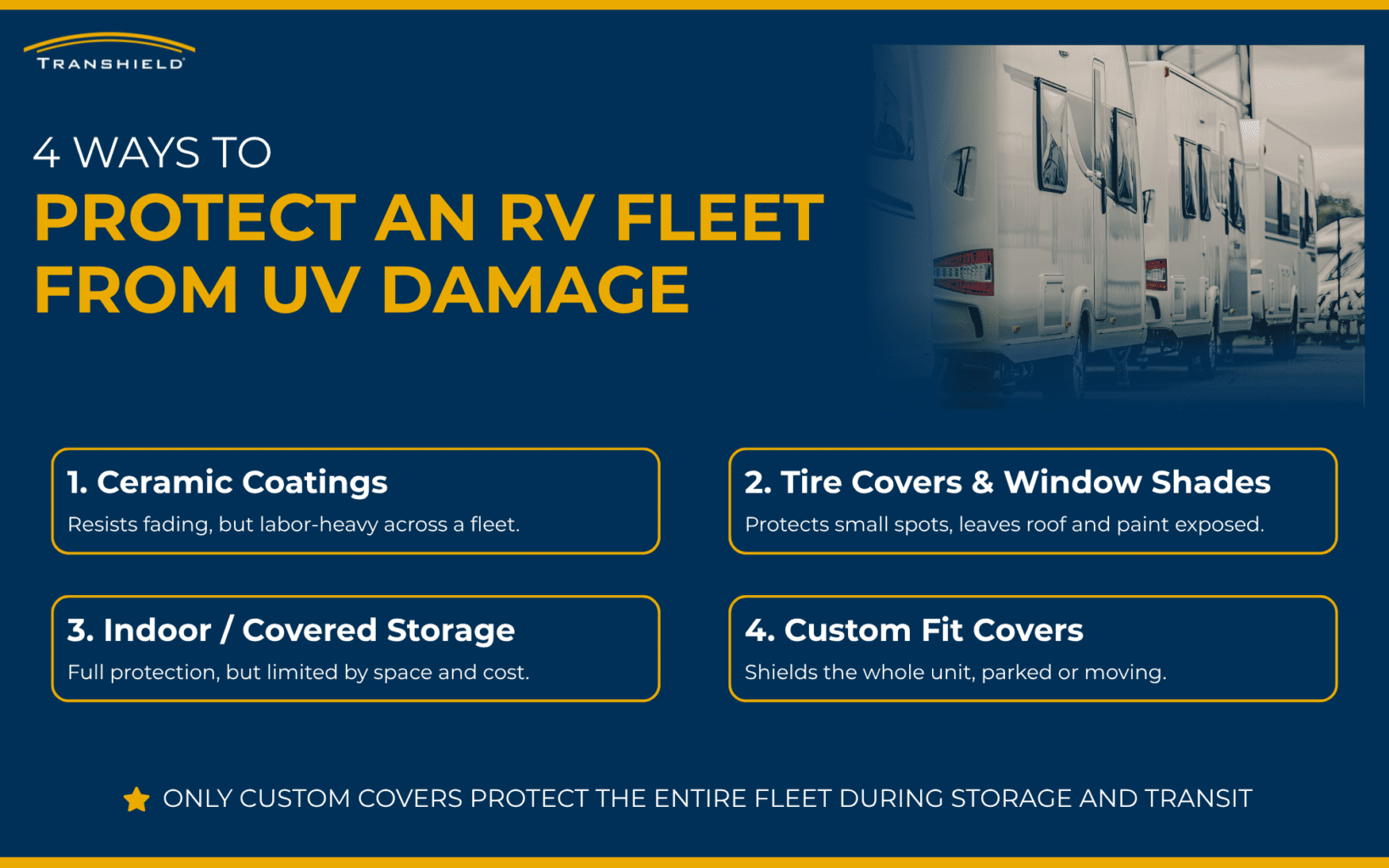
There are several ways to reduce UV damage on a recreational vehicle. Each has a place, though not all of them scale well across a fleet.
Ceramic Coatings
A ceramic coating adds a protective layer over the RV’s exterior that helps resist fading and makes cleaning easier. Coatings work well for finished surfaces, but they require application labor, cure time, and reapplication down the road, which adds up quickly across many units.
Tire Covers and Window Shades
Tire covers shield RV tires from direct sunlight and slow the dry-rotting that ruins sidewalls. A window shade or windshield cover protects the dash and interior from sun exposure. These accessories help with specific trouble spots, but they only cover small areas and leave the roof, paint, and seals exposed.
Indoor or Covered Storage
Keeping recreational vehicles indoors offers strong protection from sun, rain, and snow. The catch is space and cost. Few operations have enough covered square footage to shelter an entire inventory of trailers and motorhomes, especially oversized units.
Custom Fit Covers
For full coverage that travels with the unit, custom fit covers are the most practical option. A quality RV cover shields the entire RV’s exterior, roof, rubber seals, and storage compartments at once, both in storage and during transport. Unlike a generic tarp, a custom cover follows the shape of the unit, so there are limited gaps where the sun, moisture, or debris can sneak in.
| Method | Coverage | Fits Fleet Use? |
| Ceramic coating | Painted surfaces only | Labor-heavy at scale |
| Tire covers / window shade | Small, specific areas | Partial protection only |
| Indoor storage | Full, while parked | Limited by space and cost |
| Custom fit cover | Full unit, parked or moving | Yes |
What to Look for in the Best RV Cover for a Fleet
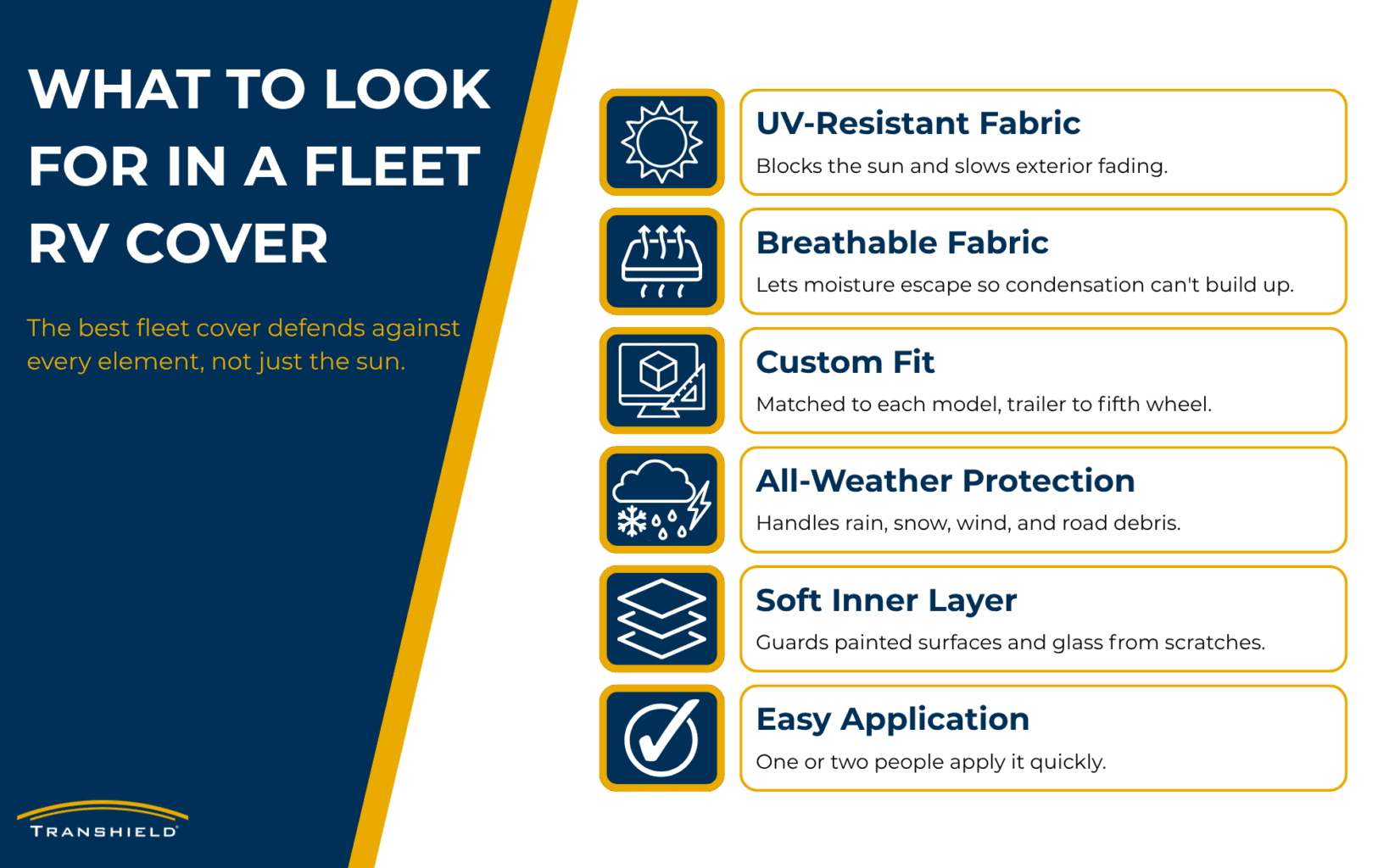
Not every cover holds up to fleet demands. When comparing options for transport and long-term storage, look for:
- UV-resistant fabric that blocks the sun’s rays and slows fading across the whole RV’s exterior.
- Breathable fabric that lets trapped moisture escape so condensation does not build up under the cover.
- A custom fit matched to each model, from a compact travel trailer to a large fifth wheel or toy hauler.
- Harsh weather protection that handles rain, snow, wind, dirt, and road debris, not just sun.
- A soft inner layer that will not scratch painted surfaces or window glass.
- Easy application so crews can cover units quickly with minimal labor.
A cover that blocks harsh UV rays but traps moisture, or one that repels rain but scratches the finish, only trades one problem for another. The best RV cover handles environmental contaminants from every direction.
How Transhield Protects RV Fleets From Sun Damage
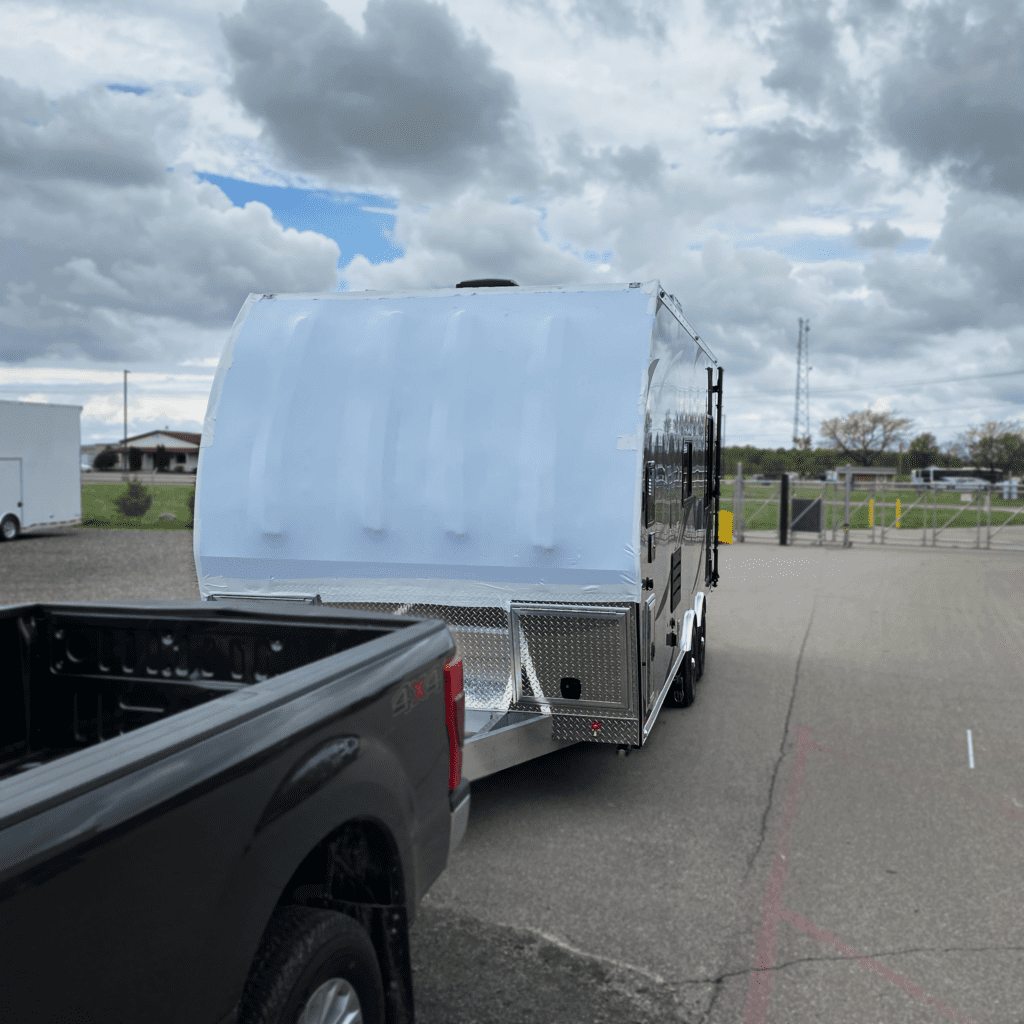
At Transhield, we have spent over 30 years building custom covers for manufacturers, distributors, and fleet operators across the RV and motorhome industry. Our covers are engineered to protect recreational vehicles during transport and storage, keeping units in factory-fresh condition from the production line to the showroom floor.
Each cover uses a three-layer system with a patented adhesive that emits VCIs:
- Outer layer: A UV-resistant polyethylene film that blocks harmful UV rays and repels rain and snow.
- Middle layer: A hot-melt adhesive that can include Vapor Corrosion Inhibitor (VCI) additives to slow corrosion on metal components by up to 95%.
- Inner layer: A soft, non-woven material that pulls moisture away from surfaces while protecting paint and trim from scratching.
When heat-shrunk, the fabric forms a snug, aerodynamic fit that holds up through moderate wind and highway speeds. The result is full sun protection for the roof, paint, seals, RV tires, and storage compartments, plus a barrier against moisture and debris, all in one cover built for your specific units.
Sun damage is slow, steady, and expensive once it adds up across a fleet. The right cover keeps UV radiation, moisture, and harsh weather off your inventory so every recreational vehicle arrives ready to sell. Ready to protect your RV fleet from sun damage? Contact Transhield today to talk through a custom cover solution built for your units.