
Intermodal shipping has become one of the most practical ways to move freight across the country and around the world. By combining truck, rail, and ocean transport into a single journey, it trims fuel costs, lowers carbon footprint, and works around the driver shortages that strain long-haul trucking. For manufacturers and distributors moving equipment over long distances, the appeal is easy to see.
There is a tradeoff, though. Every time freight changes modes, it passes through another handoff and another set of conditions, and an intermodal journey can stretch on for weeks. For the machinery riding inside the container, that adds up to a long stretch of temperature swings and trapped moisture, with no one watching over it. This guide covers how intermodal shipping works and how to keep your equipment protected from the first mile to the final destination.
How Intermodal Shipping Works
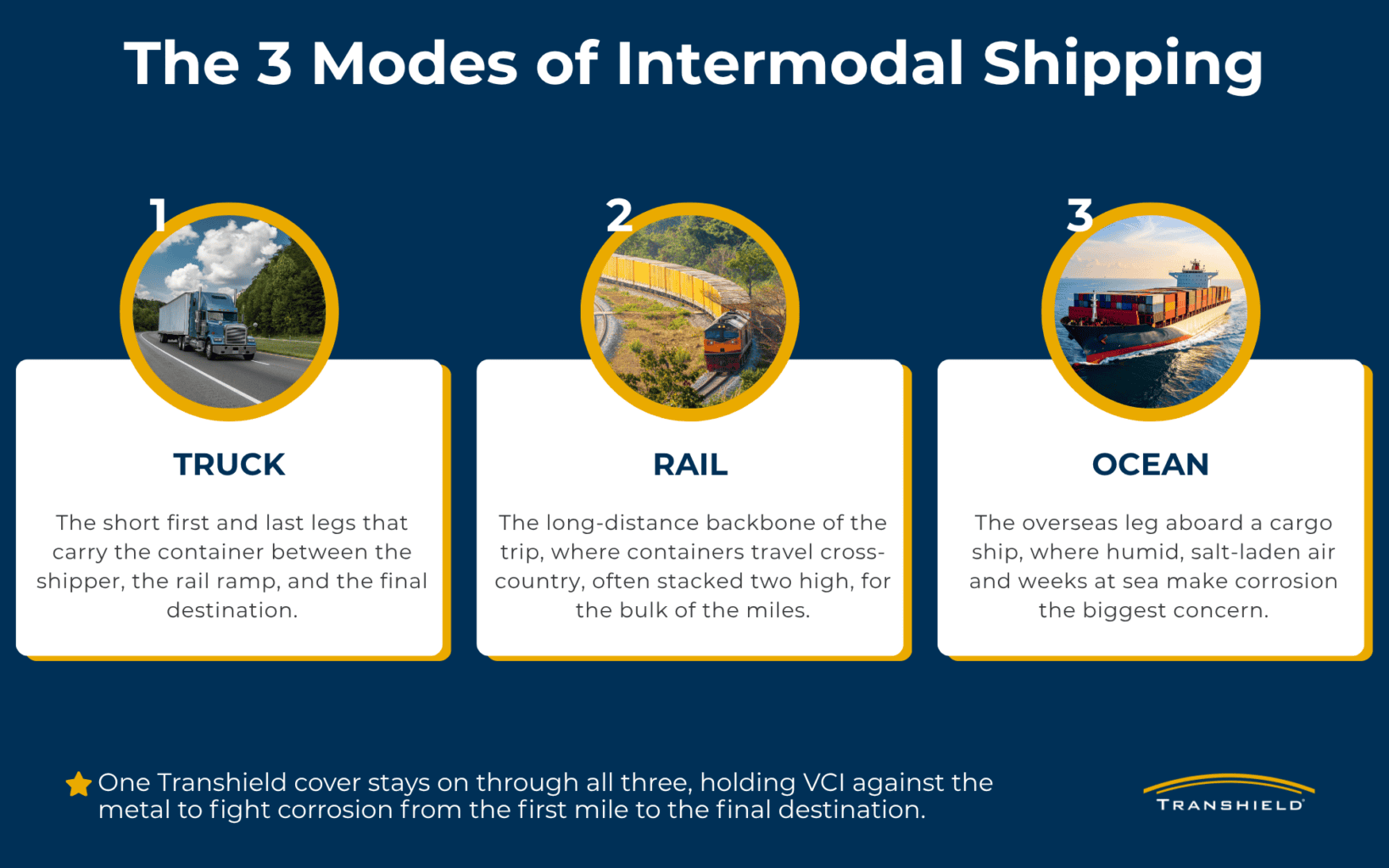
Intermodal transportation moves freight in a standardized container that travels by more than one mode of transportation without anyone unloading the cargo inside. The container itself gets lifted from one mode to the next, which is what makes the system efficient. Domestic intermodal shipping usually pairs truck and rail across the United States, while international moves add an ocean leg.
A typical journey uses three modes:
| Leg | What Happens | What the Equipment Faces |
| Drayage (truck) | A drayage carrier hauls the container between the shipper, the rail ramp, and the final delivery point | Vibration and temperature shifts on the short road legs |
| Rail | A railroad moves the container long-distance, often as double-stacked containers | Sustained vibration, wide temperature swings, and dwell time waiting at the rail yard |
| Ocean | A cargo ship carries the container overseas for international intermodal freight | Humid, salt-laden air and big temperature swings that cause condensation inside the box, over weeks at sea |
Most freight rides in standard shipping containers, often 40-foot containers, moving through intermodal terminals and rail ramps. An intermodal carrier coordinates the whole route, handing the container off from truck to rail to ship along the way.
A closed container blocks the obvious threats, turning away rain, spray, and road debris the way you would expect. What it does not block is the temperature swings and trapped humidity inside, and those are what actually drive corrosion.
Why Companies Choose Intermodal
The benefits of intermodal shipping come down to cost and sustainability.
- Lower cost: Moving the long-distance leg by rail transport usually costs less than trucking the whole way. Rail carries a ton of freight much farther on a gallon of fuel than a truck, so that fuel efficiency cuts fuel consumption and fuel costs, and the cost savings grow over distance and volume.
- Lower emissions: That same efficiency means a smaller carbon footprint and fewer greenhouse gas emissions, which helps operations meet sustainability goals.
- Capacity: An extensive rail network adds capacity and helps work around driver shortages in the trucking market.
For a lot of operations moving freight through a global supply chain, intermodal transport hits the cost efficiency and environmental impact targets that direct trucking cannot. What those benefits do not change is the toll the journey takes on the equipment.
What an Intermodal Journey Puts Your Equipment Through
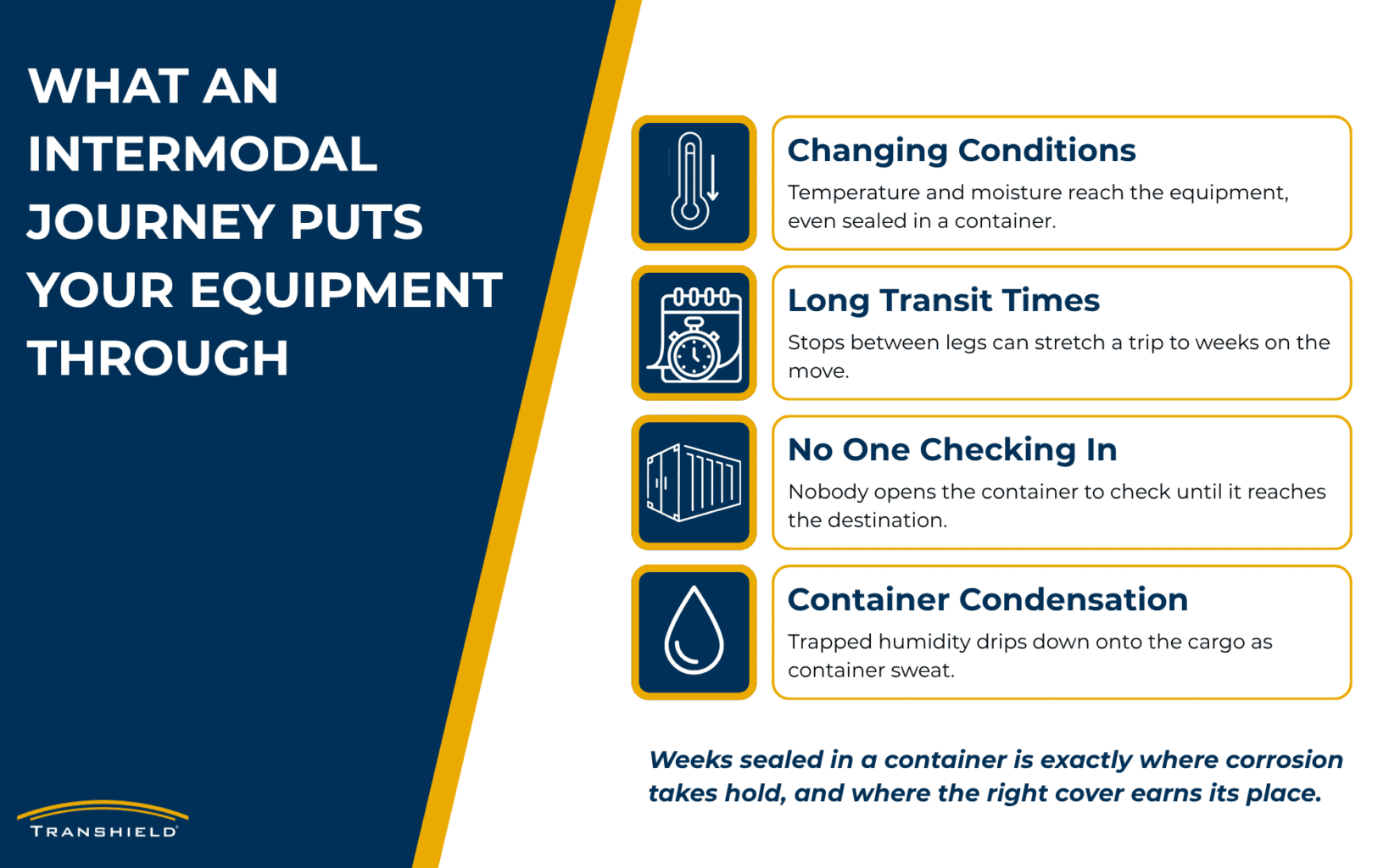
Intermodal shipping is efficient for the container. It is demanding on whatever rides inside. A few things set it apart from a single-mode haul:
- Changing conditions the whole way: One shipment can run from a hot terminal yard to a cold rail crossing to humid ocean air. The container blocks the rain and spray, but those temperature and moisture changes pass right through to the equipment.
- Long transit times: Intermodal moves are slower than direct trucking. Add the time spent waiting at an intermodal terminal or rail yard between legs, and equipment can be in transit for weeks.
- No one checking in: Once a container is sealed and loaded, no one opens it to look at the machinery until it reaches the final destination. Whatever protection is in place has to last the whole way on its own.
- Container condensation: A sealed container is not as dry as it looks. As temperatures swing between day and night or between climates, the humid space inside condenses into water that drips onto the cargo, a problem shippers call container sweat.
Protecting Equipment Across Every Leg
Because no one tends the equipment between modes, the protection has to be self-sufficient and built for the entire trip. A custom cover designed for the specific machine does that across road, rail, and sea.
One Cover for the Whole Journey
A cover built for the exact machine seals the equipment before it ever goes into the container and stays put through every transfer and every hour of dwell time. That fit matters because an intermodal trip is full of movement: cranes lift the container from truck to rail to ship, and the load gets jostled at each handoff. A close-fitting cover holds its position through all of it, with no need to re-secure it between legs. Shrinkable fabric tightens to the shape of the equipment so it stays put over a trip measured in weeks rather than hours.
Why VCI Fits Intermodal So Well
Corrosion is the biggest threat on a long intermodal move, between the salt air at sea, the humidity, and the container sweat that forms inside the box. This is why a cover containing Vapor Corrosion Inhibitor (VCI) additives is best. VCI works by maintaining a concentration of protective molecules in the space around the metal. A custom cover releases the additives and holds the vapors against the equipment instead of letting them disperse. Quality VCI products blend multiple formulations to provide protection over the short, medium, and long term, which is what a journey of several weeks calls for.
This barrier slows the corrosion process by up to 95% in testing and keeps working as long as the cover stays on, so the equipment is protected through every leg without anyone lifting a finger.
Keep It Covered to the Final Destination
An intermodal shipment is not finished when the container comes off the ship, train, or truck. The equipment may sit in a yard or warehouse before it is unpacked and put to work. Leaving the cover in place through that last stretch keeps the protection going until the machine is actually needed.
Prepare for a Trip You Cannot Supervise
Because an intermodal journey passes through several carriers with no one inspecting the equipment along the way, the prep before loading matters more than it would on a short haul.
- Clean the equipment first: Dirt, grease, and salt residue hold moisture and feed corrosion over a long trip, so starting clean removes that head start.
- Document the condition: Photograph the machine before it ships. With multiple carriers handling the container, a clear record is what settles a claim if damage turns up at the final destination.
- Secure everything inside: Block, brace, and tie the equipment down so it does not shift during transfers or rail vibration.
- Cover it for the full journey: Fit the protective cover before the equipment goes into the container, so it is sealed in from the very first leg.
How Transhield Protects Intermodal Shipments
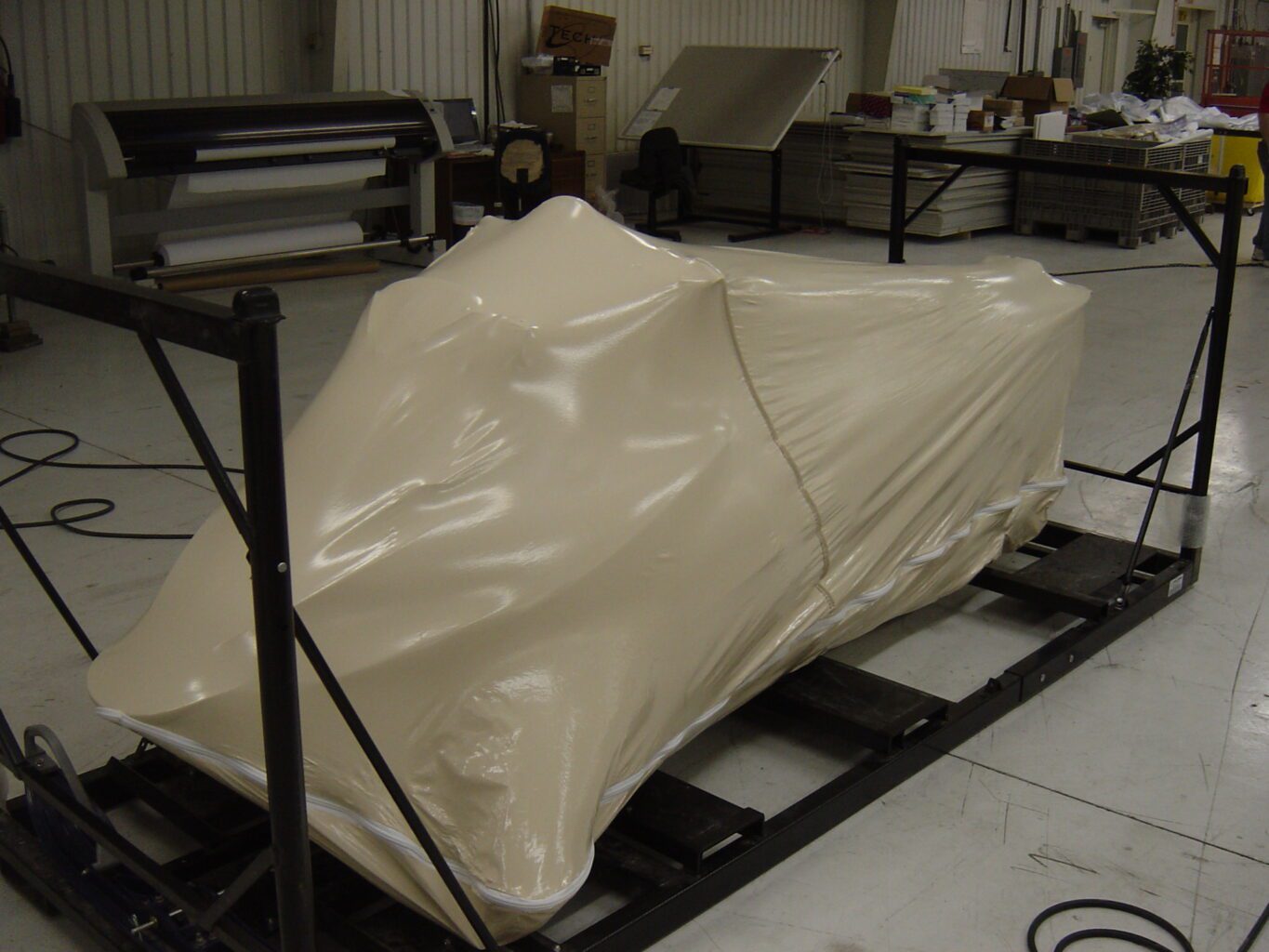
Transhield has spent more than 30 years building protective covers for industrial, manufacturing, and commercial freight moving across the United States and overseas. Every cover is built on a three-layer system with a patented adhesive that emits VCIs:
- Outer layer: A UV-resistant polyethylene film that turns away water and sunlight.
- Middle layer: A solvent-free hot-melt adhesive carrying the VCI chemistry that slows corrosion.
- Inner layer: A soft, non-woven face that pulls moisture off the metal and guards painted surfaces from scratching.
Made for each specific piece of equipment, Transhield’s custom covers guard against the moisture and condensation an intermodal trip brings and the VCI keeps working through every mile of road, rail, and sea. For equipment headed across the country or around the world, that is protection you can load and forget.
Protecting the equipment is what protects the savings. Intermodal shipping saves money and lowers your environmental impact. The right cover makes sure those savings do not come at the cost of equipment that arrives corroded or damaged. Backed by ISO 9001:2015 certification and a 97.4% customer retention rate, Transhield can help you ship with confidence.
Ready to protect your next intermodal shipment? Contact Transhield to talk through a custom cover built for your equipment.