
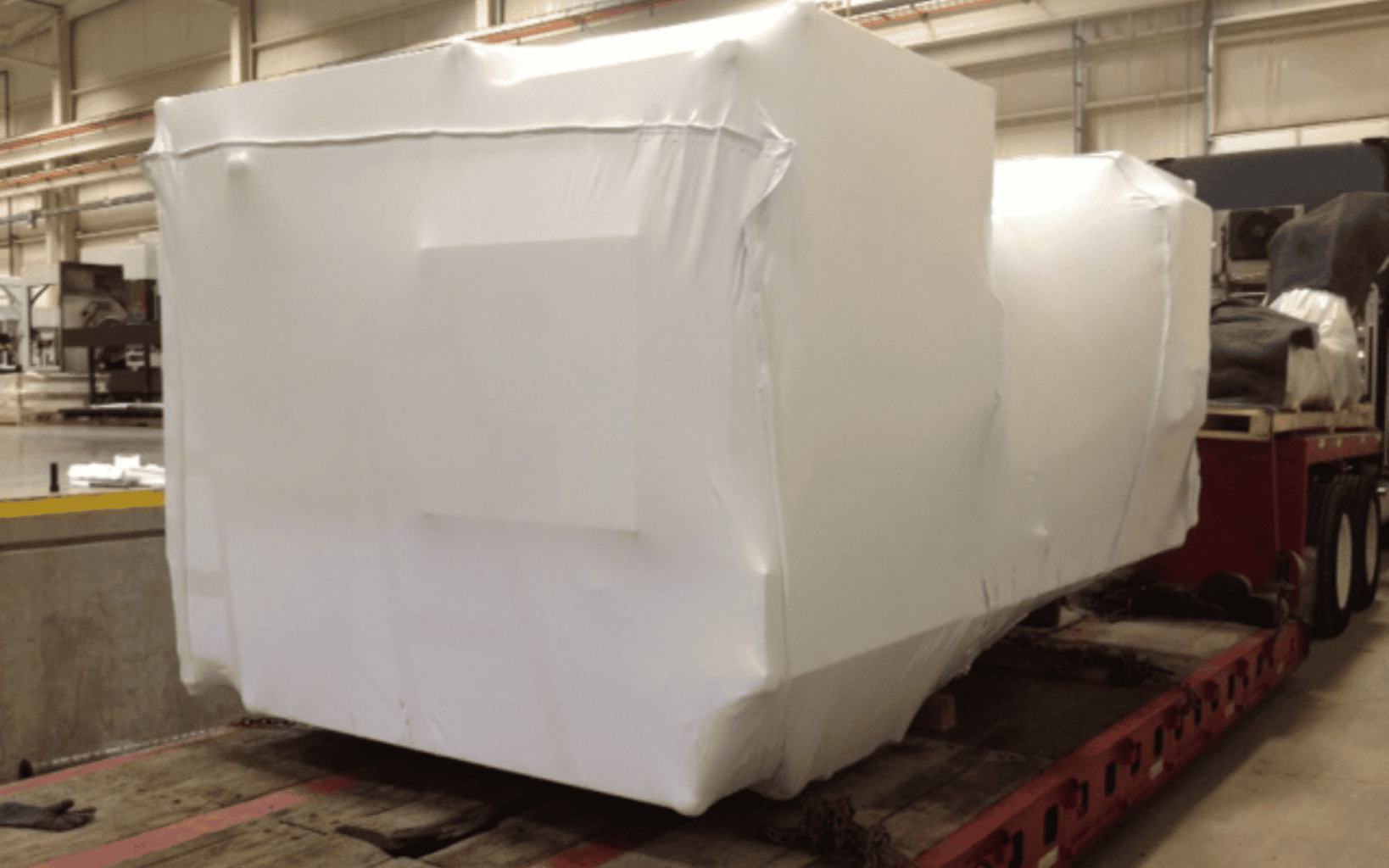
CNC tools are the cutters used to shape parts such as end mills, drill bits, and the tool holders that grip them. Together with the machines that run them, they are a major investment for any machine shop. Getting that equipment to a customer or into storage without a scratch is its own challenge. For the manufacturers and distributors who build and move it, the real risks are corrosion on precision surfaces, water damage to controls, and dings that turn a factory-fresh machine into a warranty claim before it is ever switched on.
This guide covers how to protect CNC machines and equipment during shipping and long-term storage, including how to prep the machine, protect the tooling that ships with it, and choose a cover that keeps moisture and debris out for the whole journey.
Why Protecting CNC Equipment Matters
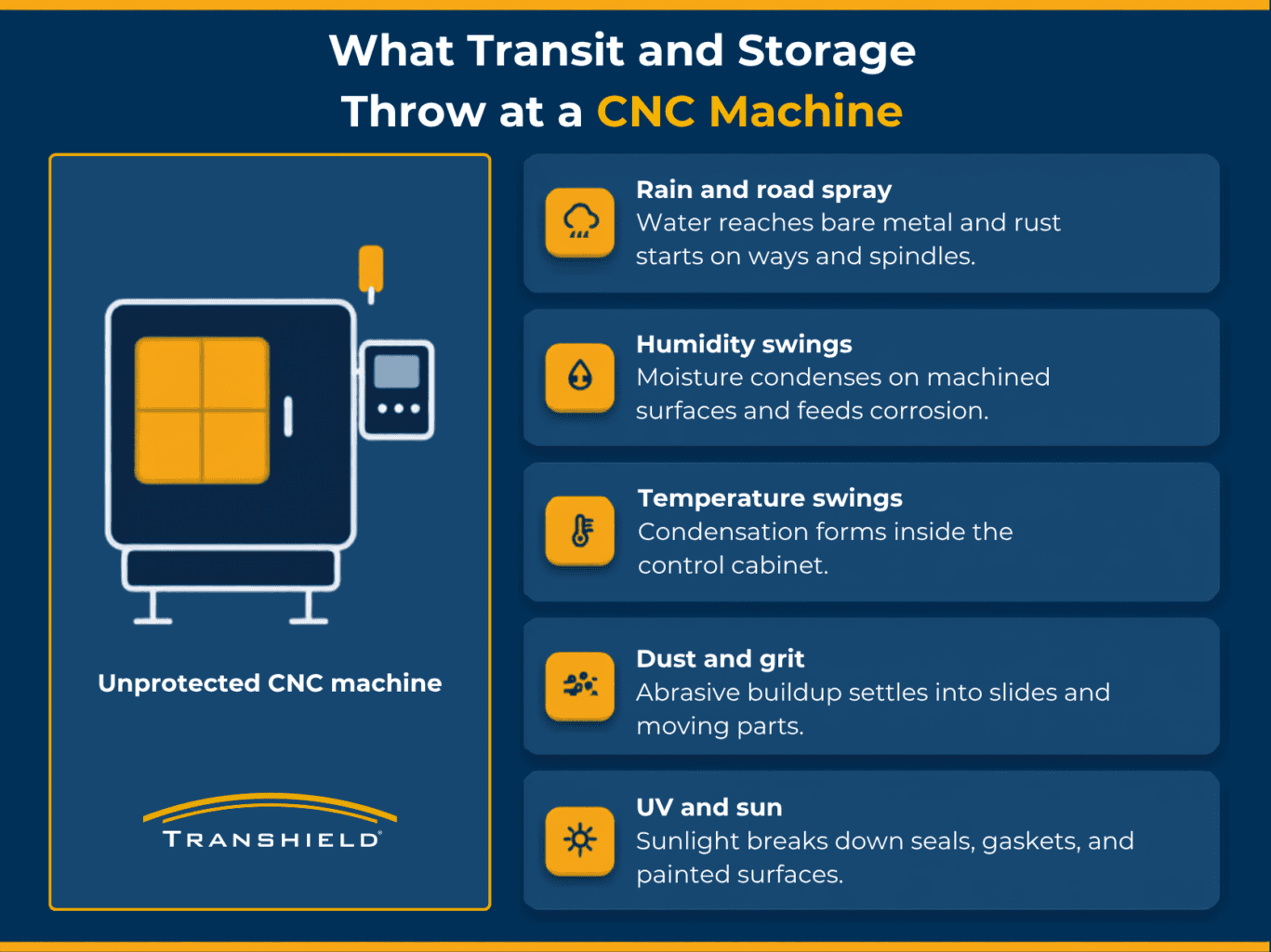
CNC machines leave the plant in perfect condition. Keeping them that way through transit and storage is the hard part. On an open trailer or in a yard, a machine faces rain, road spray, humidity swings, dust, and airborne grit, and every one of those attacks the surfaces that make the machine worth buying. A tarp thrown over the top does not stop them, since it can trap moisture underneath and work loose in the wind.
Corrosion is the quiet threat. Machined surfaces rust when moisture reaches them, and a thin film of rust on a precision surface is enough to throw off the accuracy the customer paid for. The real exposure for a manufacturer is the machine itself: the castings, the control cabinet, and the finished surfaces that are expensive to restore. Damage in transit lands on you, not the carrier, in the form of rejected shipments, warranty disputes, and a customer whose first impression is a corroded machine, so protecting it properly costs far less than any of those problems.
Keep the Small Components Covered Too
Before a machine ships, the loose tooling and spare parts that travel with it need protecting as well. Cutters like end mills and drill bits hold up best in storage tubes, where each one sits in its own space, and a cap keeps debris off the edges, while loaded tool holders ride safely on a CNC tool rack that keeps top-mounted tool holders upright and visible. A storage cabinet with foam or divided drawers keeps mixed inserts from knocking together.
When parts move with the machine, tool carts and utility carts keep them together, and labeled containers make the tool number, shank size, and pack quantity easy to check on arrival. Confirm a rack or cart’s load capacity before you load it, and the whole shipment reaches the customer factory-fresh, not just the machine.
The Corrosion Problem for Precision Tooling and Machines
Corrosion causes $2.5 trillion a year in damages worldwide, so keeping moisture away from precision tooling and machine surfaces protects both your parts and your budget. Physical separation handles nicks and chips. Corrosion needs a different answer, because rust forms from the moisture and oxygen in the space around the metal, not from contact.
A Vapor Corrosion Inhibitor (VCI) works in that space. VCI molecules move off a source material and settle on metal surfaces, forming a thin protective layer that slows the chemical reaction behind rust. It reaches recessed areas and complex shapes that a coating would miss, which suits the varied geometry of machine tools and tool holders. Transhield builds VCI into its custom covers for exactly this reason, so the protection travels with the equipment instead of coating one surface at a time.
Here is how the process works:
| Stage | What Happens |
| Release | VCI molecules vaporize from the source material |
| Migration | These molecules travel through the enclosed space |
| Adhesion | VCI vapors bond with metal surfaces upon contact |
| Protection | A molecular layer forms, blocking moisture and oxygen |
Quality VCI products blend multiple formulations to provide protection over the short, medium, and long term. For precision tooling and CNC machines that may sit for weeks between runs, that steady coverage keeps metal in the condition you need.
Storing and Moving CNC Machines and Equipment
Small tooling fits in a cabinet. A CNC machine is a different challenge, especially when it ships between facilities or goes into storage after a plant move.
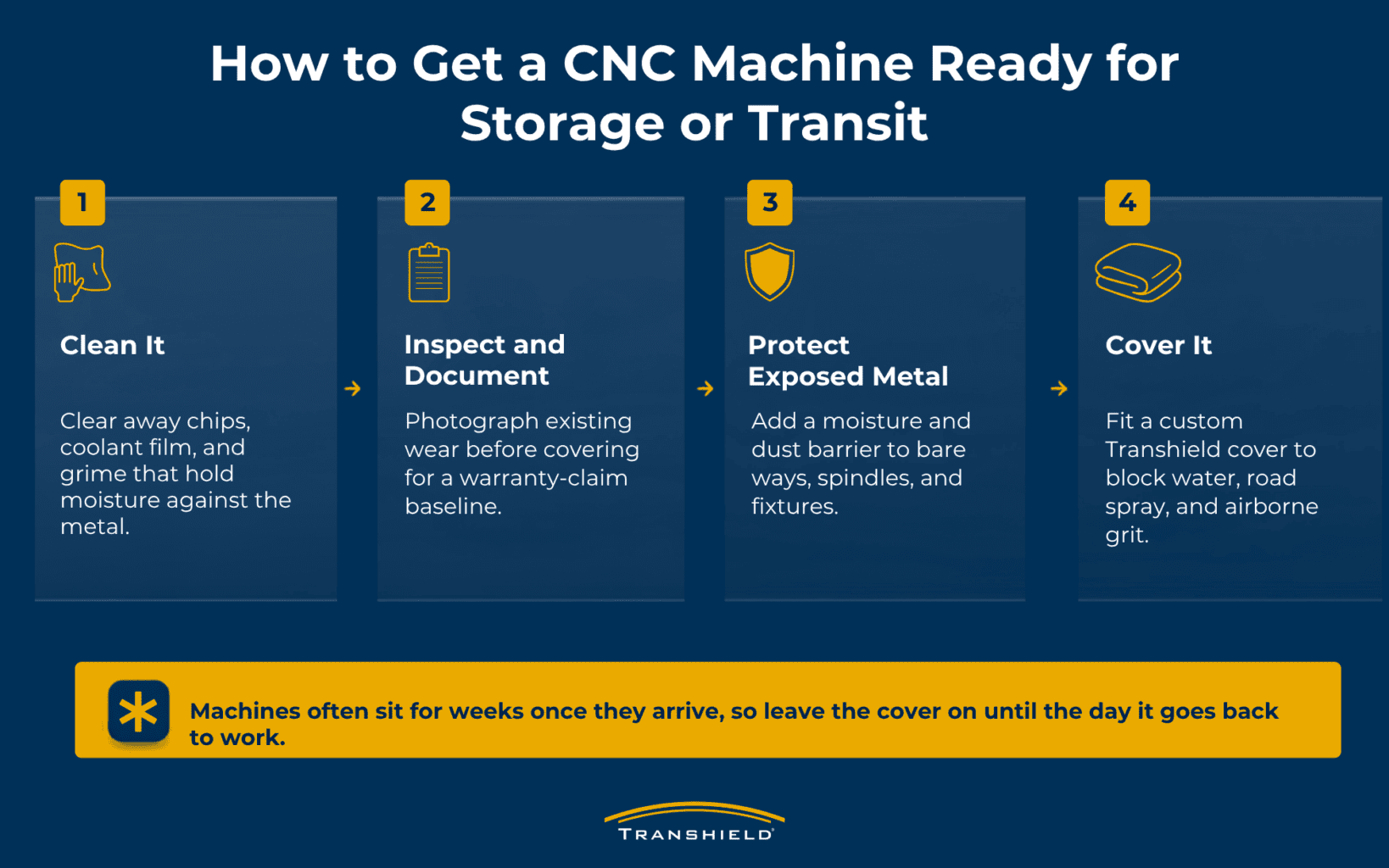
Before a CNC machine goes into storage or onto a truck:
- Clean it and remove chips, coolant, and grime that trap moisture against surfaces.
- Inspect and document its condition so you have a baseline for any warranty claim.
- Protect exposed metal, since bare ways, spindles, and fixtures need a barrier against moisture and dust.
- Cover it so water, debris, and airborne pollutants stay off the machine during the trip and the wait that often follows.
Transportation is where a lot of damage happens. On an open trailer, a machine faces road spray, wind-driven grit, and temperature swings that pull condensation onto cold metal. A cover built for the equipment closes the gaps where those elements get in.
How Transhield Covers Protect Machines in Transit and Storage
Transhield builds custom equipment covers for manufacturers, distributors, and the teams that move machine tools. Our covers use a three-layer system with a patented adhesive that emits VCIs:
- Outer layer: a UV-resistant polyethylene film that blocks sunlight and repels water.
- Middle layer: a hot-melt adhesive that carries VCI chemistry, holding it away from the metal so the molecules vaporize before reaching the surface.
- Inner layer: a soft, non-woven material that pulls moisture away from equipment and guards painted and machined surfaces from scratches.
Covers containing VCI additives have reduced corrosion by up to 95% in testing, and the protection lasts as long as the cover stays in place. Each cover fits a specific piece of equipment, so there are no gaps where moisture or debris can slip in. Since a CNC machine often sits in storage after transit rather than going straight into service, keeping the cover on through that period protects it across the whole journey, not only the drive.

Build a Storage Approach That Fits Your Operation
A job shop with a few machines and a distributor moving pallets of machine tools have different needs, but the practices carry over. Give each tool its own protected space, label it so people can find it, control moisture with VCI, and cover machines for the road and the storage yard.
Transhield has spent over 30 years developing protective solutions for industrial and machine shop customers across the country. If you are moving or storing CNC machines and want them to arrive in the same condition they left, contact us today to talk through a custom cover for your equipment.