
Steel is one of the most widely used materials in manufacturing, construction, and heavy equipment. It’s strong, versatile, and dependable, but it has one major vulnerability: rust.
When steel is exposed to moisture and oxygen, iron oxide forms on the surface. Left unchecked, rust weakens metal, damages equipment, and drives up repair and warranty costs. The good news is that rust is preventable. With the right approach, you can keep steel and metal parts in factory-fresh condition during long-term storage and shipping.
Why Steel Rusts
Rust is the result of a straightforward chemical reaction. Iron in the steel reacts with oxygen and moisture to form iron oxide. The process speeds up when other factors are present, including high humidity, salt exposure from road salt or sea spray, temperature swings that cause condensation, prolonged contact with standing water, and surface damage that exposes bare steel.
How Steel Composition Affects Corrosion Risk
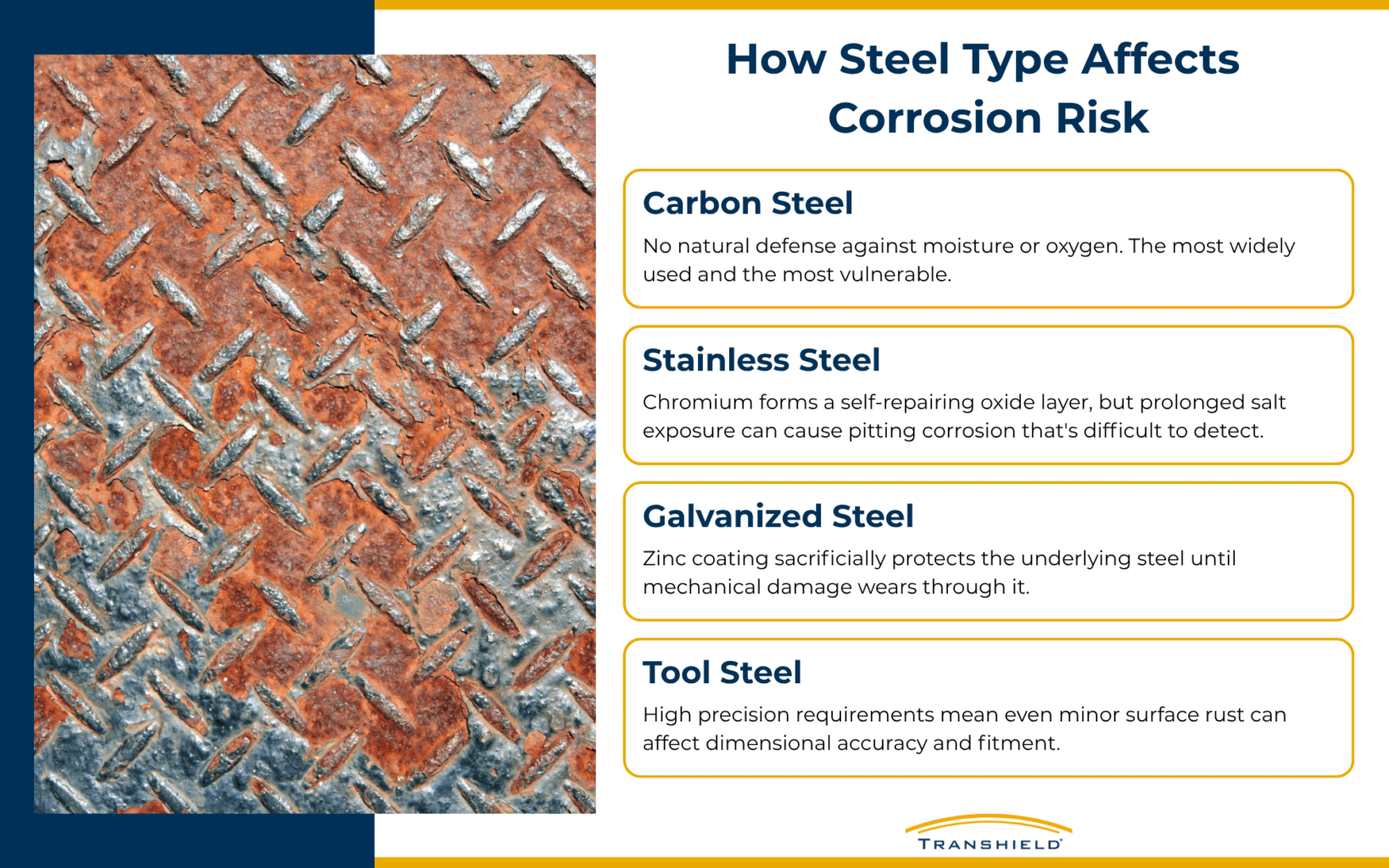
Not all steel corrodes at the same rate or for the same reasons. The alloying elements in a given type of steel determine how it reacts to moisture, oxygen, and salt during storage and transit.
Carbon steel contains no protective alloying elements, giving it no natural defense against moisture and oxygen. It’s the most widely used and the most vulnerable. Bare carbon steel in a humid environment can begin showing rust within hours.
Stainless steel contains at least 10.5% chromium, which forms a self-repairing oxide layer on the surface that resists rust. That passive layer holds up well in most environments but breaks down under prolonged chloride exposure from salt air or road salt, leading to pitting corrosion that’s difficult to detect and repair.
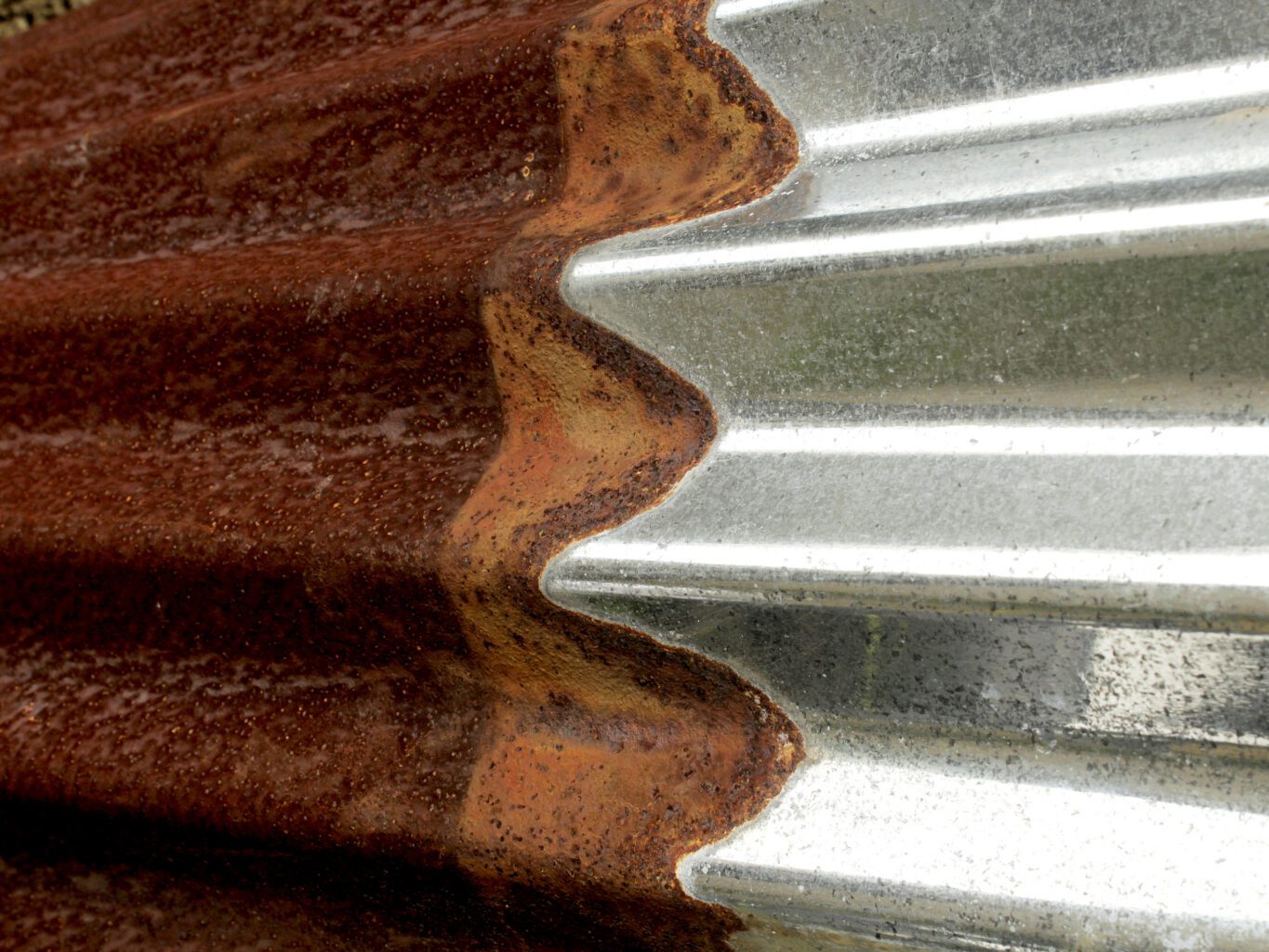
Galvanized steel uses a zinc coating that corrodes sacrificially before the underlying steel does. The risk in storage and transit is mechanical damage; scratches or abrasion that wear through the zinc layer expose the base carbon steel underneath, where corrosion sets in quickly.
Tool steel is engineered for hardness and precision, which makes it especially sensitive to rust. Even light surface oxidation can affect dimensional accuracy and fitment, and tool steel is often stored for extended periods, increasing the window of exposure.
Common Rust Prevention Methods
There’s no single fix for rust. The best approach depends on the type of steel, the storage or shipping conditions, and how long it needs to stay protected.
Protective Coatings and Paints
Applying a coating to the metal surface is one of the most common rust prevention methods. Options include:
- Powder coating for long-term surface protection on finished parts
- Epoxy-based paint for high-moisture or chemical environments
- Zinc coating for structural steel with outdoor exposure
- Rust-resistant spray paint for touch-ups on smaller areas or a spot of rust repair
Each coating creates a physical barrier between the metal surface and corrosive elements. The tradeoff is that any gap, scratch, or chip in the coating can allow rust to start underneath.
Rust Inhibitor Oils and Waxes
For metal parts in storage, a light oil or wax creates a thin protective layer that repels moisture. Common options include linseed oil, paste wax, and rust prevention sprays. These work well for tools, frames, and smaller components, but require reapplication over time reapplication or further cleaning steps down stream that adds further costs to the process and can be impractical for large or complex equipment.
VCI Technology
Vapor corrosion inhibitors (VCIs) take a different approach. Instead of requiring direct application to every metal surface, VCI molecules vaporize from a source material and travel through an enclosed space, bonding to metal surfaces upon contact and forming an invisible protective layer that blocks moisture and oxygen. The process works like this:
| Stage | What Happens |
| Release | VCI molecules vaporize from the source material |
| Migration | Molecules travel through the enclosed space |
| Adhesion | VCI vapors bond with metal surfaces on contact |
| Protection | A molecular layer forms, blocking moisture and oxygen |
VCIs are particularly effective for complex equipment shapes and hard-to-reach areas where direct coating application isn’t practical. It’s widely used in protective packaging and equipment covers for industrial shipping and storage. Transhield can integrate VCI technology directly into our custom equipment covers, combining physical protection with corrosion prevention in a single solution.
Rust Prevention During Storage
Steel is particularly unforgiving in storage. Unlike equipment with fully enclosed housings, steel components and machinery often have exposed metal surfaces, weld points, and machined areas that are vulnerable the moment protective coatings are compromised. Equipment sitting idle for weeks or months is exposed to humidity fluctuations, condensation, and environmental contaminants; and on steel, that exposure compounds quickly.
Best Practices for Storage
- Clean equipment thoroughly before storing and address any existing rust spots before covering. On steel, even minor surface rust will continue to spread if left untreated.
- Control the environment when possible. Climate-controlled storage is especially valuable for carbon steel and tool steel, where humidity alone is enough to cause visible oxidation.
- Pay attention to machined surfaces, weld points, and heat-affected zones. These areas are more vulnerable than the surrounding steel and benefit from a rust inhibitor oil or VCI treatment before going into storage.
- Avoid trapping moisture. Regular tarps and plastic sheeting can seal in humidity and create conditions that accelerate rust on steel surfaces rather than prevent it.
- For carbon steel and other ferrous metals, VCI protection is especially worthwhile during extended storage periods where humidity can’t be fully controlled.
Rust Prevention During Shipping
Transit introduces a different set of corrosion risks than storage. Machinery and heavy equipment on open flatbeds are fully exposed to road salt, sea spray, and wind-driven debris for the entire journey. Steel components that leave a facility in perfect condition can arrive with visible rust if they aren’t properly protected for transit.
Temperature changes are a particular concern for steel. As equipment moves between climates (from a heated facility to an outdoor staging area to a cross-country flatbed), the metal surface experiences repeated condensation cycles. Each cycle deposits moisture directly onto steel surfaces, surfaces, speeding corrosion rates on bare steel, freeze thaw cycles may damage painted surfaces if they have micro-cracks where water can penetrate and start the corrosion cycle.
How to Protect Equipment During Transit
- Use a cover that fits precisely over the equipment. Gaps allow moisture and debris to reach steel surfaces, and a poor fit that shifts during transport can abrade coatings and expose bare metal.
- Choose a cover with VCI technology. Steel components with complex geometries, internal cavities, and hard-to-reach areas benefit most from VCI, since the molecules reach every surface without direct application.
- Pay special attention to weld points and heat-affected zones. These areas have altered microstructures that make them more susceptible to corrosion than the surrounding steel and are often overlooked during pre-shipment preparation.
- Avoid generic tarps. Avoid generic tarps. They trap moisture, shift in the wind, and leave gaps at edges and access points, accelerating the very damage you’re trying to prevent. A poor fit can also tear or wear through the cover itself, leaving equipment exposed mid-trip.
A Practical Pre-Storage and Pre-Shipment Checklist
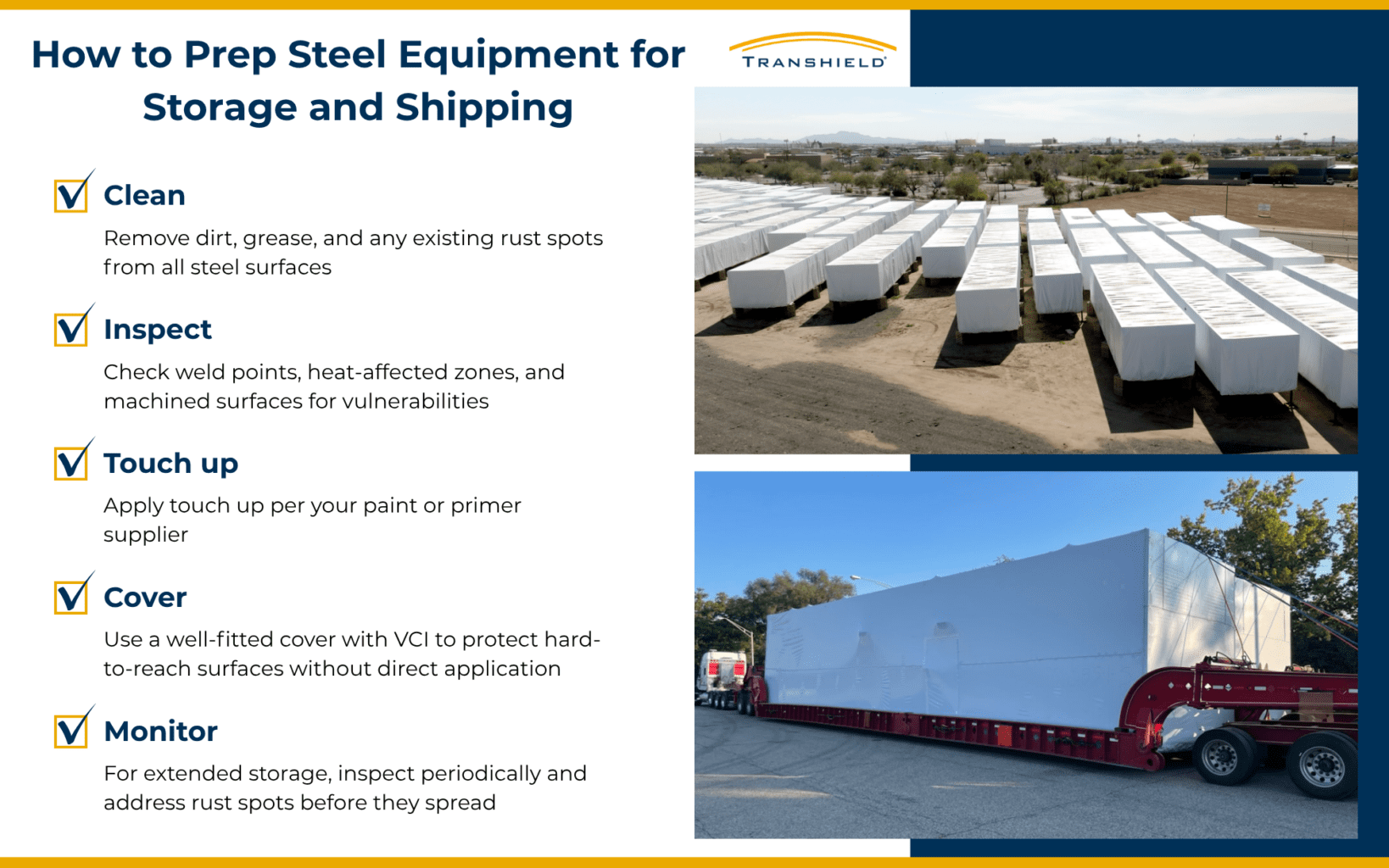
Before putting equipment in storage or preparing it for shipment, work through these steps:
- Clean all metal surfaces and remove any existing rust spots before covering
- Inspect weld points, heat-affected zones, and machined surfaces, as these areas are more vulnerable than the surrounding steel
- Apply touch up per your paint or primer supplier
- Apply a rust inhibitor oil to machined surfaces and hard-to-reach areas before covering, or use a cover with integrated VCI technology to handle those areas automatically.
- Install a custom cover that won’t abrade coated or galvanized surfaces and allows moisture to escape rather than trapping it inside
- For extended storage, inspect equipment periodically and address any rust spots before they spread
Rust prevention isn’t complicated, but it does require consistency. Taking the right steps before storage or shipping is far less costly than repairing or replacing equipment that has corroded while sitting idle.
Matching Protection to the Type of Steel
Carbon steel has no natural corrosion resistance, so it needs the most active protection. A combination of a rust-resistant coating or paint, a light oil or VCI treatment, and a well-fitted cover is the most reliable approach for storage and transit.
Stainless steel benefits most from keeping chloride exposure low. Regular cleaning to remove salt deposits, avoiding prolonged moisture contact, and using a protective cover goes a long way.
Galvanized steel relies on its zinc coating as the first line of defense, so the priority is keeping that coating intact. Touch up any chips or scratches with a zinc-rich primer before storage, and use a cover that won’t abrade the surface.
Tool steel is sensitive to even light surface oxidation, which can affect dimensional accuracy and fitment. Priority protection includes a rust inhibitor oil or VCI treatment for machined surfaces, careful packaging to prevent contact with other surfaces during transit, and a cover that keeps humidity out during what are often extended storage periods.
How Transhield Addresses Rust During Storage and Shipping
Transhield builds custom protective covers for industrial equipment, machinery, and manufactured goods. Our three-layer system with patented adhesive that emits VCIs is designed specifically to prevent rust during storage and transit.
Three Layers of Protection
- The outer layer is a UV-resistant polyethylene film that repels water and blocks sunlight.
- The middle layer is a hot-melt adhesive with VCI chemistry that releases corrosion-inhibiting molecules into the enclosed space.
- The inner layer is a soft non-woven material that wicks moisture away from metal surfaces, eliminating condensation to fall on the product being covered.
For covers with VCI chemistry, this system can reduce corrosion by up to 95%. The VCI works by maintaining a concentration of protective molecules in the space around the metal, reaching every surface, including hard-to-access areas, without requiring direct coating application.
Built Around Your Equipment
Because each cover is custom-fit to specific equipment, there are minimal gaps where moisture or road debris can enter. Features like zipper access doors, vents, and secure fastening systems can be integrated based on the specific storage or transit requirements.
Rust doesn’t wait, and neither should your protection plan. Transhield has spent decades developing protective solutions for manufacturers, fleet operators, and industrial equipment producers. If rust prevention during storage or transit is a challenge for your operation, contact Transhield today to discuss a custom cover solution designed for your specific equipment and shipping conditions.