
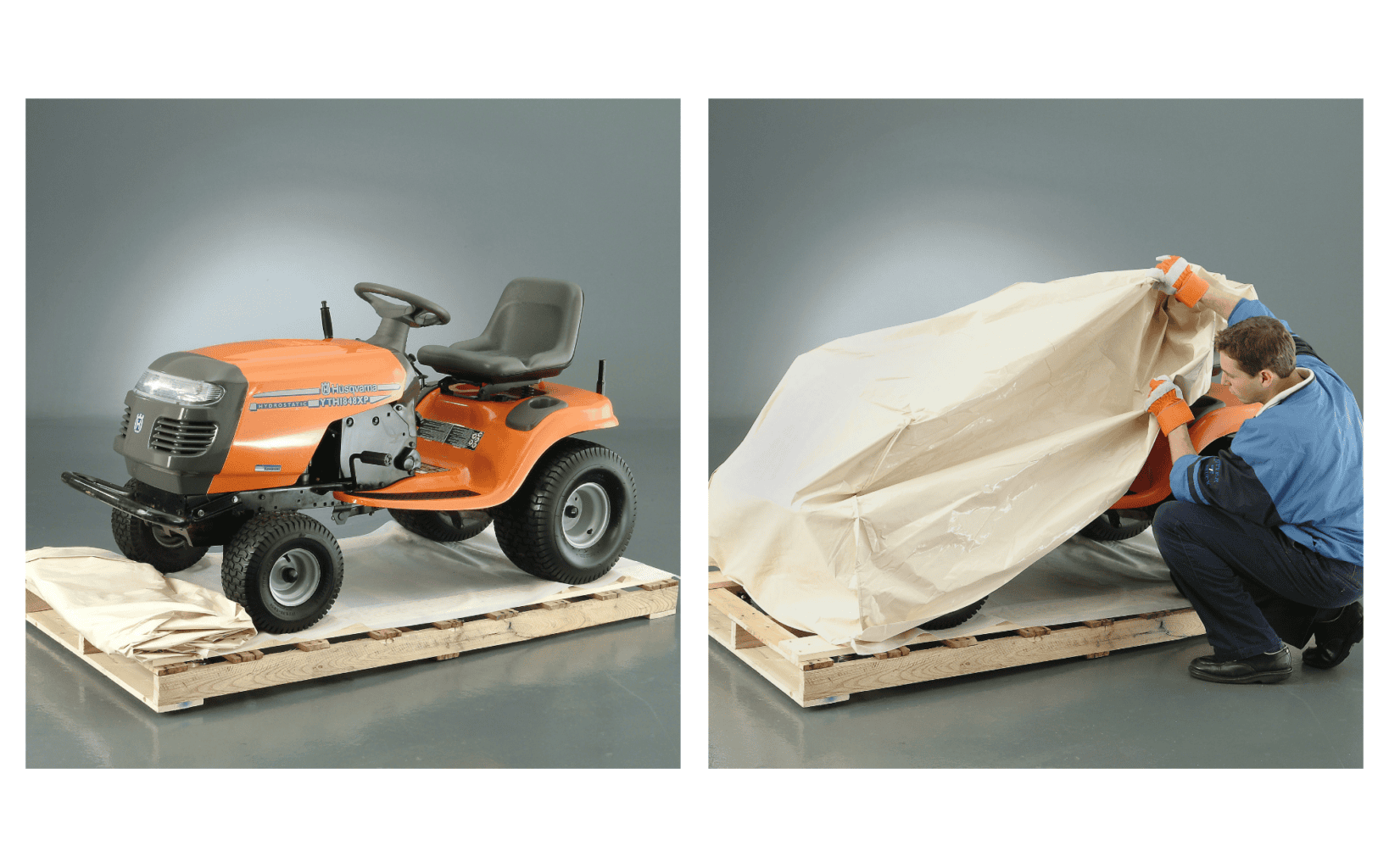
Manufacturers and distributors of farm equipment have to keep inventory in factory condition until it sells, which can mean months of waiting after the build is done. Some of that inventory sits in the yard because covered space ran out, and some sits inside a warehouse or distribution facility waiting to ship. Either way, finished tractors, combines, and sprayers can pick up damage while they wait.
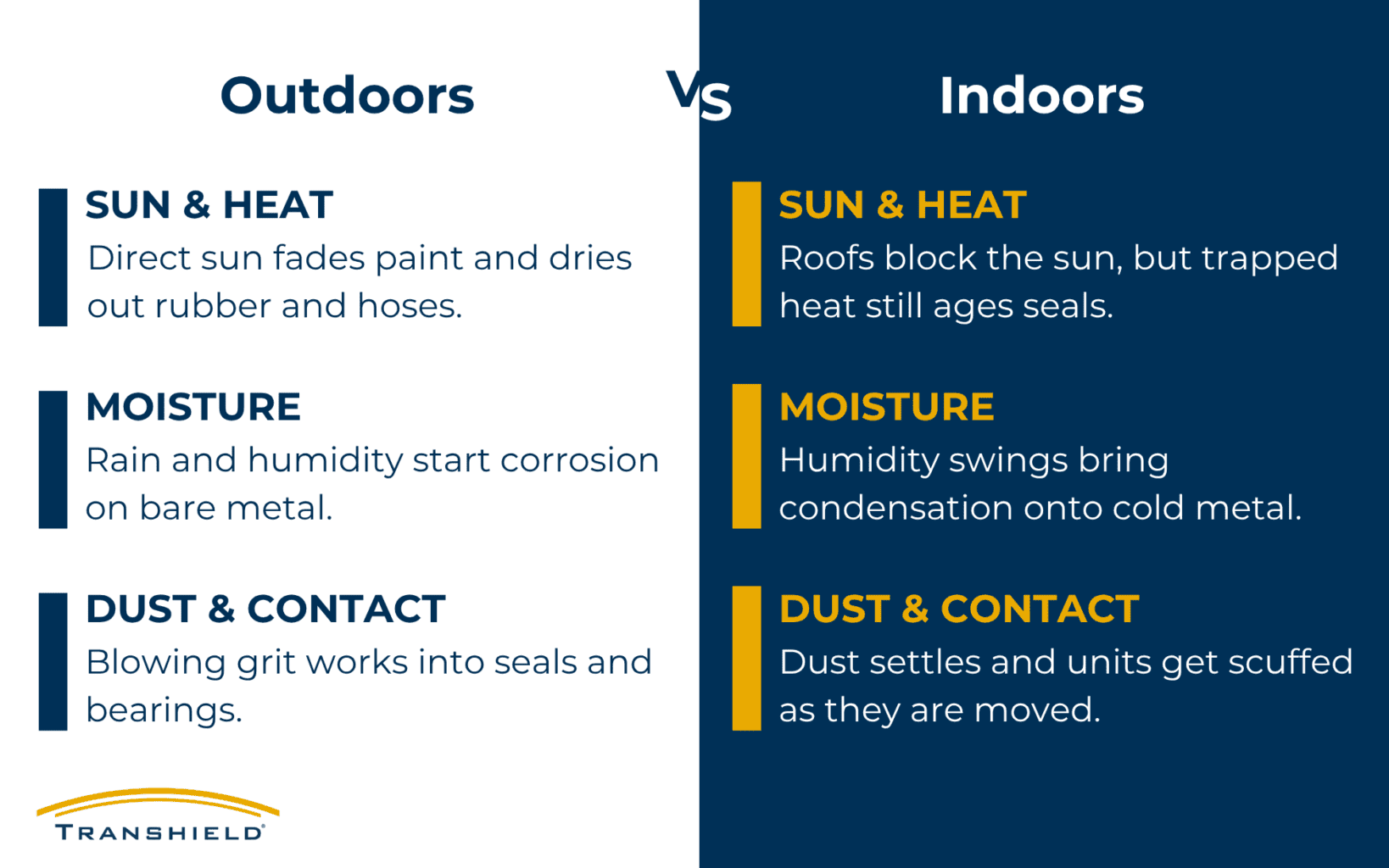
Outdoors, sun fades paint and degrades rubber and hydraulic lines, moisture starts corrosion on bare metal, and blowing dust works into seals and bearings. Indoors is easier on equipment but not risk-free, since dust settles, humidity swings bring condensation, and units get scuffed as they move around a busy building. Protecting inventory in both settings holds its value, which protects warranty status and resale price. A roof blocks rain and snow. A custom protective cover fitted to each machine also blocks the dust, condensation, and handling wear a building lets through.
Why Farm Equipment Inventory Ends Up Outside
A few common situations leave more finished equipment on hand than there is covered space to store it. Production and import schedules do not line up with demand, so finished goods pile up between the build and the sale. Seasonal equipment moves in waves, which means a distribution yard can go from half full to overflowing in a matter of weeks. Staging units for shipment to dealers takes floor space that warehousing does not always have.
Building more space also takes time. A new distribution warehouse means capital budgeting, permits, site prep, and a construction timeline that rarely matches the next inventory surge. Until then, farm machinery waits outside through whatever harsh weather the season brings, and every week outdoors chips away at condition and margin. A Transhield custom cover does that protecting now, without the budget, permits, or construction wait a new building takes.
Where Buildings Fall Short
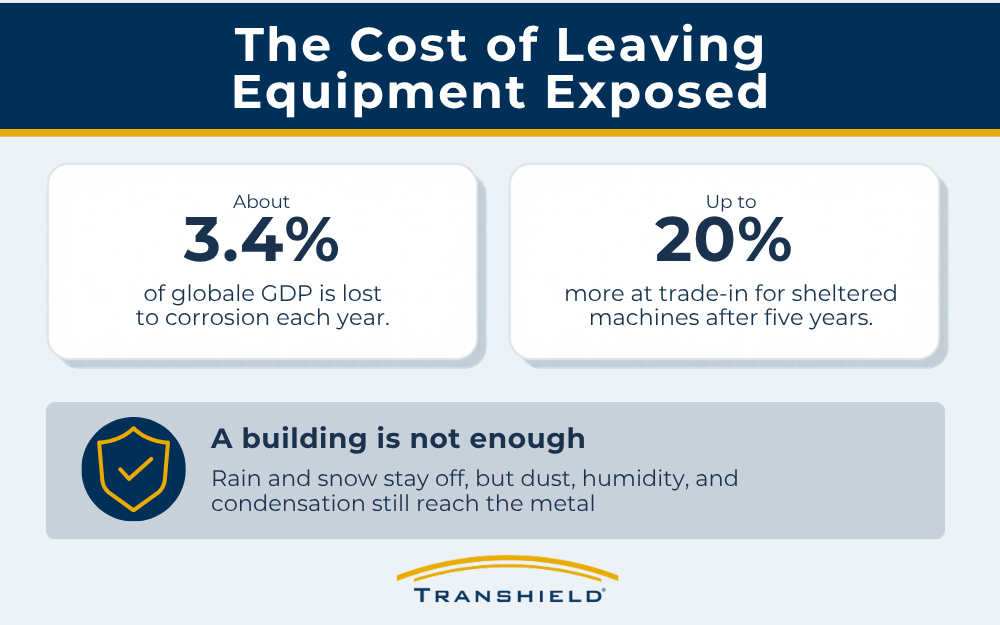
Even with covered space on site, farm equipment inventory does not stay protected on its own. A building keeps rain and snow off, but dust still settles on units parked for months, humidity still swings with the seasons, and condensation still forms on cold metal. Rust is not a small line item, since corrosion runs about 3.4% of global GDP every year, and much of it starts on metal left sitting in humid storage. Machinery gets nicked and scuffed every time it is moved to reach the unit behind it. Outdoors, the exposure is harder still, and no roof reaches the overflow parked in the yard.
The gap is the same indoors and out. Stored equipment needs a barrier against moisture, dust, and debris, one that stays with each unit rather than the building around it. That is where a fitted cover earns its place.
Covers Built Around the Lines You Sell
Every product line has its own shape, and a cover made to fit one model protects every unit of that line the same way. A pattern built for a compact utility tractor, a row-crop planter, or a self-propelled sprayer wraps each unit with no gaps or loose spots, and once that pattern exists, it repeats across the entire production run.
The payoff lands twice. In the yard and the warehouse, a fitted cover keeps finished inventory ready to sell. On the dealer lot and the customer’s farm, it puts that same clean appearance in front of the buyer and cuts the warranty claims that trace back to weather and corrosion damage in storage. The gap shows up at resale, where sheltered machines have brought as much as 20% more at trade-in after five years than the same models left outside. The cover protects the unit and the reputation of the line it carries.
Protecting Inventory Indoors and Out
Custom protective covers protect farm equipment wherever it sits. In the yard, they stand in for covered space without needing to pour a foundation. Inside a building or warehouse, they keep dust, condensation, and handling scuffs off units that may sit for months before they ship. For manufacturers and distributors holding many units at once, covers scale across a yard or a floor in a way a fixed building cannot, and they stay on a unit as it ships, protecting it in transit until it reaches the dealer lot or the buyer’s farm storage building.
A generic tarp does not do the same job. Tarps trap moisture against metal, leave gaps that let in dust and pests, and tear loose in wind. A cover built to fit a specific machine seals out water and debris while still letting trapped moisture escape, which keeps finished units in factory condition through storage and staging.
What a Custom Cover Adds
- A UV-resistant outer film slows the sun damage that fades paint, cracks rubber, and breaks down plastics on units waiting to ship.
- A soft nonwoven inner layer wicks moisture away from painted and machined surfaces so condensation does not sit on the metal.
- For equipment prone to rust, covers containing VCI additives release vapor that settles on metal surfaces and reduces corrosion by up to 95 percent.
- Heat-shrinkable fabric shrinks to the shape of the machine for a snug fit that sheds snow and water and stays put in wind.
- Custom access points such as zipper doors and vents allow inspection and airflow without removing the whole cover.
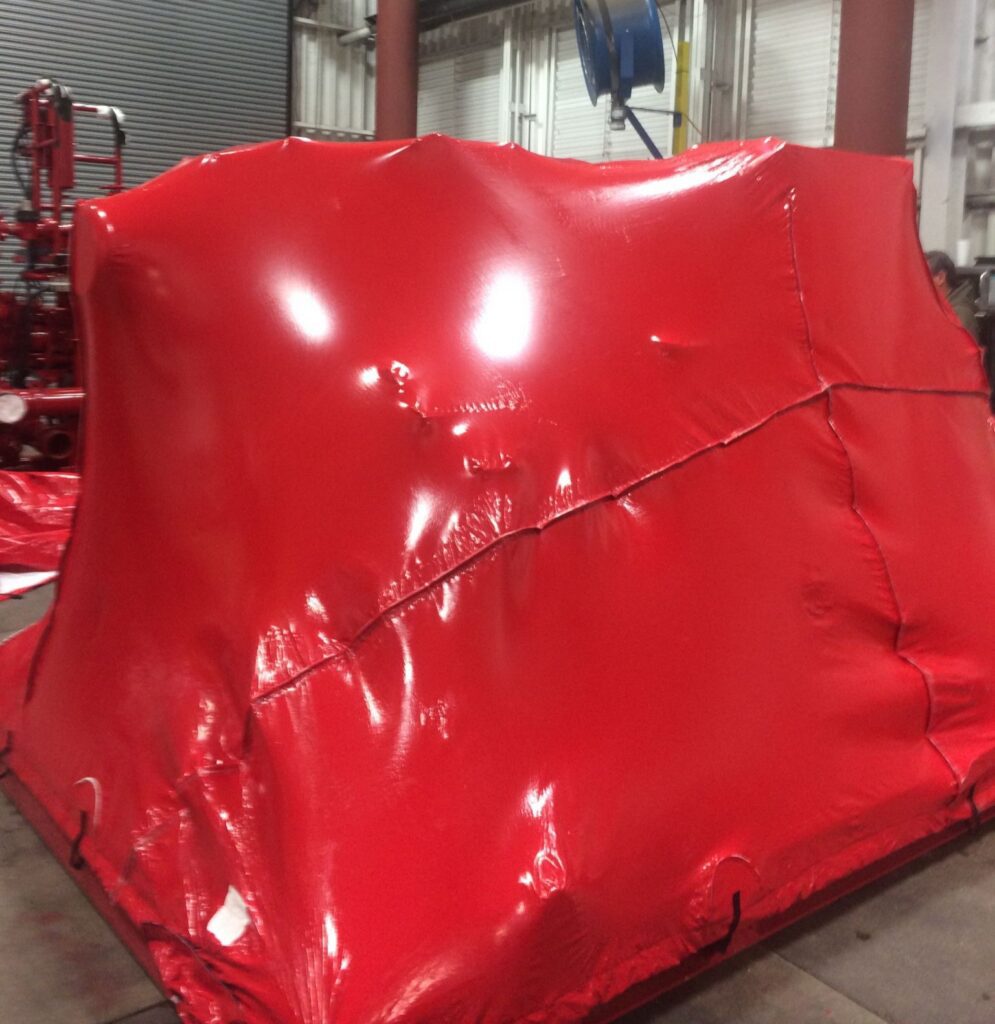
Transhield builds that protection into a three-layer system with a patented adhesive that emits VCIs, an outer UV-resistant film, and a soft nonwoven interior. Each cover is designed to fit a specific line of equipment, so there are no gaps where moisture, dust, or debris can enter, and the corrosion protection lasts as long as the cover stays in place. For a manufacturer protecting a full production run or a distributor covering a yard, that repeatable fit protects appearance, warranty status, and resale value across every unit.
Protect Farm Equipment Inventory, Indoors or Out
Transhield has spent over 30 years building custom protective covers for manufacturers, distributors, and fleet operators across industrial, military, and agricultural markets. Every cover is engineered to fit the equipment it protects, which keeps inventory ready to ship and sell in the yard, in the warehouse, and on the way to the buyer.
Ready to protect farm equipment inventory in the yard or the warehouse? Contact Transhield today to talk through a custom cover program built for your operation.