
Storing seasonal equipment the right way can mean the difference between a smooth start next season and costly repairs, corrosion, and delays. From snow plows that sit idle all summer to combines stored outside of harvest season, how you protect your assets during storage directly affects their condition and life cycle costs.
This guide walks through the best storage options for seasonal equipment, what to consider when choosing a method, and how custom protective covers can simplify the process.
What Counts as Seasonal Equipment?
Seasonal equipment includes any tools, machinery, or vehicles used primarily during specific times of year. This covers a wide range of industries and applications:
| Season | Equipment Examples |
| Winter | Snow plows, salt spreaders, portable heaters |
| Summer | Pavers, asphalt equipment, lawn mowers, aerial lifts |
| Harvest | Combines, balers, tractors, grain carts |
| Peak demand | Forklifts, material handling equipment for warehouse surges |
Whether you manage a fleet of commercial vehicles, run an equipment rental operation, or store valuable equipment at a resale lot, the off-season presents the same challenge: protecting your investment from the elements.
Why Proper Seasonal Storage Matters
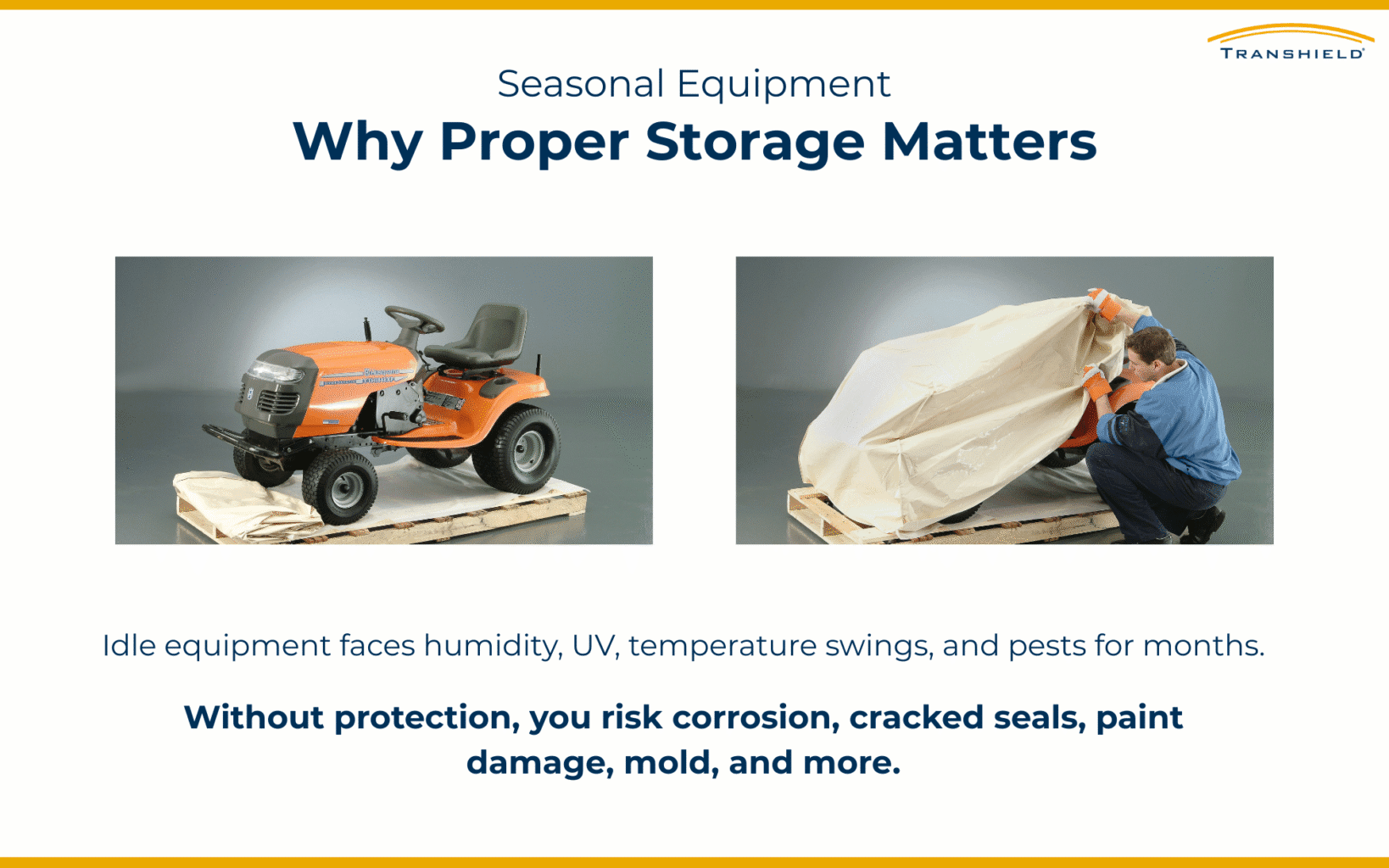
Seasonal equipment often sits unused for weeks or months. During that period, it’s exposed to weather conditions and environmental factors that cause real damage: humidity, temperature swings, UV rays, dust, rain, snow, and pests. Without proper protection, you risk rust and corrosion on metal surfaces, cracked rubber seals and hoses, faded or damaged paint, mold and mildew growth, and rodent or insect intrusion.
The impact of corrosion alone can be significant. Even mild steel left unprotected in humid conditions will start showing rust within days. Over a full off-season, that damage compounds quickly.
Common Storage Options for Seasonal Equipment
When it comes to protecting seasonal equipment, not all storage options offer the same level of protection. Here’s what to consider.
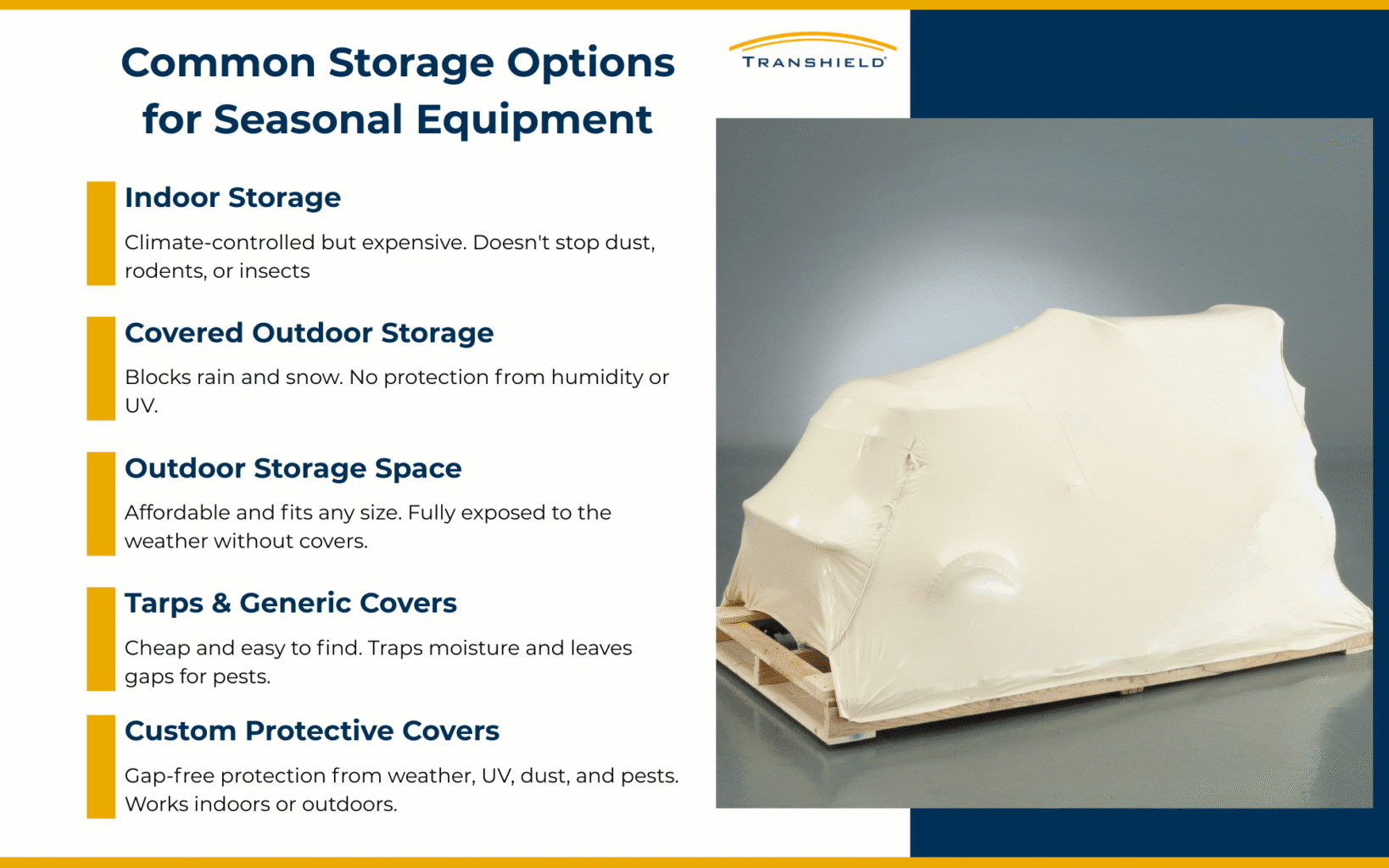
Indoor Storage
Storing equipment inside a climate-controlled building offers the highest level of protection. Temperature and humidity stay consistent, and equipment is shielded from UV exposure, precipitation, and wind-blown debris. A garage or warehouse keeps valuable equipment safe from the elements entirely. A garage or warehouse keeps valuable equipment safe from the elements, though not necessarily from dust, rodents, or insects.
Best for: High-value equipment, electronics, and assets sensitive to temperature or humidity changes.
Limitations: Indoor storage requires significant space and can be expensive, especially for large fleets, bulky items, or oversized machinery. Not every facility has room to bring everything inside. Even indoors, equipment can still be exposed to dust, rodents, and insects.
Covered Outdoor Storage
Semi-covered or open-sided structures provide a middle ground. Equipment stays protected from direct rain and snow while remaining accessible.
Best for: Equipment that needs easy access or won’t fit indoors.
Limitations: These structures don’t protect against humidity, temperature swings, dust, or wind-driven moisture. Corrosion and UV damage remain concerns.
Outdoor Storage Space
Many operations rely on outdoor storage lots for seasonal equipment, including RV storage lots, commercial vehicle storage yards, and yards for construction or agricultural machinery. Others simply store equipment on their own property, whether that’s a back lot, job site, or open land. Outdoor storage space is often more affordable and can accommodate equipment of any size.
Best for: Large fleets, boats, campers, RVs, and equipment that doesn’t require climate control.
Limitations: Equipment is fully exposed to weather conditions unless properly covered. Without protection, outdoor storage accelerates wear and corrosion.
Tarps and Generic Covers
Basic tarps are an inexpensive way to keep rain and snow off equipment. They’re widely available and offer easy assembly.
Best for: Short-term protection or budget-conscious operations.
Limitations: Tarps trap moisture underneath, creating ideal conditions for rust, mold, and mildew. They don’t fit snugly, leaving gaps where water, dust, and pests can enter. Wind can also blow tarps loose, leaving equipment exposed.
Custom Protective Covers
Custom covers are designed to fit specific equipment, providing complete coverage without gaps or pooling. The best options combine physical protection with corrosion prevention technology. Because there are no gaps, custom covers also keep out rodents, insects, and dust, making them a smart choice even for indoor storage.
Best for: Long-term protection of valuable equipment stored outdoors or indoors.
Limitations: Higher upfront cost than tarps, though the investment typically pays off through reduced maintenance and fewer warranty claims.
What to Look for in a Seasonal Storage Solution
When evaluating your options, consider these factors:
| Factor | Why It Matters |
| Moisture control | Trapped moisture causes rust, mold, and mildew |
| UV protection | Sun breaks down rubber, paint, and plastics over time |
| Ventilation | Allows humidity to escape instead of condensing on surfaces |
| Secure fit | Gaps let in water, dust, debris, and pests |
| Corrosion protection | Metal surfaces need a barrier against oxidation |
| Ease of use | Complicated solutions get skipped when time is short |
The best storage options for seasonal equipment address multiple concerns at once rather than solving one problem while creating another.
Custom Covers: A Comprehensive Storage Solution
For equipment stored outdoors or indoors during the off-season, no matter the location, custom protective covers from Transhield offer a practical, all-in-one solution. Unlike generic tarps that trap moisture and blow off in the wind, Transhield covers are designed to fit your specific equipment and built to handle long-term protection.
Features That Make a Difference
Transhield covers can be customized with features tailored to seasonal storage needs:
- Shrinkable fabric that heat-shrinks for a snug fit, preventing wind from getting underneath
- Zipper doors for easy access without removing the entire cover
- Vents to promote airflow and reduce humidity buildup
- Secure fastening systems like ratchet straps
- Soft interior that protects painted surfaces from scratching
Because each cover is designed for specific equipment, there are no gaps where moisture, dust, or pests can enter.
Best Practices for Seasonal Equipment Storage
No matter which storage option you choose, following a few best practices will help keep your equipment in top condition:
Before storage:
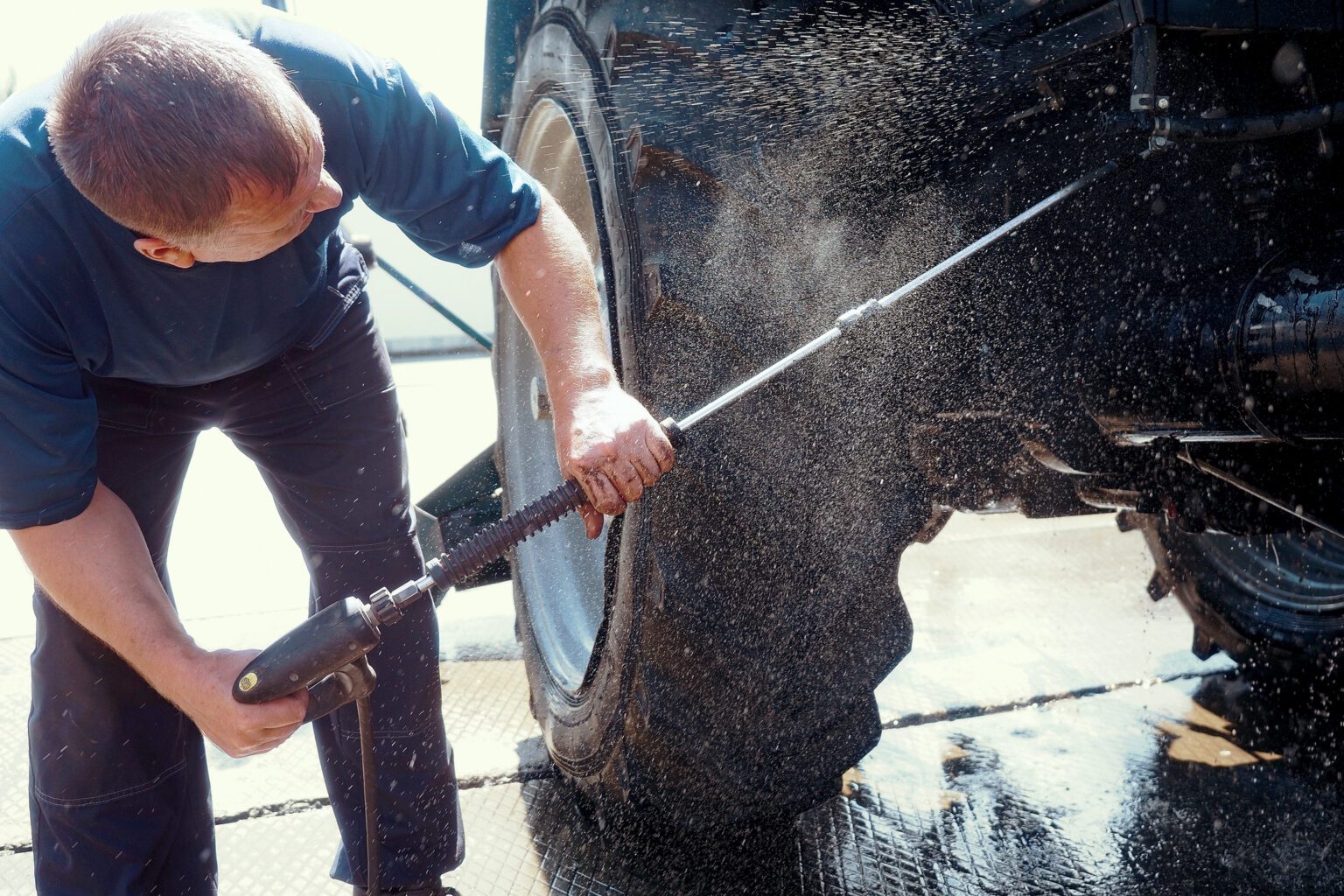
- Clean equipment thoroughly to remove dirt, grease, and debris
- Inspect for existing damage or corrosion and address it before covering
- Lubricate moving parts to prevent seizing
- Disconnect or remove batteries if storing for extended periods
- Apply touch-up coatings to any exposed metal
During storage:
- Check covers periodically for damage or shifting
- Monitor for signs of moisture intrusion or pest activity
- Keep storage areas clear of debris that could damage covers
Before returning to service:
- Inspect equipment for any issues that developed during storage
- Test all systems before putting equipment back to work
A consistent maintenance program during the off-season prevents small problems from becoming expensive repairs.
Protect Your Investment
Seasonal equipment represents a significant investment. The right storage solution protects that investment, reduces maintenance costs, and ensures your equipment is ready to perform when you need it.
Custom protective covers from Transhield offer a practical way to keep equipment protected through the off-season without the cost of indoor storage or the drawbacks of basic tarps. With over 30 years of experience and solutions for equipment of any shape or size, Transhield can help you find the right fit for your storage needs.
Ready to protect your seasonal equipment? Contact us today to discuss custom cover solutions.