
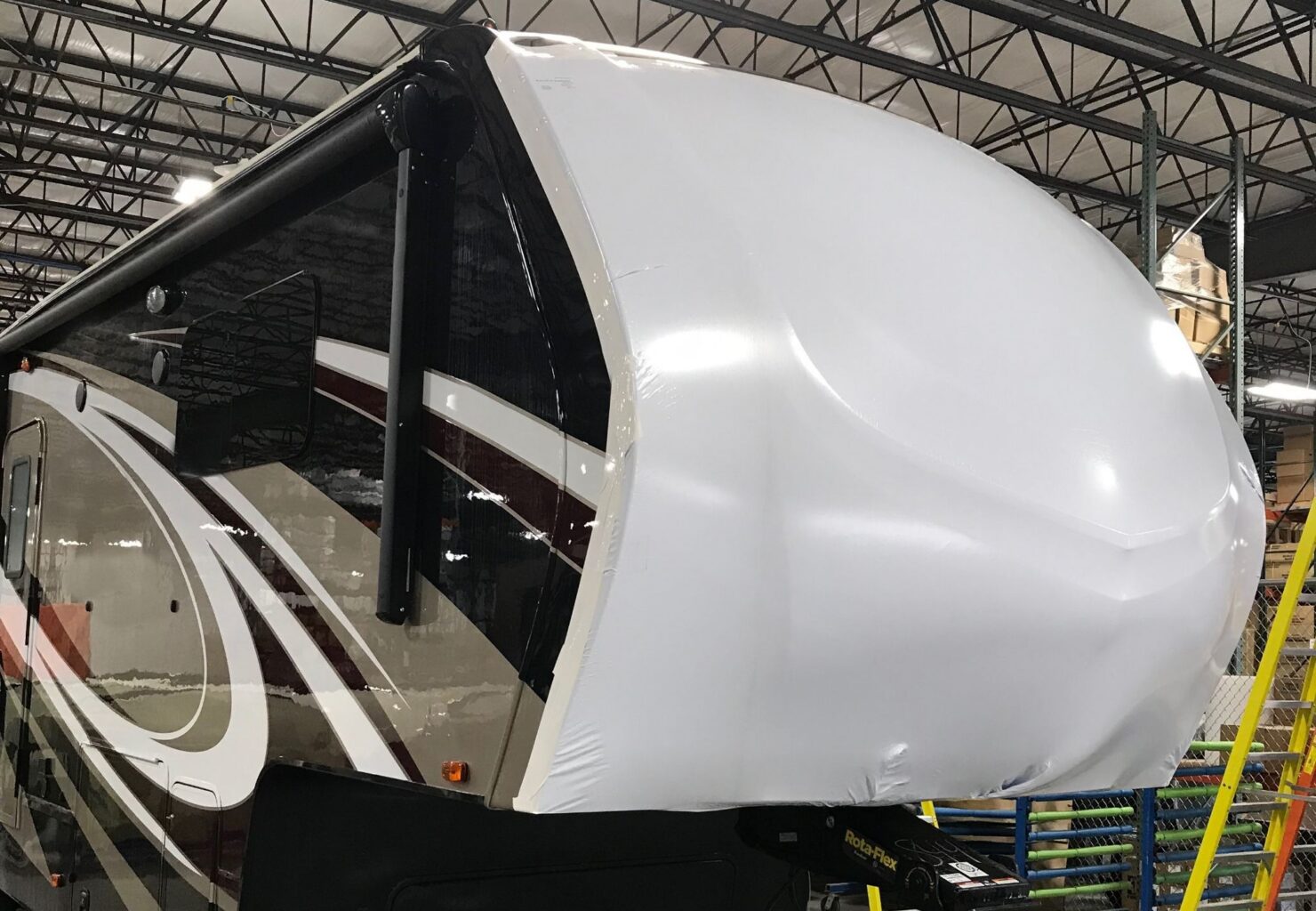
As the outdoor recreation season winds down each fall, RVs head into months of storage. How each unit is prepared and protected before winter directly affects its condition when the next season arrives. Fleets, dealerships, distributors, and storage facility operators face the same task once the weather turns: getting every RV ready to sit safely through the off-season.
Why Fall Preparation Matters for RV Storage
A recreational vehicle that sits through fall and winter faces humidity, temperature swings, UV exposure, rain, and snow. Left unprotected, metal surfaces corrode, seals dry out, paint fades, and moisture builds up inside. For an operation storing many units at once, a small problem repeats across the whole lot and adds up quickly. A consistent preparation process keeps each vehicle in better shape and reduces the repair work waiting at the start of the next season.
Prepare Each Vehicle Before Storage
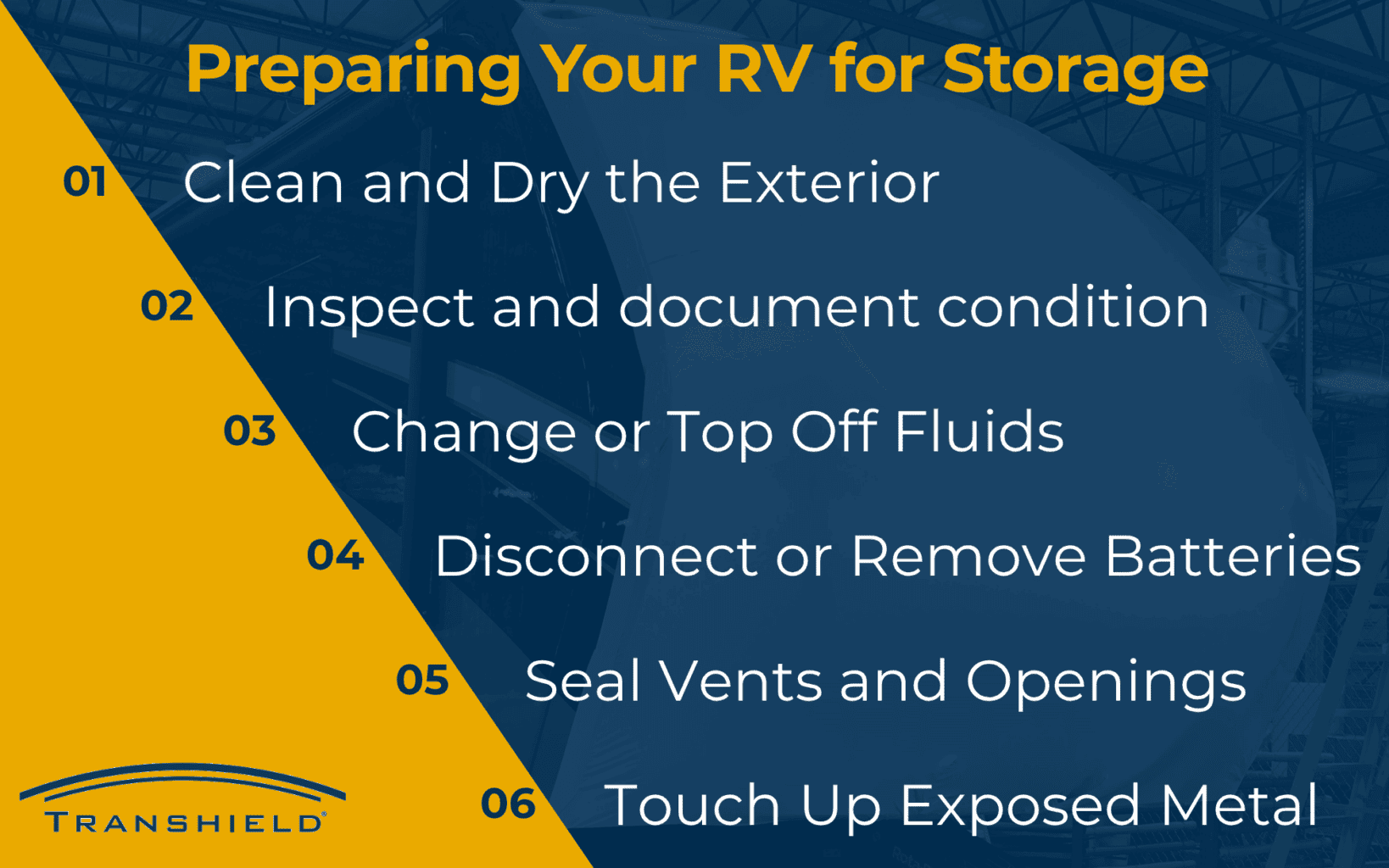
Preparation is the step most often rushed, and it is the one that prevents the most damage. Taking time to prep each RV correctly protects the interior, the systems, and the finish through a long stretch of vehicle storage.
- Wash and dry the exterior fully before covering, since leftover grime and moisture speed up corrosion on painted and metal surfaces.
- Walk each unit and record its condition with notes or photos, which gives you a baseline for warranty claims and damage tracking.
- Top off or replace fluids on units headed into long storage, because fresh fluids guard internal components better than old ones sitting for months.
- Disconnect or pull the batteries and keep them somewhere cool and dry to prevent drainage and hold a charge for next season.
- Close vents and seal openings on the body to keep rodents, insects, and dust from getting inside.
- Touch up chipped paint and coat any bare metal to put a barrier between rust and exposed surfaces.
Documentation deserves extra attention across a fleet. Photos and written notes give you a clear record of each unit before it is covered, which supports warranty purposes and helps you track any issue that develops in the storage area.
Choosing the Right Storage Space
Storage options range widely, and the right one depends on the value of the units, how long they will sit, and the budget. A Transhield cover earns its place under any of these choices, because the location alone does not shield a unit from the moisture, UV, dust, and pests that cause damage in storage.
Indoor Storage
Indoor or climate-controlled storage offers the most protection from weather and UV exposure. It also costs the most and requires a location with room that many operations do not have for large motor homes and trailers. Dust and pests still reach uncovered units inside a building, and a fitted Transhield cover closes that gap.
Outdoor Storage Lots
Many operations rely on an outdoor RV storage lot or a vehicle storage yard. Outdoor storage space is more affordable and holds units of any size, which makes it the practical choice for large fleets and dealer inventory. Equipment sits fully exposed to weather, which makes covering each unit the main line of defense against corrosion and UV damage. A Transhield cover does the work the lot itself cannot, and it stays with the unit from one storage spot to the next season after season.
RV Storage Lots for Fleet Inventory
A manufacturer or distributor staging a batch of vehicles on an RV storage lot or vehicle storage yard has more to track than a single unit. Recordkeeping and lot logistics keep a large inventory organized through the off-season.
- Keep current registration, current insurance, and title records on file for each unit in the storage area, and confirm the arrangement meets state law.
- Log every vehicle in and out with notes or photos, which supports warranty claims and inventory counts.
- Match lot capacity, drainage, security, and access hours to the size of the fleet before units arrive.
Protecting Stored RVs
Once an RV is prepped and parked, the cover it sits under determines how well it holds up. Generic tarps are inexpensive and widely available, but they trap moisture underneath, leave gaps where water and pests enter, and blow loose in the wind. That trapped moisture creates the rust and mildew that storage is meant to prevent.
Custom covers built for a specific vehicle fit without gaps or pooling. For operations protecting RVs at scale, covers that pair physical protection with corrosion control deliver the most value over a full season.
What to Look for in a Cover
A cover made for long-term outdoor storage should meet a few standards:
- Water resistance and UV protection keep interiors dry and guard paint and rubber from sun damage.
- Breathable construction lets trapped moisture escape as vapor, which prevents condensation, mold, and mildew.
- A snug fit with secure fastenings keeps wind from getting underneath the cover.
- Access features like zipper doors and vents allow inspections without pulling the whole cover off.
Transhield covers use a three-layer construction that addresses each of these needs. A UV-resistant outer film blocks sunlight and repels water, a soft non-woven inner layer wicks moisture away from surfaces and protects paint, and a middle adhesive layer can carry Vapor Corrosion Inhibitor (VCI) chemistry. That patented adhesive emits VCIs that slow corrosion by charging the space around the metal with protective molecules. Covers containing VCI additives can reduce corrosion by up to 95%, which matters most for units stored on open lots through months of humidity and temperature change.
Fall RV Storage Checklist at a Glance
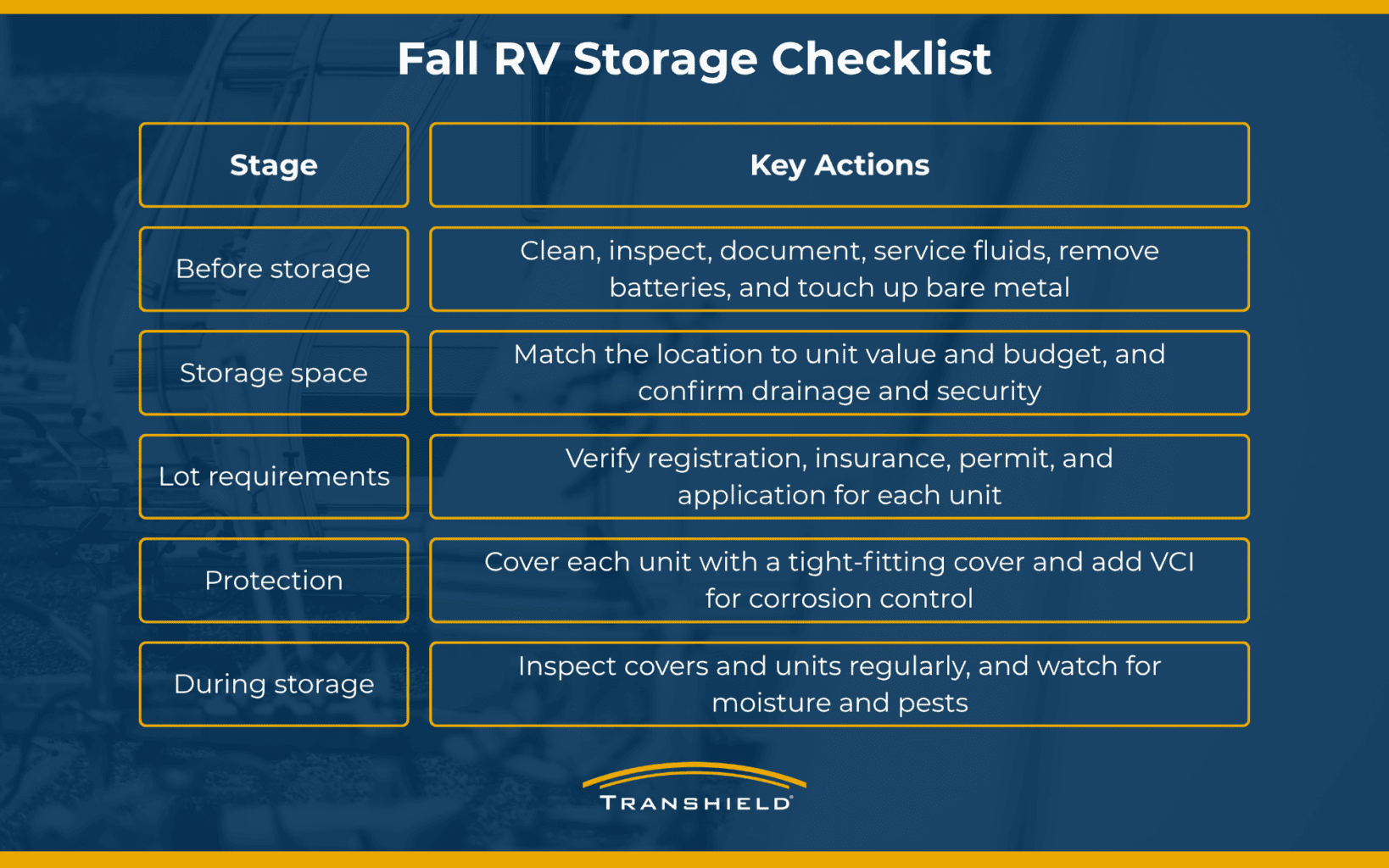
The full process comes together in a few stages. Before storage, clean and inspect each unit, document its condition, service the fluids, pull the batteries, and touch up any bare metal. When choosing storage space, match the location to unit value and budget, and confirm the site has good drainage and security. Lot logistics come next, with records kept current and the lot’s capacity, drainage, security, and access matched to the size of the fleet. Protection comes down to fitting each unit with a tight cover and adding VCI for corrosion control. Once units are parked, inspect the covers and vehicles regularly and watch for moisture and pests through the season.
Set Up the Next Season
Fall storage sets up the season ahead. A repeatable process of preparing each RV, choosing the right storage space, meeting lot requirements, and covering units correctly protects the whole operation from off-season damage.
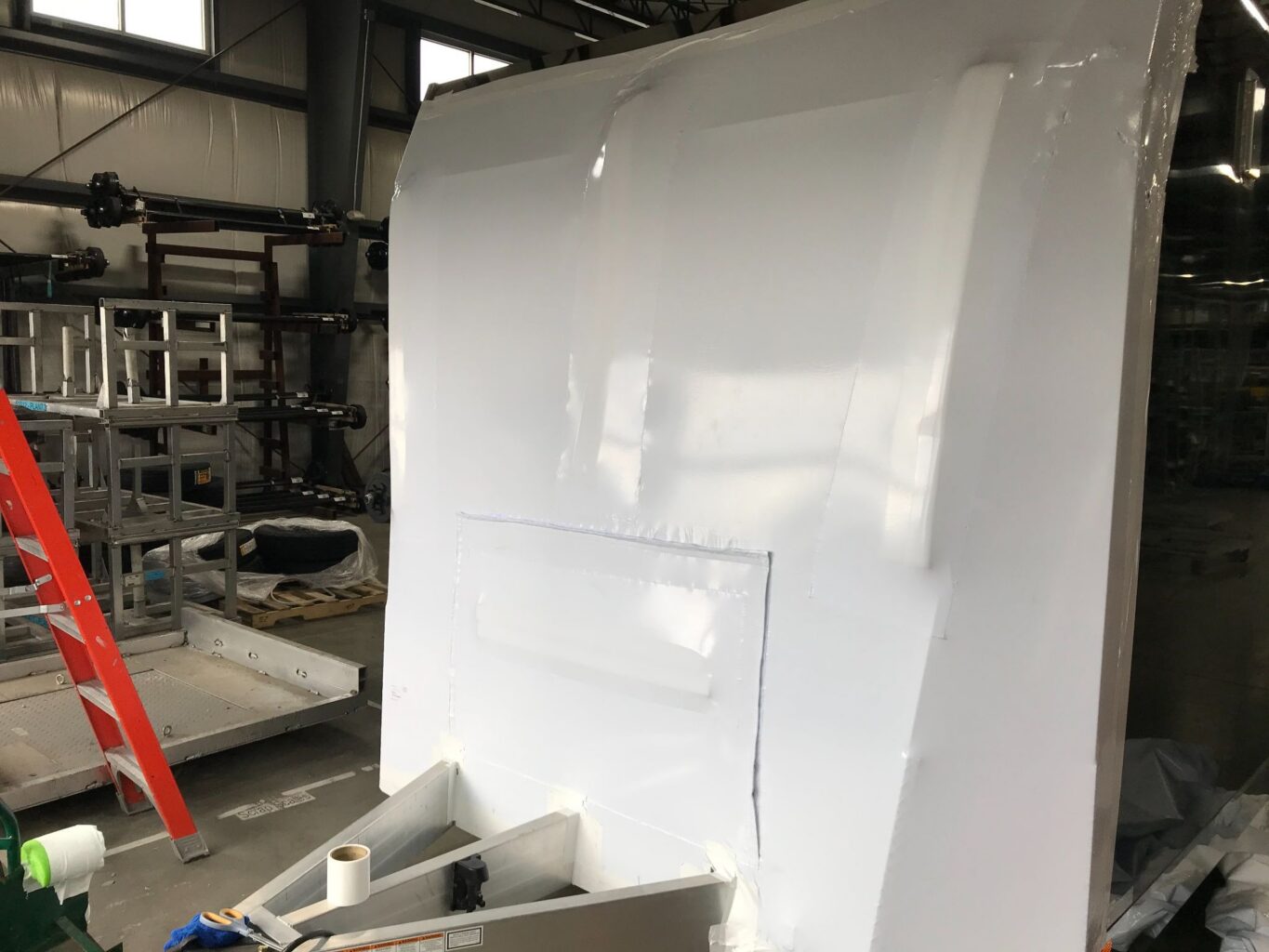
The cover on each unit is the part of the checklist that keeps working through every fall storm and winter freeze. Transhield builds custom protective covers for manufacturers, distributors, military storage programs, and fleets that need RVs to come out of the off-season in the same shape they went in. A cover engineered to fit each motor home, trailer, or boat repels water, wicks moisture away from surfaces, and slows corrosion through months of humidity, UV exposure, and temperature swings on the lot. Contact Transhield today to discuss custom cover solutions for your RV fleet.