
Wind, hail, and salt each damage equipment in a different way. High winds drive debris and tear loose covers away, hail dents metal panels and cracks coatings, and salt spray leaves chloride that keeps corroding metal for weeks after the sky clears. Hurricane and hail season brings all three at once, and operations holding fleets of high-value equipment can lose dozens of units in a single event.
Manufacturers, distributors, port authorities, marinas, and military operations all face the same question when severe weather moves in. How do you protect a large number of assets before the storm and keep corrosion from setting in afterward? Custom covers built for extreme weather conditions are one of the most practical answers.
How Hurricanes and Hail Damage High-Value Assets
Storm damage comes from several directions at once. Understanding each threat makes it easier to plan protection that will hold up in severe weather.
| Threat | What It Does to Equipment |
| High wind | Drives debris into surfaces and tears loose covers away, exposing equipment mid-storm |
| Hail | Dents metal panels, cracks canopies and blade coatings, and chips paint |
| Salt spray | Coats metal in chloride that speeds corrosion long after the storm passes |
| Water intrusion | Pools in cavities and seams, leading to rust, mold, and electrical damage |
| Flying debris | Punctures and scratches exposed surfaces during severe weather |
Hail and hurricane season often overlap along the Gulf Coast and across the Southeast, which means many operations plan for both at the same time.
Protecting Marine Assets and Boat Fleets
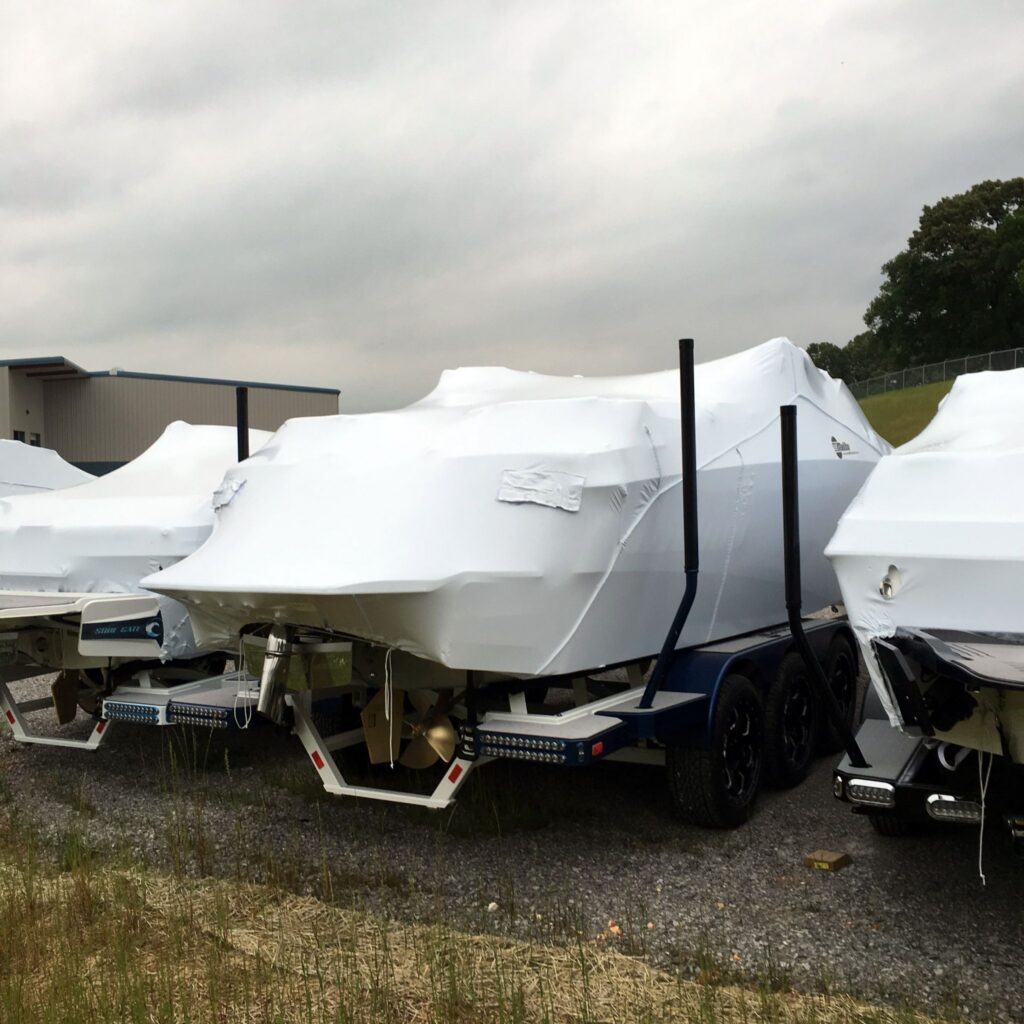
Boat dealers, manufacturers, and marine distributors keep rows of hauled-out hulls in storage yards and on trailers that all need protection when a storm is forecast. Our covers for stored and in-transit inventory do more than keep rain out. A quality custom boat cover shields gelcoat and upholstery from harmful UV rays, resists abrasion from wind-driven grit, and stays put when gusts pick up. Fit is what separates a cover that helps from one that becomes a liability. A loose cover can flap, chafe, and blow off, while a snug fit with a secure hem holds through high wind.
For a fleet of identical hulls, Transhield designs custom covers to exact models and produces them in volume, giving every pontoon boat, center console, or bass boat in the fleet the same fit rather than a one-off design for each unit. Salt exposure is the long-term threat for marine assets, because chloride left on fittings and hardware keeps working at the metal after the wind dies down. Covers containing VCI additives slow that process, which matters most for engines, trailers, and metal components stored through the season.
Protecting Aircraft and Aviation Fleets
Aircraft skins, canopies, and rotor assemblies are expensive to repair and slow to replace. Hail is the primary concern during storm season, since even moderate stones can dent aluminum panels and crack transparencies. Parked aircraft and staged airframes at manufacturing plants and military sites need cover that absorbs impact and blocks water.
Aviation covers use heavy duty fabric and shaped panels that guard high-contact areas like leading edges and canopies. For military fleets, the same protection travels with the asset, guarding airframes and components in both storage and transit.
Protecting Wind Turbines and Components
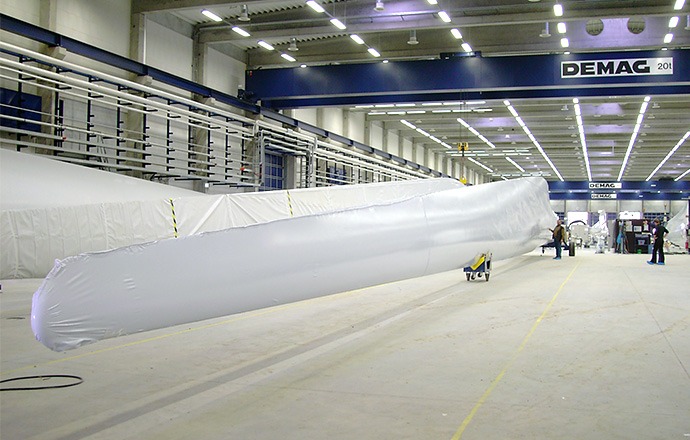
Wind turbine components spend long stretches in staging yards and at ports before installation. Blades, nacelles, and hubs sit exposed to sun, salt, and hail during that wait, and a pitted blade coating or a corroded nacelle costs far more to address than a cover would have.
Blade coatings are sensitive to UV rays and hail impact, both of which reduce aerodynamic performance over time. Covers with superior fade resistance and a shaped fit protect these surfaces through months of outdoor storage. For components shipped long distances, the same cover guards against road grime and moisture in transit.
What to Look for in an Extreme-Weather Cover
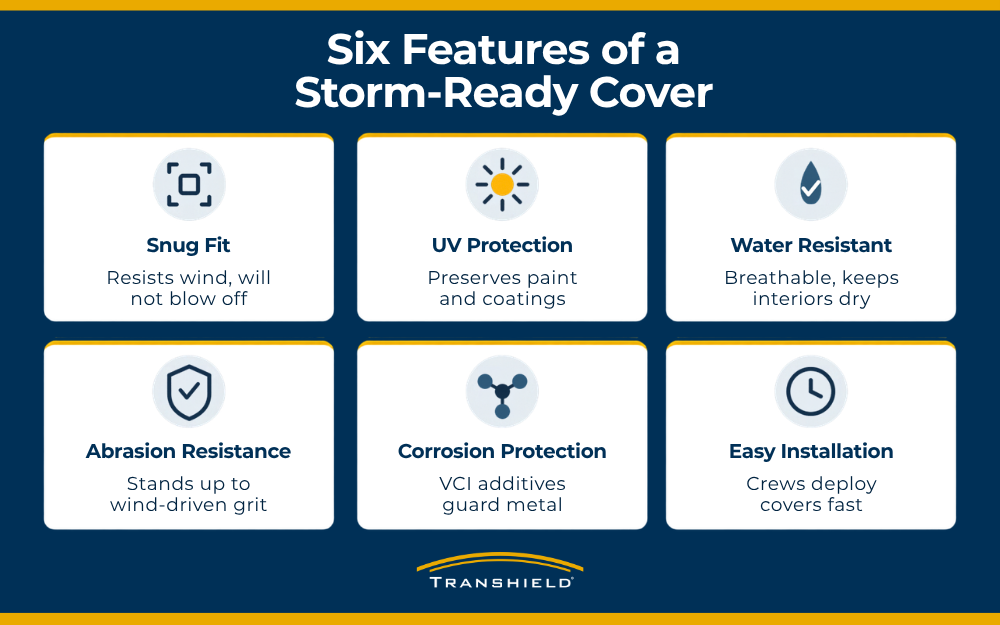
Not every cover holds up when the weather turns. A few features separate storm-ready protection from a tarp that fails in the first gust.
- A snug, secure fit holds firm in high wind instead of flapping loose or pulling away at the seams.
- UV protection shields paint, coatings, and rubber components from harmful UV rays during long outdoor storage.
- A water-resistant, breathable fabric seals out rain while venting the humidity that causes rust and mold.
- Abrasion resistance in the marine fabric handles blowing grit and the wear of repeated wrapping.
- Corrosion protection from covers containing VCI additives keeps working on metal after the skies clear.
- Easy installation means a small team can secure each unit fast when a storm is on the way.
Long-term durability matters too. A cover that survives one season and fails the next becomes a recurring purchase rather than a lasting investment.
How VCI Technology Slows Corrosion
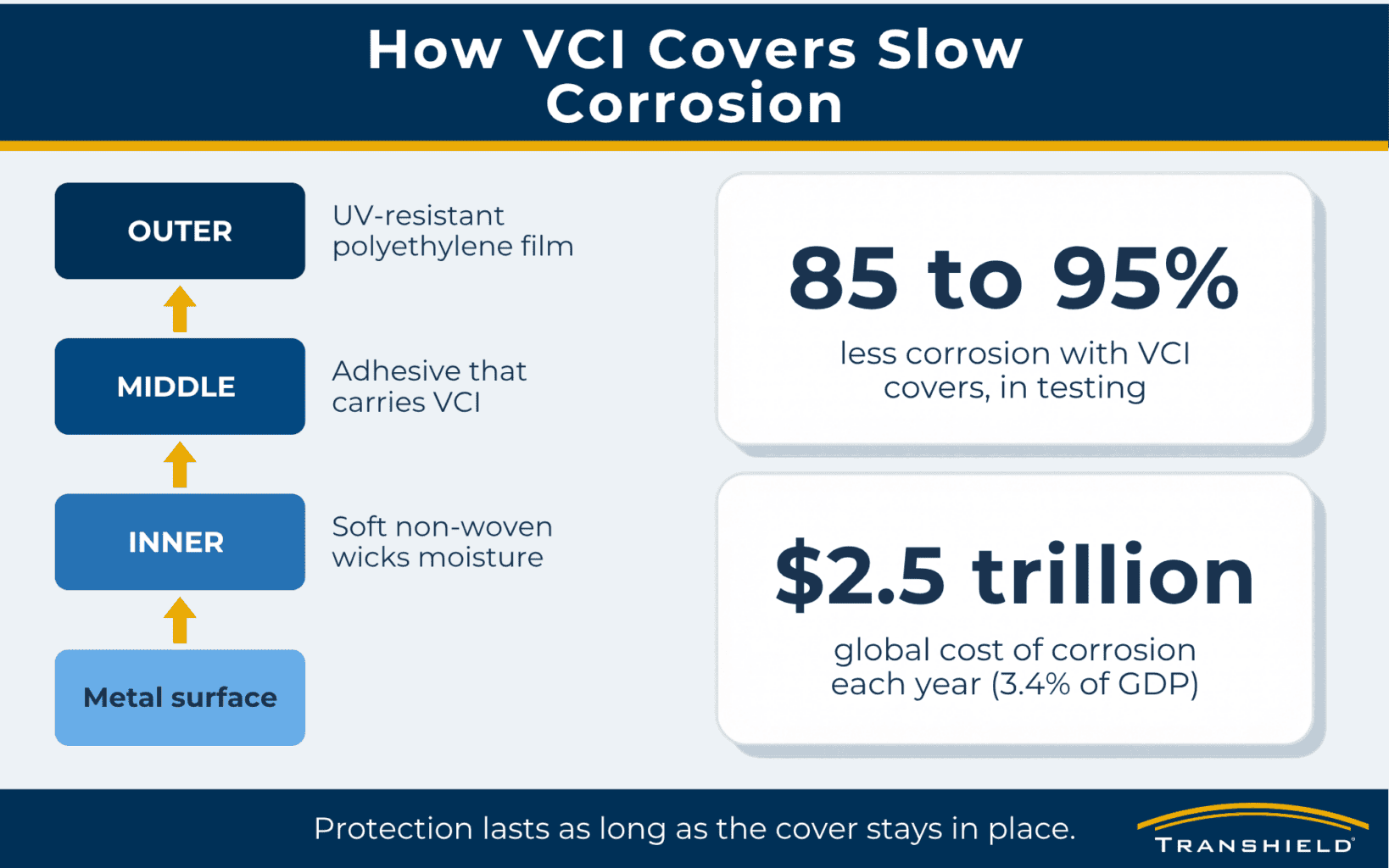
Physical coverage handles wind, hail, and water. Corrosion needs a second layer of defense, because salt and humidity linger long after a storm clears. The global cost of corrosion runs about $2.5 trillion a year, roughly 3.4 percent of global GDP. This is where Vapor Corrosion Inhibitor (VCI) technology earns its place.
VCI works by maintaining a concentration of protective molecules in the space around the metal. Those molecules settle on metal surfaces and form a thin barrier that slows the reactions that cause rust, and quality VCI products blend multiple formulations to provide protection over time. A three-layer cover system with a patented adhesive that emits VCIs delivers this protection without a separate step, since the outer polyethylene film blocks sun and water, the middle adhesive layer holds the VCI additive, and the soft inner layer wicks moisture away from the surface. In testing, covers with VCI have slowed corrosion by 85 to 95 percent, and the protection lasts as long as the cover stays in place.
Planning Ahead for Storm Season
Storm protection works best when it is in place before a watch turns into a warning. A few steps keep a fleet ready.
- Order covers well ahead of hurricane season, since lead times stretch as demand climbs across industries.
- Clean and inspect equipment before covering it, because trapped dirt and salt speed up corrosion under any cover.
- Confirm each cover fits the specific asset, since gaps let in water, debris, and the wind that tears covers loose.
- Train crews on easy installation ahead of time, which lets covers go on fast when a storm is only hours away.
- Keep covers secured through the full season, because storage often runs long after the first storm passes.
Good preparation also limits what happens after a storm. Covered assets see less storm-related damage, which cuts repair costs, insurance claims, and the wreckage removal that follows a direct hit.
Protect Your Fleet Before the Next Storm
Transhield has spent over 30 years building custom protective covers for marine, aviation, and wind energy operations across the United States. Working under an ISO 9001:2015 quality management system and holding a 97.4% customer retention rate, Transhield designs covers that fit your exact equipment and hold up through extreme weather conditions. All military covers are made in the United States.
Hurricane and hail season arrives on its own schedule. Protecting aircraft, boat fleets, and wind turbine components before damage arrives keeps high-value assets in service and off the repair list. Contact Transhield to discuss custom cover solutions for your fleet.