
Winterizing a boat the right way is one of the most important things you can do as a boat owner. Skip steps, and you risk cracked engine blocks, fuel system failures, and costly repairs that show up right when you’re ready to get back on the water. Done right, proper winterization protects your investment and makes the transition back to the boating season much smoother.
This guide walks through everything you need to know, from engine prep and fuel systems to choosing the right cover for long-term winter storage.
Why Winterizing Your Boat Matters
Freezing temperatures are the primary enemy. Any water left inside your engine, cooling system, or plumbing can expand when it freezes and crack components that are expensive to replace. Fuel left untreated over winter can degrade, gum up your fuel system, and cause starting problems in the spring. Exposure to UV rays, moisture, and debris over months of storage can also take a toll on your boat’s exterior, upholstery, and hardware. A thorough inspection, proper winterization, and the right cover prevents the majority of off-season damage.
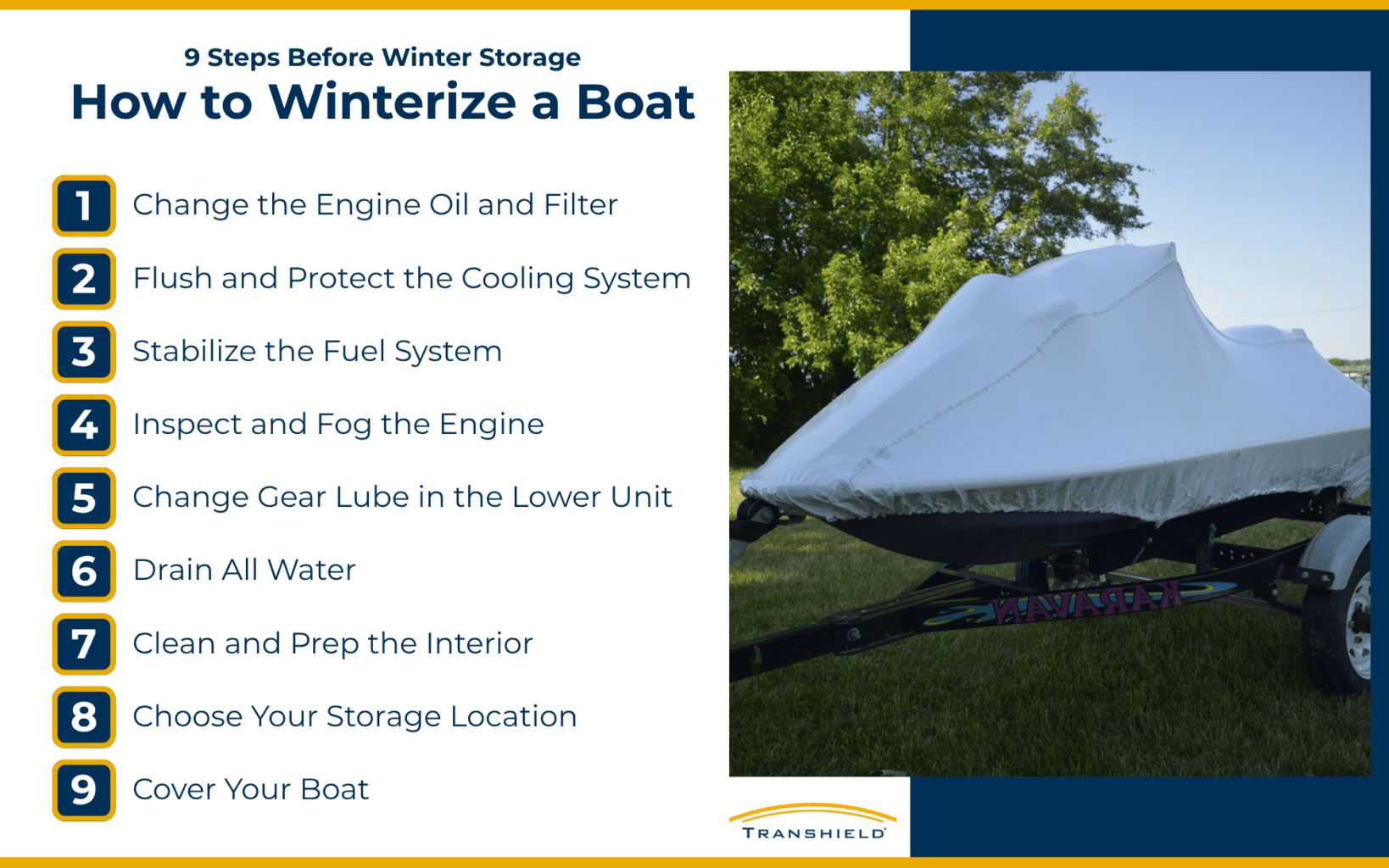
Step 1: Change the Engine Oil and Filter
Before storing your boat, change the engine oil and oil filter. Used engine oil contains acids and combustion byproducts that can corrode internal engine components if left sitting over winter.
Outboard motors: Most outboards have an oil drain plug or can be drained via the dipstick tube. Warm the engine first to get the oil flowing, then drain and replace it.
Inboard, V-drive, and sterndrive (I/O) engines: Warm the engine up first, then drain and replace the oil and filter. Check your owner’s manual for the correct oil specification.
Jet drives and pod drives: The process varies by manufacturer; consult your owner’s manual or a certified marine technician.
Step 2: Flush and Protect the Cooling System
Failure to properly drain or treat the cooling system is one of the most common causes of freeze damage. This step varies by engine type.
Outboard Motors: Flush the outboard motor with fresh water using a garden hose and flushing muffs. Run the engine until the water runs clear to remove salt, sand, and debris from the raw water passages. Then fog the engine with fogging oil to protect internal components.
Inboard Engines and Raw Water Systems: Drain all raw water from the engine block, raw water pump, raw water hose, and any other components in the raw water circuit. Once drained, run marine antifreeze through the system to protect against any residual moisture. Do not use automotive antifreeze; use marine antifreeze rated for your climate.
Step 3: Stabilize the Fuel System
A full fuel tank over winter reduces condensation buildup inside the tank.
Add a quality fuel stabilizer to the fuel tank, then run the engine for 10 minutes to make sure the treated fuel circulates through the entire fuel system. This prevents gumming, varnish buildup, and corrosion inside the fuel system during storage.
If your boat has a fuel filter or fuel/water separator, this is also a good time to replace those as part of your winterization.
Step 4: Replace Spark Plugs and Inspect the Engine
Pull the spark plugs and inspect them. If they’re worn or fouled, replace them now so your engine is ready to go next season. With the plugs out, squirt a small amount of fogging oil into each cylinder and turn the engine over briefly to coat the cylinder walls; this protects against rust during winter storage.
This is also a great opportunity to do a thorough inspection of belts, hoses, and fluid levels. Address anything that looks worn before winter sets in.
Step 5: Change Gear Lube in the Lower Unit
The lower unit on an outboard or sterndrive houses gears submerged in gear lube. Drain the old gear lube and inspect it. If it looks milky, that means water has gotten in, which is a sign of a failing water pump impeller or seal. Replace the gear lube with fresh fluid. If you see water contamination, have the lower unit inspected before the next boating season.
While you’re servicing the lower unit, check the water pump impeller. Most manufacturers recommend replacing it every two to three years, regardless, and winter is a good time to get it done.
Step 6: Drain All Water from the Boat
Go through the entire boat and remove any water that could freeze.
- Pull the drain plugs and tilt the boat to drain any standing water
- Flush and drain the freshwater system and any livewells or baitwells
- Drain and blow out any plumbing lines
- Remove water from bilge areas
Even small pockets of fresh water or raw water left behind can cause significant damage if they freeze.
Step 7: Clean and Prep the Interior
Before closing things up for winter, give the boat a thorough cleaning. Remove all gear, food, and anything that could attract pests or mold over the winter. Wipe down surfaces, clean out compartments, and leave drawers or hatches slightly ajar to allow airflow. Moisture and mildew are real problems in enclosed boat interiors during long storage periods.
Step 8: Choose Your Storage Location
You have a few options for winter boat storage:
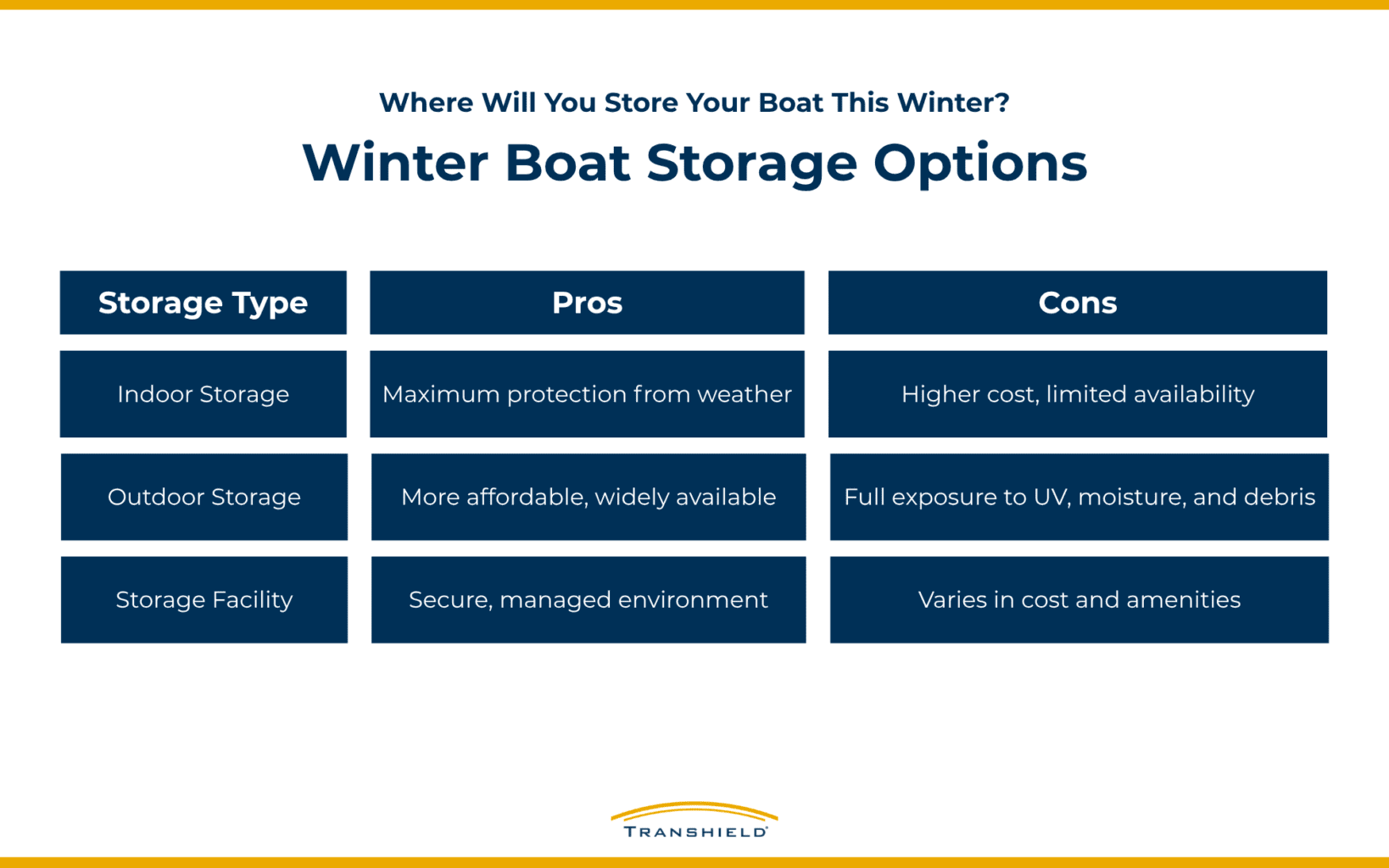
Indoor storage gives your boat the most protection from the elements but tends to come with higher costs and limited availability. A storage facility offers a secure, managed environment, though pricing and amenities vary. Outdoor storage is the most accessible and affordable option, but it leaves your boat fully exposed to UV rays, moisture, and debris all season long. Wherever your boat ends up, a quality cover is one of the most important parts of winterization.
Step 9: Cover Your Boat Properly
A proper boat cover is the last line of defense through the winter months. The right cover keeps out rain, snow, UV exposure, and debris, while helping prevent moisture from building up inside.
Shrink Wrap
Shrink wrap is a widely used option for winter boat storage. It conforms to the boat’s shape and sheds water and snow reasonably well, but it has real drawbacks. It traps moisture underneath, which can lead to mildew buildup over a long storage period. It also gets cut off and thrown away every spring, meaning you’re paying for it again every single year.
Reusable Boat Covers
Reusable boat covers solve the main problems that come with shrink wrap. A breathable cover lets moisture escape instead of trapping it underneath, which goes a long way toward preventing mildew over a long storage period. The right cover will also block rain, UV rays, and debris without sealing everything in. Transhield offers individual boat covers built for exactly this: reusable, breathable, and designed to protect through a full winter season.
Winterization Checklist at a Glance
| Task | Notes |
| Oil and oil filter change | All engine types; consult owner’s manual for spec |
| Cooling system flush and antifreeze | Use marine antifreeze for raw water systems |
| Fuel stabilizer | Add to full tank, run engine to circulate |
| Spark plug inspection/replacement | Fog cylinders with fogging oil |
| Lower unit gear lube change | Check for water contamination |
| Water pump impeller inspection | Replace if needed |
| Drain all water | Bilge, livewells, freshwater system, drain plugs |
| Interior cleaning | Remove food, gear; allow airflow |
| Choose storage location | Indoor or outdoor |
| Cover the boat | Reusable cover recommended |
Getting Ready for Next Season
Before you head to the boat ramp next season, take time to reverse the process. Reconnect the battery, check all fluid levels, inspect the raw water pump and impeller, and run the engine on fresh water before launching. A little prep in the spring is a lot easier than diagnosing problems at the dock.
Protect Your Boat All Winter Long
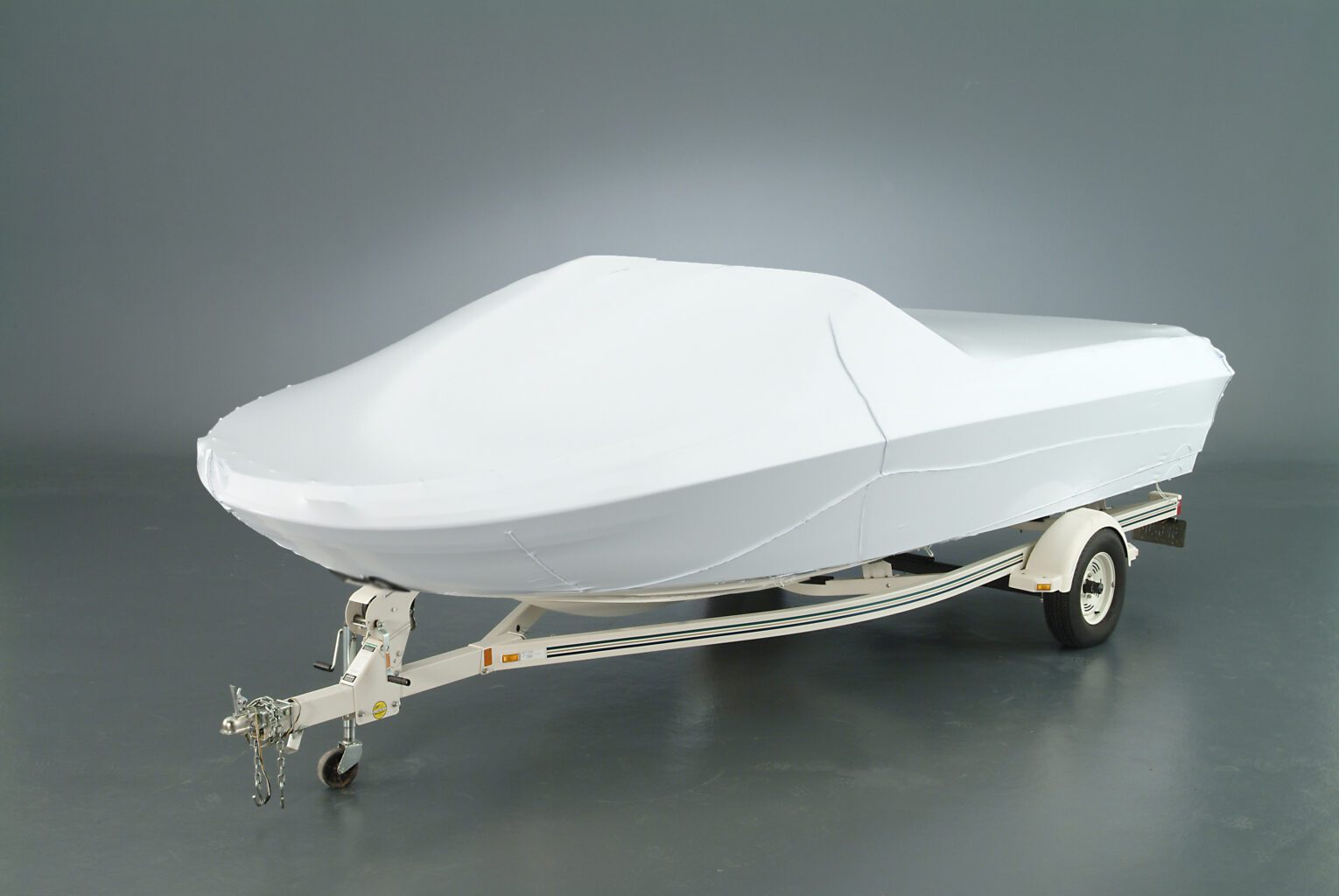
Proper winterization is what separates a smooth start to boating season from a costly one. Take care of your engine, your fuel system, and your hull now, and your boat will be ready to go when the weather turns. The last step, and one of the most important, is making sure your boat is covered.
Transhield has spent over 30 years developing protective cover solutions, and our individual boat covers are built for exactly what you’re dealing with: a full winter season of UV exposure, moisture, and debris. Reusable and breathable, Transhield’s covers protect your boat through the off-season without the recurring cost of shrink wrap. Shop Transhield boat covers on Amazon and get your boat ready for a clean start next spring.