
Corrosion is one of the most expensive problems in the heavy equipment sector today. It weakens metal, voids warranties, delays projects, and lowers the value of assets while they sit in storage or move across the country. For manufacturers, distributors, military fleet managers, and anyone responsible for protecting large machinery, corrosion prevention is part of protecting the bottom line.
Corrosion can be slowed and controlled with the right approach. This guide covers why heavy equipment corrodes, the types of corrosion to watch for, and the methods that keep metal surfaces protected through long-term storage and transit.
Why Heavy Equipment Corrodes
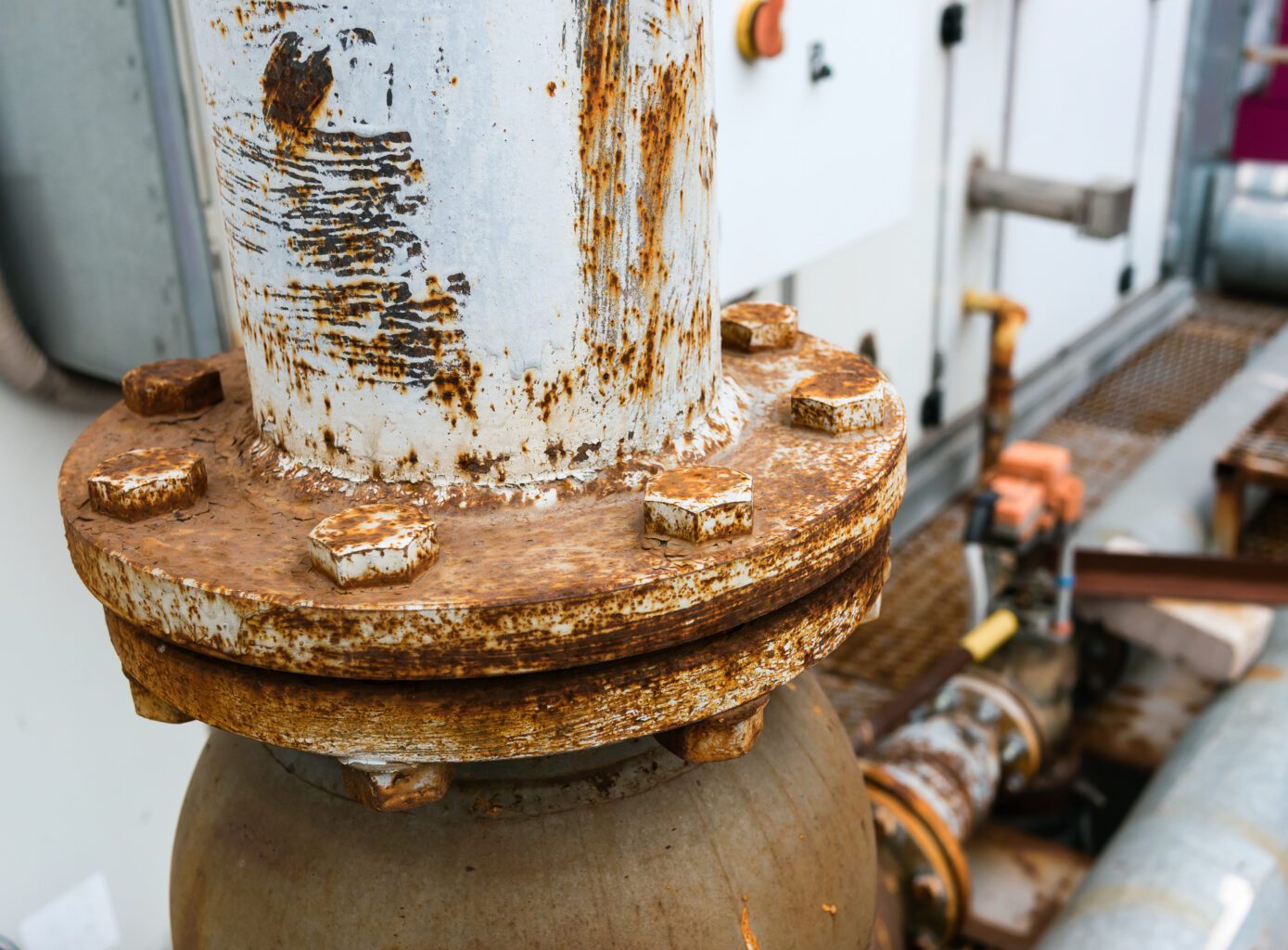
Corrosion is a chemical reaction between metal and its surroundings. When bare metal meets moisture and oxygen, it begins to break down and form rust. Salt, chemicals, and airborne pollutants speed the process, which is why equipment in coastal, industrial, and agricultural settings tends to corrode faster.
Heavy equipment faces two high-risk periods:
- Storage: Machinery parked outdoors is exposed to rain, humidity, temperature swings, UV rays, and ground moisture for weeks or months at a time.
- Transit: Equipment on open trailers meets road salt, salt spray near the coast, wind-driven debris, and rapid changes in temperature and humidity.
Both situations leave metal surfaces open to environmental factors that cause rust and pitting. The longer equipment stays exposed, the more the damage compounds.
Common Types of Corrosion
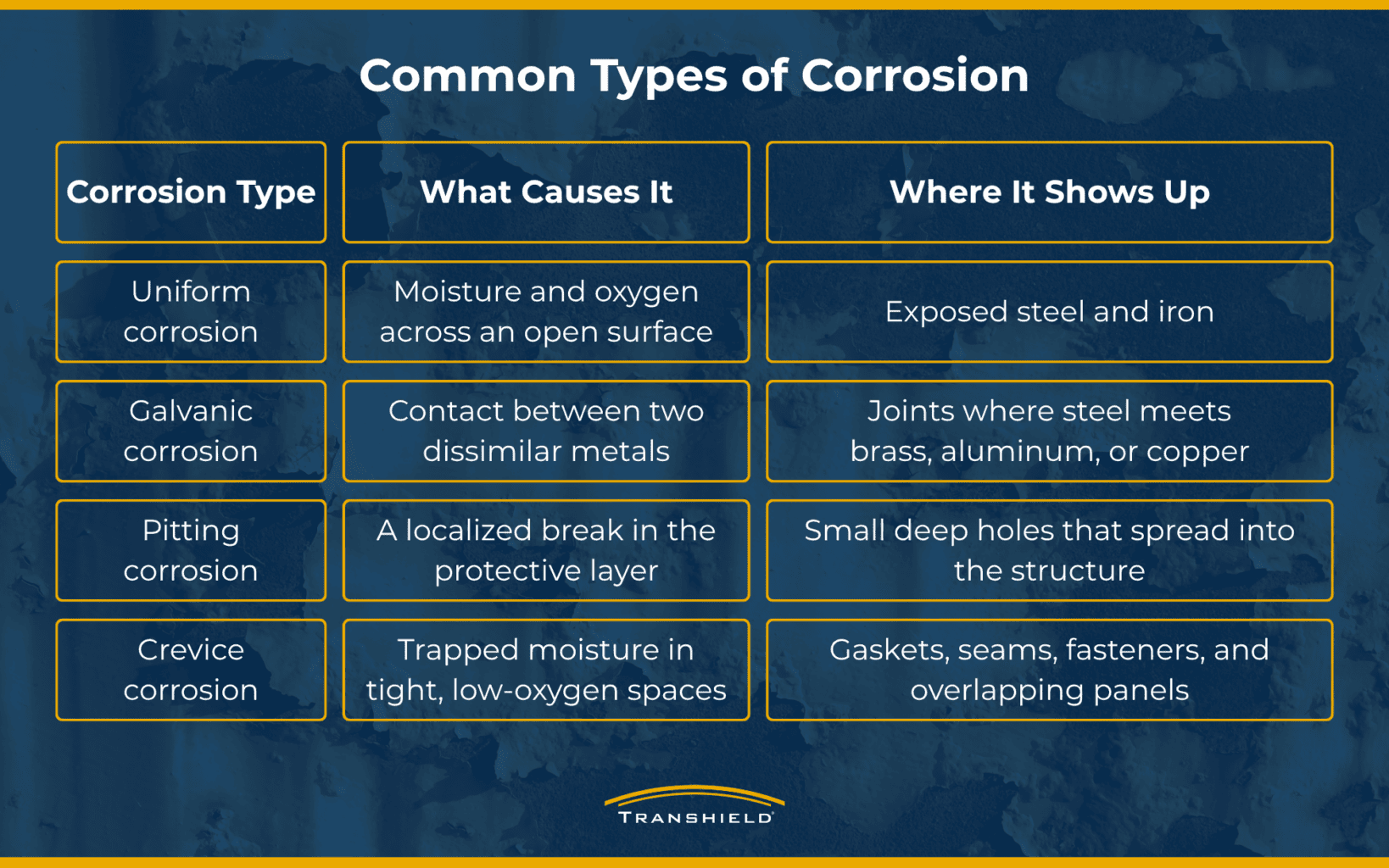
Different conditions produce different forms of corrosion. Knowing which type you are dealing with helps you choose the right protection.
Uniform Corrosion
This is the most common form, spreading evenly across an open metal surface wherever moisture and oxygen reach bare steel or iron and thinning the material over time.
Galvanic Corrosion
Two dissimilar metals in contact, with moisture present, set this off, such as steel against brass, aluminum, or copper. One metal corrodes faster than it would on its own, so watch the joints where different metals meet.
Pitting Corrosion
A localized break in the protective layer opens small, deep holes. The surface can look sound while the damage works into the structure, which makes pitting harder to catch early.
Crevice Corrosion
Crevice corrosion develops where moisture collects in narrow, sheltered gaps that get little air. Common spots include the areas under gaskets, along seams, around fasteners, and beneath overlapping panels. Because these areas sit out of sight, the damage often goes unnoticed until it is well advanced.
How to Prevent Corrosion on Heavy Equipment
No single method covers every situation. The strongest results come from combining surface preparation, coatings, corrosion inhibitors, and protective covers.
Start With Surface Preparation
Every protection method works better on a clean surface. Before storage or transit, remove dirt, grease, and salt residue, since these trap moisture and hold it against the metal. A degreaser clears oily buildup, and any existing rust should be removed before new protection goes on. Skipping this step lets corrosion continue underneath whatever you apply next.
Apply a Protective Coating
A protective coating creates a physical barrier that keeps moisture and oxygen away from the metal. Common options include:
- Powder coating: forms a hard, even finish on frames and panels.
- Epoxy and zinc-rich primers: used under topcoats for added corrosion resistance.
- Corrosion-resistant coatings: built for harsh environments and high-stress areas.
Coatings depend on good surface preparation and full coverage. A small gap or a chip in an old coating gives corrosion a place to start, so inspect coated surfaces on a schedule and touch up any bare spots.
Use a Corrosion Inhibitor
A corrosion inhibitor is a compound that slows the chemical reaction behind rust. For heavy equipment in storage or transit, a Vapor Corrosion Inhibitor (VCI) is the method we recommend.
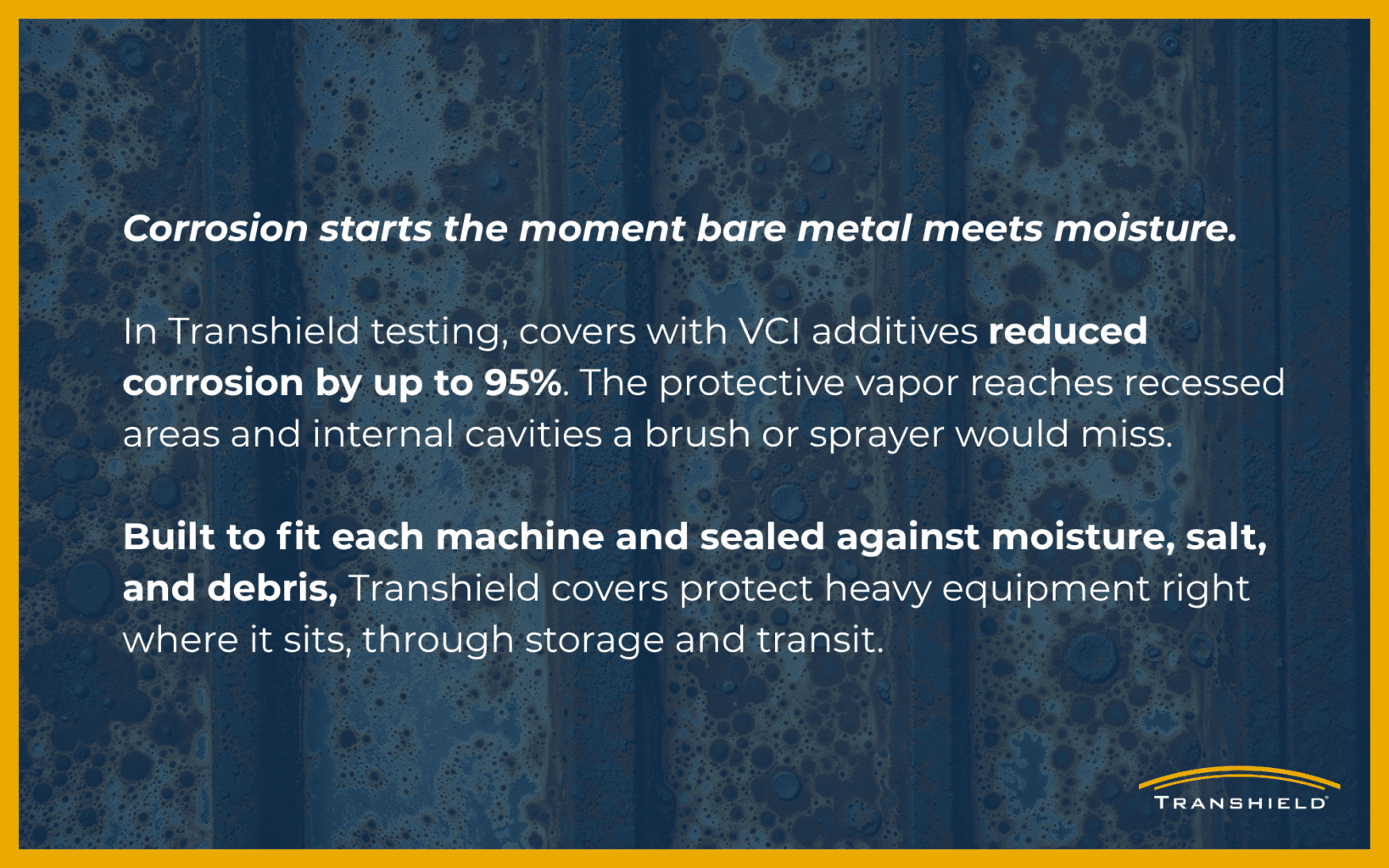
A VCI releases molecules that travel through the space around the metal and settle on the surfaces they reach, including recessed areas and internal cavities that a brush or sprayer would miss. This makes VCI well suited to the complex shapes found on heavy machinery.
| Stage | What Happens |
| Release | VCI molecules vaporize from the source material |
| Migration | These molecules travel through the enclosed space |
| Adhesion | VCI vapors bond with metal surfaces upon contact |
| Protection | A molecular layer forms, blocking moisture and oxygen |
VCIs work by maintaining a concentration of protective molecules in the space around the metal, so it performs best inside a reasonably enclosed space. Quality VCI products blend multiple formulations to provide protection over the short, medium, and long term. Many Transhield covers are built with VCI additives in the adhesive layer, so this protection comes as part of the cover rather than a separate step.
Control Storage Conditions
Where you can, lower the exposure. Climate-controlled storage, dehumidifiers, and good ventilation all reduce the moisture that drives corrosion. These controls work well indoors, but they are rarely practical for large machinery kept in an outdoor yard, which is where covers become the more workable option.
Cover the Equipment
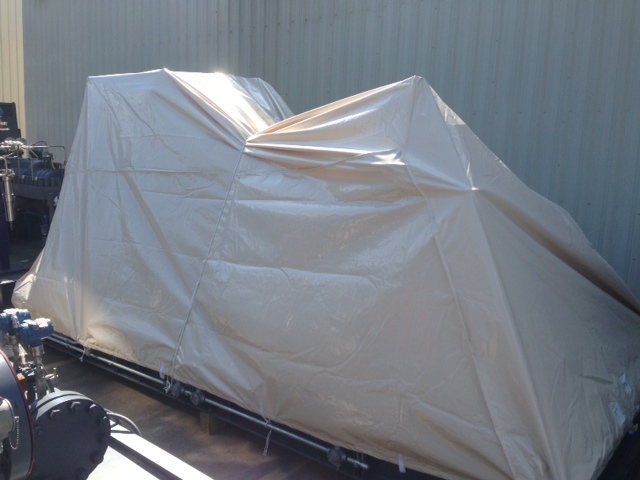
A protective cover addresses several corrosion factors at once. A cover made for a specific machine provides complete coverage without the gaps and pooling that come with a generic tarp. Covers that contain VCI additives add chemical protection to the physical barrier, which extends how long equipment stays protected.
A Prevention Routine for Storage and Transit
A consistent routine catches small problems before they turn into expensive repairs. Follow these steps:
- Inspect the equipment for existing rust or coating damage and note anything you find.
- Clean all surfaces to remove contaminants that speed corrosion.
- Prepare the metal and apply touch-up coating to any bare spots.
- Fit a custom protective cover with VCI additives over the equipment.
- Check covers on a regular schedule for shifting, moisture, or damage.
- Leave covers in place if the equipment moves into storage after transit, since the protection is still needed during that time.
Remove the cover once the equipment is ready for service, and document the condition of the machine for warranty and quality records.
How Transhield Protects Heavy Equipment
Transhield builds custom equipment covers that bring these methods together in one step. Each cover uses a three-layer system with a patented adhesive that emits VCIs: a UV-resistant outer film that blocks sunlight and repels water, an adhesive layer that releases VCI chemistry into the enclosed space, and a soft inner layer that pulls moisture away from the metal and guards painted surfaces. Because each cover is built to fit a specific machine, there are no gaps where moisture, salt, or debris can reach the surface, and in testing, this approach has reduced corrosion by up to 95%.
That kind of coverage is the last piece of a larger routine. Preventing corrosion on heavy equipment comes down to clean surfaces, the right coatings, a corrosion inhibitor, and a cover that seals out the elements through storage and transit. If you want that protection built into a cover made for your specific machines, reach out to Transhield to talk through a custom solution.