
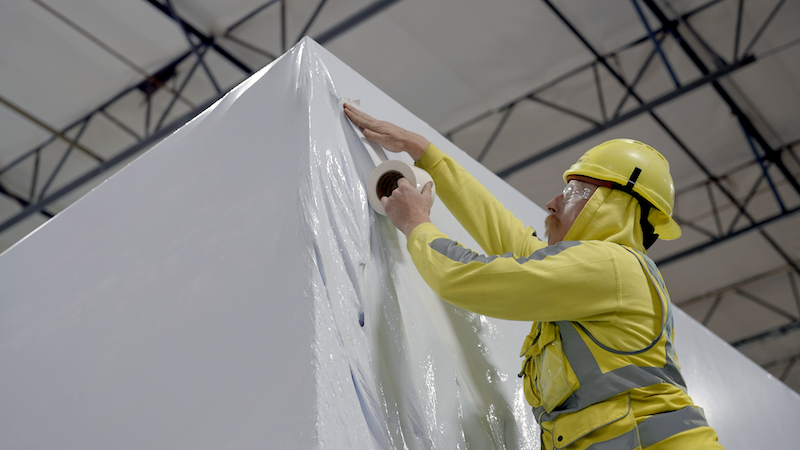
Shrink wrap earned its place in retail and warehouse operations, where it bundled products and secured palletised loads for shipment. It was built for primary and secondary packaging, not for guarding heavy equipment through months of storage or a cross-country move.
When machinery, vehicles, and industrial assets move through the supply chain, plastic shrink wrap leaves real gaps. The strongest answer is a custom protective cover engineered for the asset, and paired a physical barrier with built-in corrosion protection.
The Limits of Shrink Wrap for Equipment
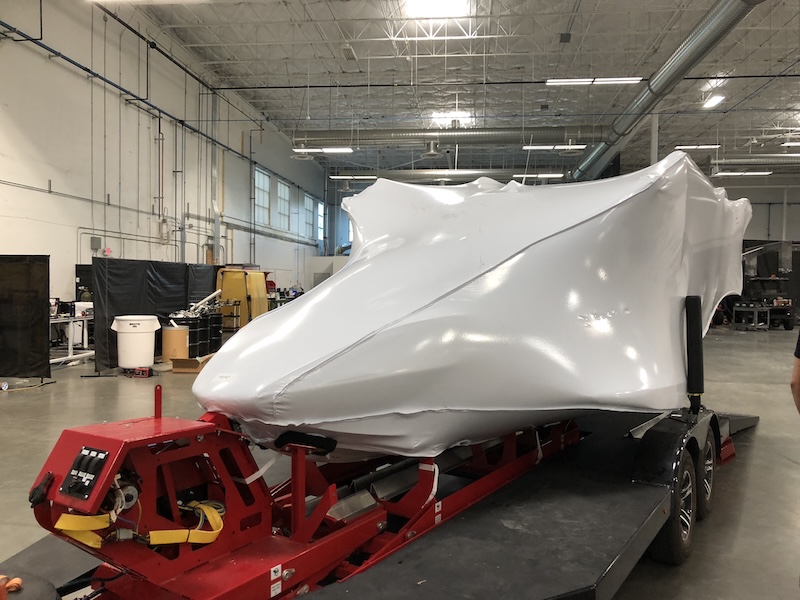
Plastic shrink wrap begins as a loose plastic film that tightens when heat is applied with a heat gun. That approach works well for a soft drink multipack or a stack of beverage cans headed to a store shelf, but for large equipment the picture changes.
- Because shrink film only forms a physical barrier, it does nothing to slow the chemical process that rusts and pits metal surfaces.
- Condensation forms under the film as temperatures swing, trapping moisture against the metal and speeding up corrosion rather than preventing it.
- As a single-use plastic product, shrink wrap becomes plastic waste once removed, which adds disposal costs and pushes many operations toward a sustainable alternative built from longer-lasting or recyclable material.
- Covering a heavy asset with film, whether by hand or with a shrink-wrapping machine, is labor-intensive and prone to gaps or loose seams where moisture and debris can still reach the equipment.
Letting metal corrode is expensive. It drains an estimated $2.5 trillion from the global economy every year, roughly 3.4 percent of global GDP. For a one-time move, a temporary solution like plastic shrink film may be enough. For equipment that sits in storage or travels through changing climates, a stronger method protects both the asset and the warranty behind it.
Common Alternatives to Shrink Wrap
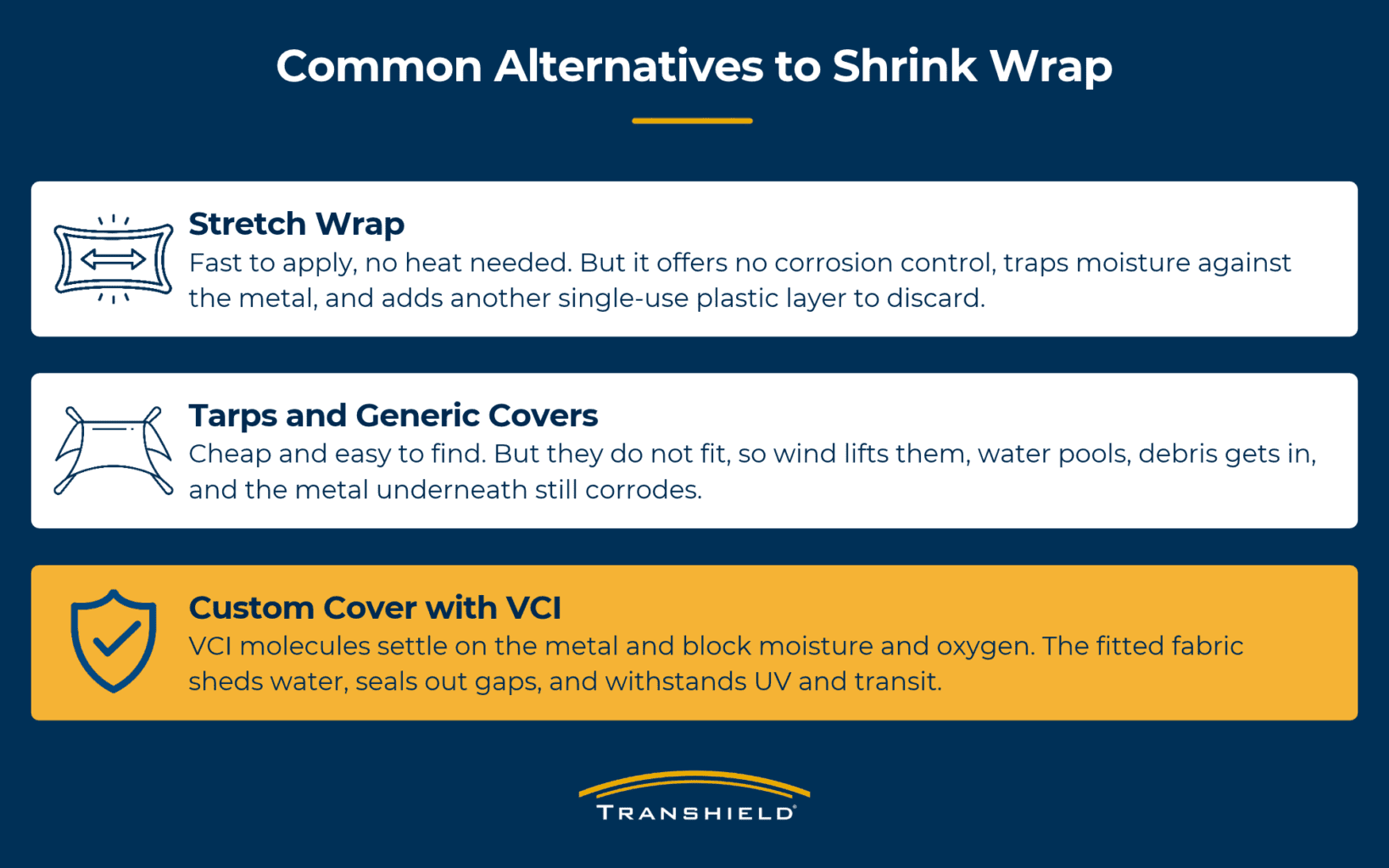
Several wrap alternatives get used in place of shrink wrap, though most solve only part of the problem. Understanding where each falls short shows why a custom protective cover is the packaging solution that holds up for equipment.
Stretch Wrap and Plastic Wrap
Stretch wrap clings to a load without heat, which makes it faster to apply than shrink wrap, and it holds boxes together on a pallet reliably. On large equipment, it repeats the same problems: no corrosion control, trapped moisture, and another layer of plastic packaging to discard after a single use.
Tarps and Generic Covers
Tarps are inexpensive and widely available, and they keep rain and snow off in the short term. Because they do not fit the equipment, wind lifts them, water pools in low spots, gaps let in dust and debris, and they provide no barrier against the corrosion that forms on the metal underneath.
Custom Protective Covers with VCI
A custom protective cover adds the one thing plastic wrap cannot: vapor corrosion inhibitor chemistry. It releases molecules into the space around the metal, and they settle on the surface to block the moisture and oxygen that cause corrosion. Built into the cover material, that protection reaches every metal surface inside the enclosed space while the fabric itself stands up to the physical elements.
The cover settles closely around a specific piece of equipment so it sheds water and leaves no gaps for moisture or debris, and its material carries far greater tensile strength than thin shrink film to stand up to handling and transit. The VCI additives guard the metal while the fabric handles UV, water, and impact, so the equipment is protected against corrosion and the elements at once.
| Option | Corrosion protection | Moisture control | Fit to equipment | Waste profile |
| Shrink wrap | None | Poor, traps moisture | Loose, heat-shrunk | Single-use plastic |
| Stretch wrap | None | Poor | Loose | Single-use plastic |
| Tarps | None | Poor, pools water | Loose, prone to gaps | Short service life |
| Custom covers with VCI | Yes, 85 to 95 percent | Wicks moisture outward | Tailored, no gaps | Built to last |
What to Look for in a Shrink Wrap Alternative
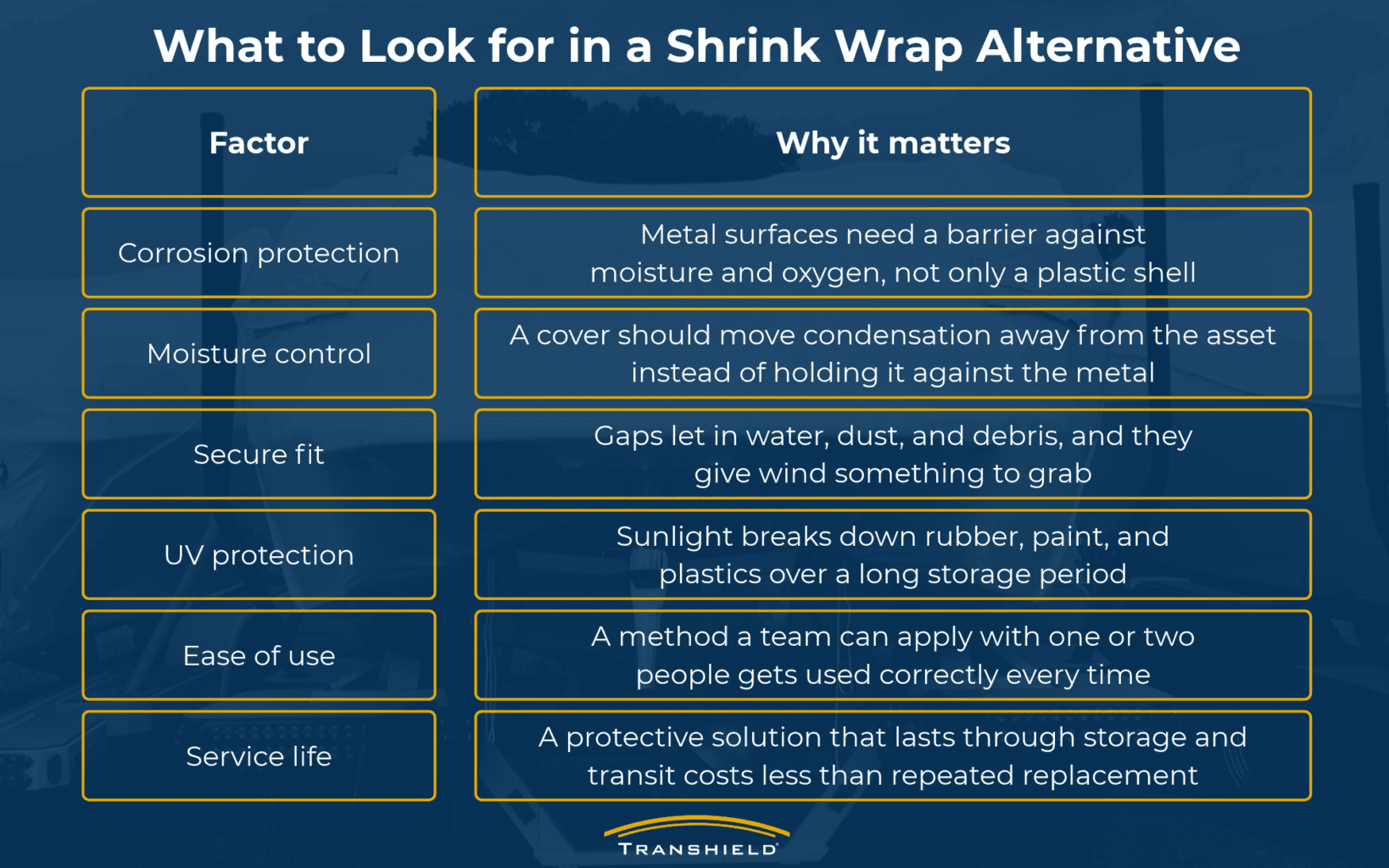
When comparing packaging solutions for equipment protection, weigh these factors against how long the asset will be stored and where it will travel.
- Corrosion Protection: the metal needs a chemical barrier against moisture and oxygen, not just a plastic shell wrapped around it.
- Moisture Control: condensation should pull away from the asset rather than stay trapped against the surface where rust begins.
- Secure Fit: a close fit keeps out water, dust, and debris and gives the wind nothing to grab and tear loose.
- UV Protection: sunlight breaks down rubber, paint, and plastics over a long storage period, so the cover has to block it.
- Ease of Use: one or two people should be able to apply it correctly every time without special training.
- Service Life: a cover that lasts through storage and transit lowers the real cost, since the alternative is paying to replace a wrap again and again.
Custom Equipment Covers as the Shrink Wrap Alternative
For manufacturers, distributors, and military programs that move and store high-value equipment, a custom cover answers the shortcomings of shrink wrap in a single product. Transhield builds custom equipment covers using a three-layer system with a patented adhesive that emits VCIs:
- The outer layer is a UV-resistant polyethylene film that blocks sunlight and repels water.
- The middle layer is a hot-melt adhesive that can carry vapor corrosion inhibitor chemistry, releasing protective molecules into the space around the metal.
- The inner layer is a soft, non-woven material that wicks moisture away from surfaces and guards painted finishes against scratches.
For covers containing VCI additives, this system slows corrosion by 85 to 95 percent across steel, stainless steel, and other metals, and the protection lasts as long as the cover stays in place. Because each cover is designed for a specific asset, there are no gaps where moisture or debris can enter. Covers can be configured with features such as zipper doors, vents, ratchet straps, and labeling to match how a team handles and inspects its equipment.
Protecting Your Investment
Shrink wrap, stretch wrap, and other plastic products still have a role in retail and pallet packaging, but that is where their usefulness ends. Protecting equipment through storage and transit asks more of a material, and a custom cover built for the asset delivers it, controlling moisture, blocking UV, and slowing the corrosion that a plastic wrap leaves unchecked.
Transhield designs custom covers around the exact equipment you need to protect, so the fit, the corrosion defense, and the durability are built in from the start. Tell us what you are storing or shipping, and we will help you find the right cover for the job.