
Concrete doesn’t just dry, it cures. The difference matters more than most people realize. Curing is a chemical process that determines how strong and long-lasting your concrete will be. Rush it or ignore it, and you end up with weak slabs, cracking, and costly repairs.
This guide breaks down what happens during the curing process, how long it takes, what affects the timeline, and how to get the best results on your construction project.
What Is Concrete Curing?
When water mixes with cement, it triggers a chemical reaction called hydration. This hydration process binds the materials together and builds strength over time. Curing is about keeping the right conditions in place so that this reaction can continue.
Fresh concrete needs moisture and the right temperature to cure properly. If the concrete surface dries out too fast or gets too cold, the hydration process slows or stops. The result is weaker concrete that won’t reach its full strength.
How Long Does Concrete Take to Cure?
Concrete curing happens in stages. Here’s a general timeline for most standard mixes:
| Timeframe | What’s Happening |
| 24-48 hours | Initial set. Concrete is firm but still fragile. |
| 7 days | Concrete reaches about 70% of its compressive strength. |
| 28 days | Concrete reaches its design strength (full cure for most mixes). |
| Months to years | Strength development continues slowly over time. |
Most construction projects use the 28-day mark as the standard for when concrete hits full strength. However, the curing process actually continues for months or even years, with the concrete slowly gaining additional strength.
For practical purposes, here’s when you can typically resume activity:
- Foot traffic: 24-48 hours
- Vehicle traffic: 7-10 days
- Heavy equipment: 28 days or per engineer specifications
These timelines assume proper curing conditions. Poor weather conditions or inadequate curing methods can extend them significantly.
Factors That Affect Concrete Curing Time
Several variables influence how fast concrete cures and how strong it becomes.
Temperature Conditions
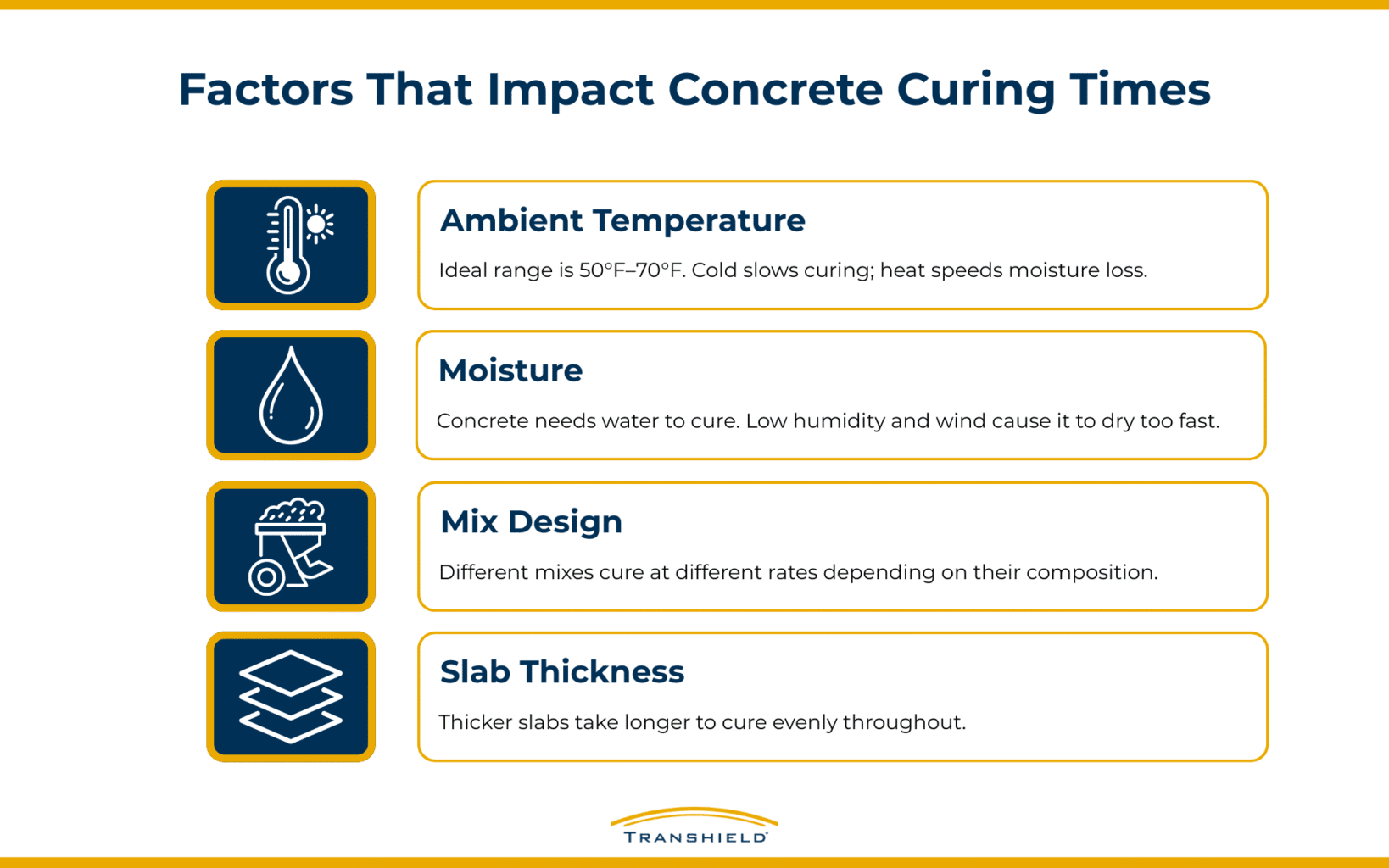
Ambient temperature plays a major role in the curing process. The ideal range for placing concrete is between 50°F and 70°F.
- Cold weather: When ambient temperature drops below 50°F, the hydration process slows dramatically. Below freezing, it can stop entirely. Uncured concrete that freezes can lose up to 50% of its potential strength.
- High temperatures: Hot weather speeds up moisture evaporation from the concrete surface, which can cause the outer layer to cure faster than the interior. This leads to surface cracking and reduced long-term durability.
Moisture Levels
Concrete needs water to cure. If the moisture content drops too quickly, the chemical reaction stalls. High evaporation rates from the sun, wind, or low humidity pull water out of fresh concrete before it can fully hydrate.
Proper curing methods keep moisture levels consistent throughout the process.
Mix Design
The concrete mix itself affects curing time. Mixes with different ratios of Portland cement, aggregate, and admixtures cure at different rates. Some mixes are designed for faster strength gain, while others prioritize long-term durability. Type 1L cements are even trickier with their need for more water and longer curing times.
Slab Thickness
Thicker concrete slabs take longer to cure evenly. The interior stays wetter longer while the surface is exposed to air. This difference can cause uneven strength development if not managed properly.
Why Proper Curing Matters
Skipping or shortening the curing process has real consequences:
- Reduced compressive strength: Concrete that cures too fast or without enough moisture won’t reach its design strength.
- Surface cracking: Rapid moisture evaporation causes the surface to shrink and crack.
- Dusting and scaling: Poorly cured surfaces break down faster under use.
- Shorter lifespan: Concrete structures that aren’t cured properly deteriorate sooner.
Taking the time to cure concrete correctly saves money and headaches down the road.
Common Curing Methods

There are several ways to maintain proper moisture and temperature conditions during the curing process.
Water Curing
Keeping the concrete surface wet is one of the most effective methods. This can be done by ponding water on flat surfaces or using sprinklers and soaker hoses. Water curing works well but requires constant attention to keep the surface from drying out.
Curing Compounds
Liquid curing compounds are sprayed onto the concrete surface to form a membrane that slows moisture evaporation. They’re easier to apply than water curing methods, but may need to be removed before applying finishes or coatings.
Plastic Sheeting
Covering concrete with plastic sheets traps moisture and protects against wind and sun. However, plastic can cause discoloration if it touches the surface unevenly, and it doesn’t provide insulation in cold weather.
Curing Blankets
Curing blankets, also known as moisture retention covers, control moisture loss, help maintain temperature, and protect the freshly finished concrete from external environmental hazards. They are used in conjunction with fresh water applied to the finished surface to provide the moisture necessary for proper curing.
Getting the Best Results
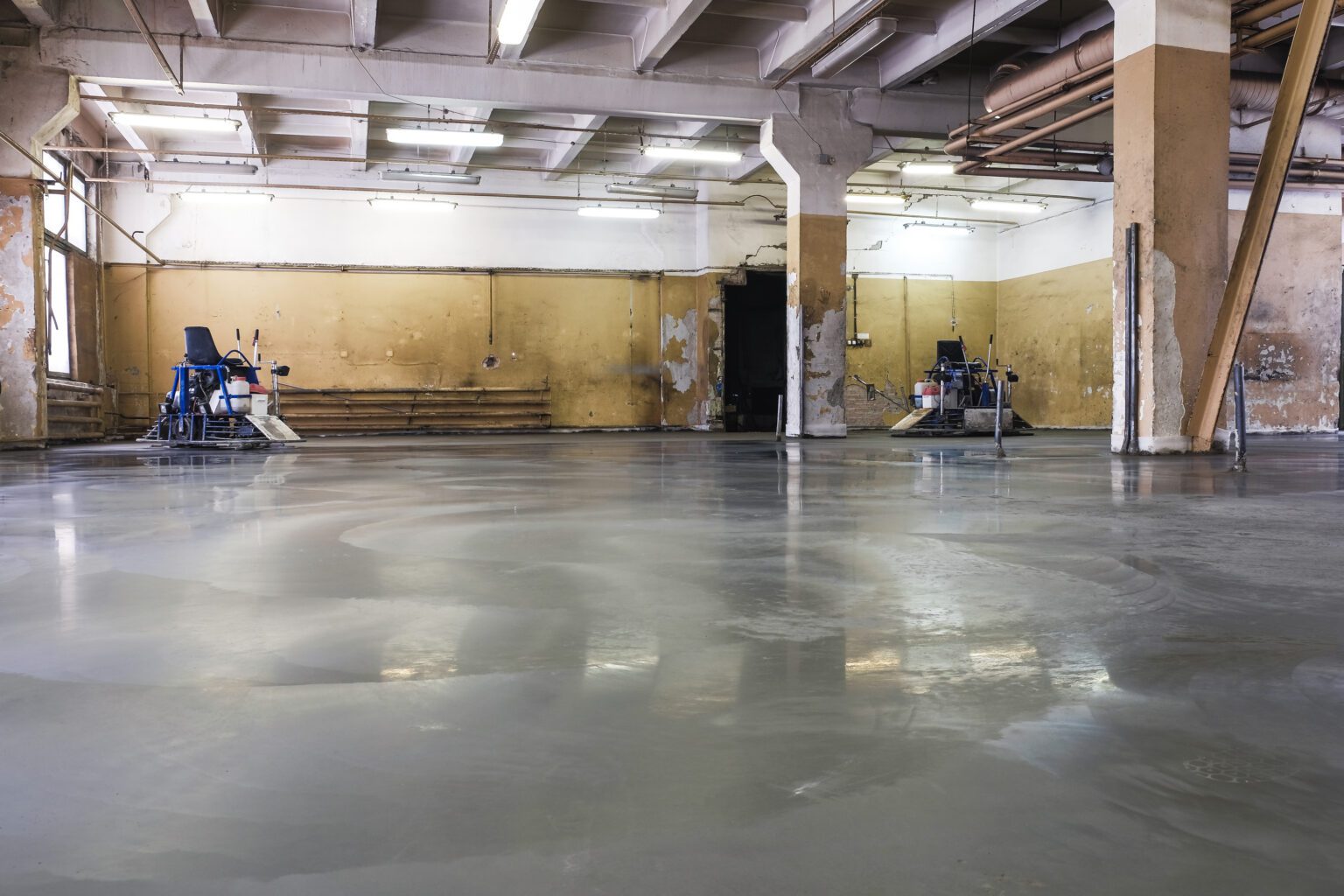
Concrete curing isn’t complicated, but it does require attention. The key points to remember:
- Concrete needs moisture and the right temperature to cure properly.
- Most mixes reach full strength at 28 days, but the process continues beyond that.
- Cold weather slows curing; hot weather speeds up moisture loss.
- Proper curing methods, including curing blankets, protect your investment in concrete structures.
Transhield has over 30 years of experience developing protective solutions for industrial applications. Our concrete curing blankets help contractors and construction teams maintain the conditions needed for proper curing and a safe job site.
Ready to improve your concrete curing process? Contact us today to learn more about our curing blanket solutions.