
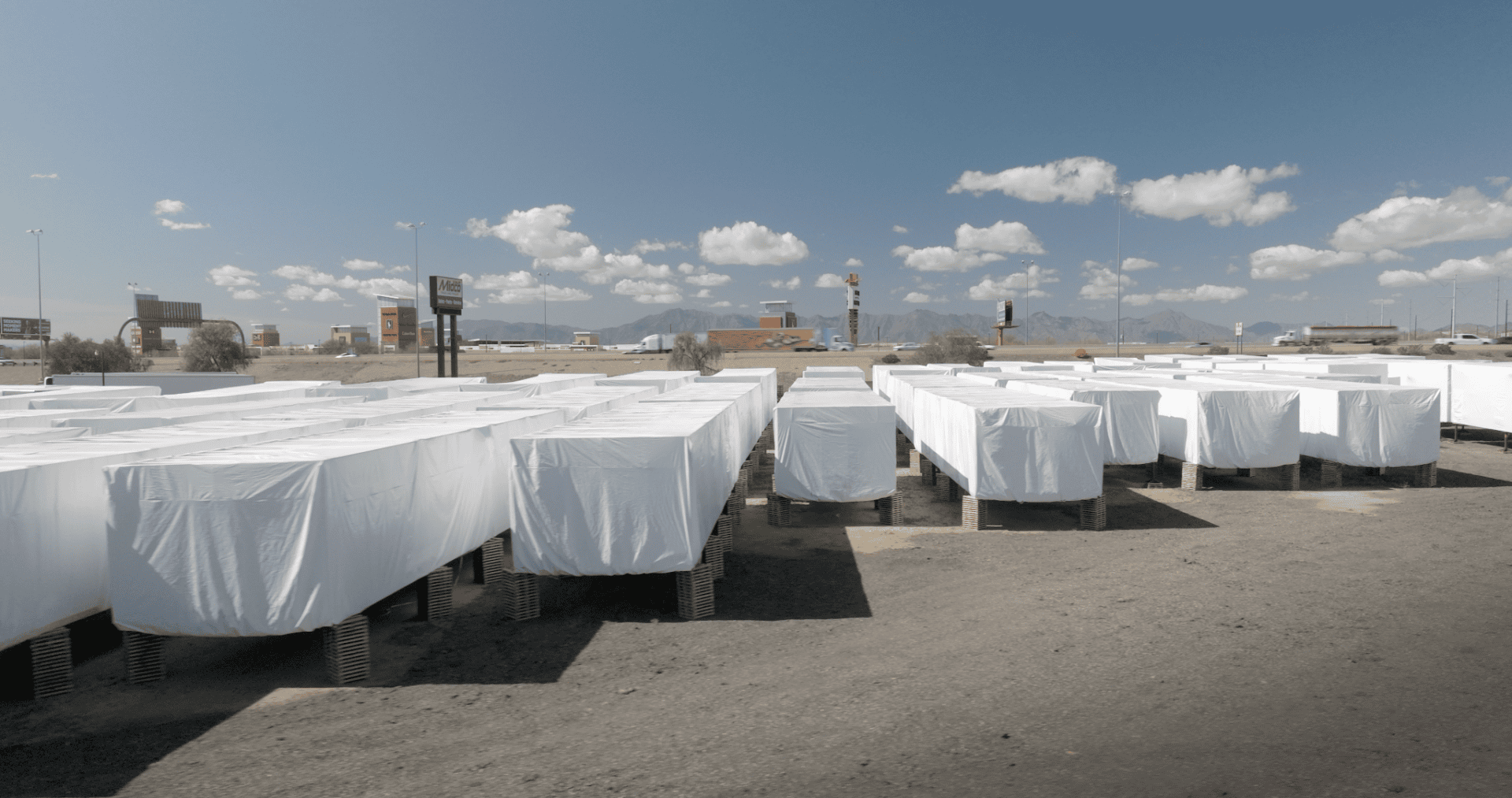
Large equipment, heavy machinery, and industrial tools represent a major investment. Without a secure storage plan, valuable machinery can lose performance, appearance, and service life faster than expected. Proper equipment storage protects machinery from corrosion, weather exposure, and unnecessary repair costs while keeping valuable equipment ready for use.
Without protection, those conditions damage seals, paint, electrical systems, and metal surfaces, especially when equipment sits outside for long-term storage.
Common Storage Risks for Large Equipment
For organizations across the United States, poor industrial storage practices can increase maintenance costs, reduce readiness, and create warranty concerns. A better storage solution protects valuable assets while supporting easy access when equipment is needed again.
- Corrosion on exposed metal components
- UV damage to painted surfaces, hoses, and seals
- Dust and debris buildup in sensitive systems
- Condensation inside covers or enclosed spaces
- Fluid leaks caused by temperature fluctuations
- Downtime, repair costs, and reduced readiness
How Strategic Storage Planning Improves Readiness
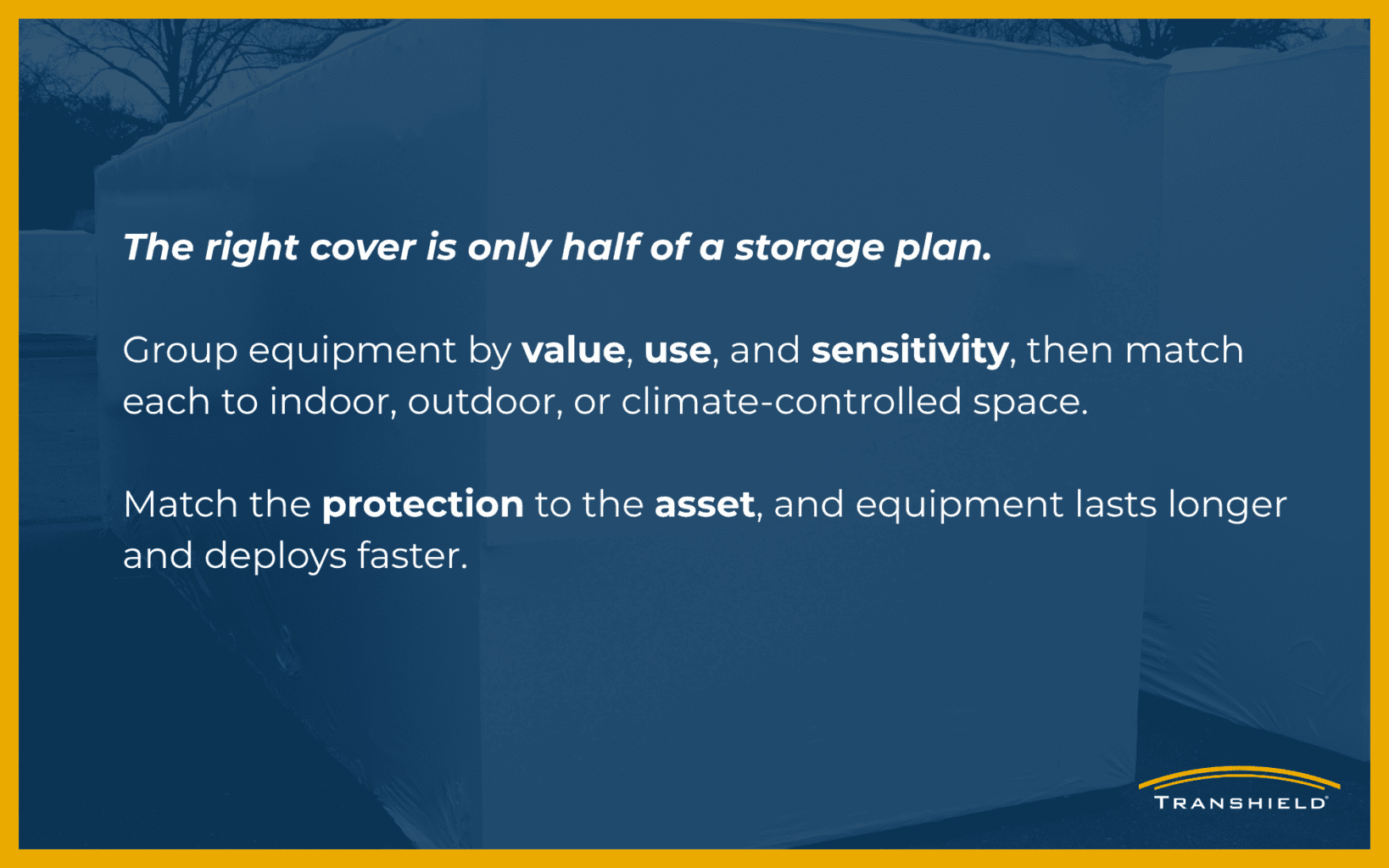
A strong equipment storage plan goes beyond choosing a cover. It includes equipment classification, facility layout, inspection routines, and access planning based on each asset’s specific needs.
Start by grouping equipment according to value, deployment frequency, and environmental sensitivity. That makes it easier to assign the right level of indoor storage, outdoor storage, or climate control support.
Elements of An Effective Storage Program
- Match each asset to the right storage solution
- Reserve premium protection for valuable equipment
- Use clear zones within the storage facility
- Maintain easy access for inspection and deployment
- Track storage dates and maintenance checks
- Review conditions regularly for long-term storage assets
Storage space design also matters. High ceilings, overhead doors, and durable flooring support safe handling of heavy loads and large machinery. While self-storage or a small storage unit may work for parts or tools, full-scale industrial equipment storage usually requires a more specialized secure storage setup.
Indoor Storage Best Practices
Indoor storage reduces direct exposure to weather, but a storage facility still needs the right setup. Industrial equipment storage works best when climate control, spacing, and inspection access are built into the process.
A climate-controlled storage environment helps reduce condensation that leads to corrosion. When possible, keep humidity below 50% and limit sudden temperature changes, especially for large machinery and construction equipment with sensitive metal components.
What To Prioritize In An Indoor Storage Facility
- Stable temperatures and climate-controlled storage when available
- Clear aisles for easy access and safer movement
- Adequate storage space around each asset
- Placement on level surfaces that can support heavy loads
- A security measure plan for restricted or high-value inventory
A secure storage facility should also account for specific requirements such as high ceilings, overhead doors, and access paths for forklifts or trailers. These features matter when storing heavy industrial equipment that cannot fit a standard storage unit or self-storage space.
Why Protective Covers Still Matter Indoors
Even inside, stored equipment can still face dust, humidity, and condensation. Protective covers with Vapor Corrosion Inhibitor (VCI) help create a more controlled environment around the equipment itself. Custom-fit covers support indoor storage by reducing dust exposure, helping control moisture around metal parts, preserving the condition of valuable equipment, and keeping assets cleaner and easier to deploy.
For companies with unique needs, a tailored equipment storage approach combines indoor protection with easy inspections and fast redeployment.
Managing Outdoor Storage Hazards
Outdoor storage is often necessary when a storage facility has limited capacity or when equipment must stay close to a job site. But outdoor storage facilities expose equipment to the most aggressive environmental conditions.
Rain, snow, fog, humidity, and salt-laden air can all accelerate corrosion. Sunlight can break down exposed components, while wind-driven debris can damage finishes and create wear over time. For heavy equipment storage, a weak outdoor storage solution can quickly become a costly problem.
Major Outdoor Storage Threats
- Moisture infiltration on exposed surfaces
- Condensation from daily temperature cycling
- UV exposure that weakens coatings and rubber parts
- Wind stress on unsecured coverings
- Dirt, smoke, and pollutants settling on equipment
Large equipment stored outside needs a storage option built for real-world exposure. This is especially important when equipment must remain available with easy access.
What An Effective Outdoor Storage Solution Should Provide
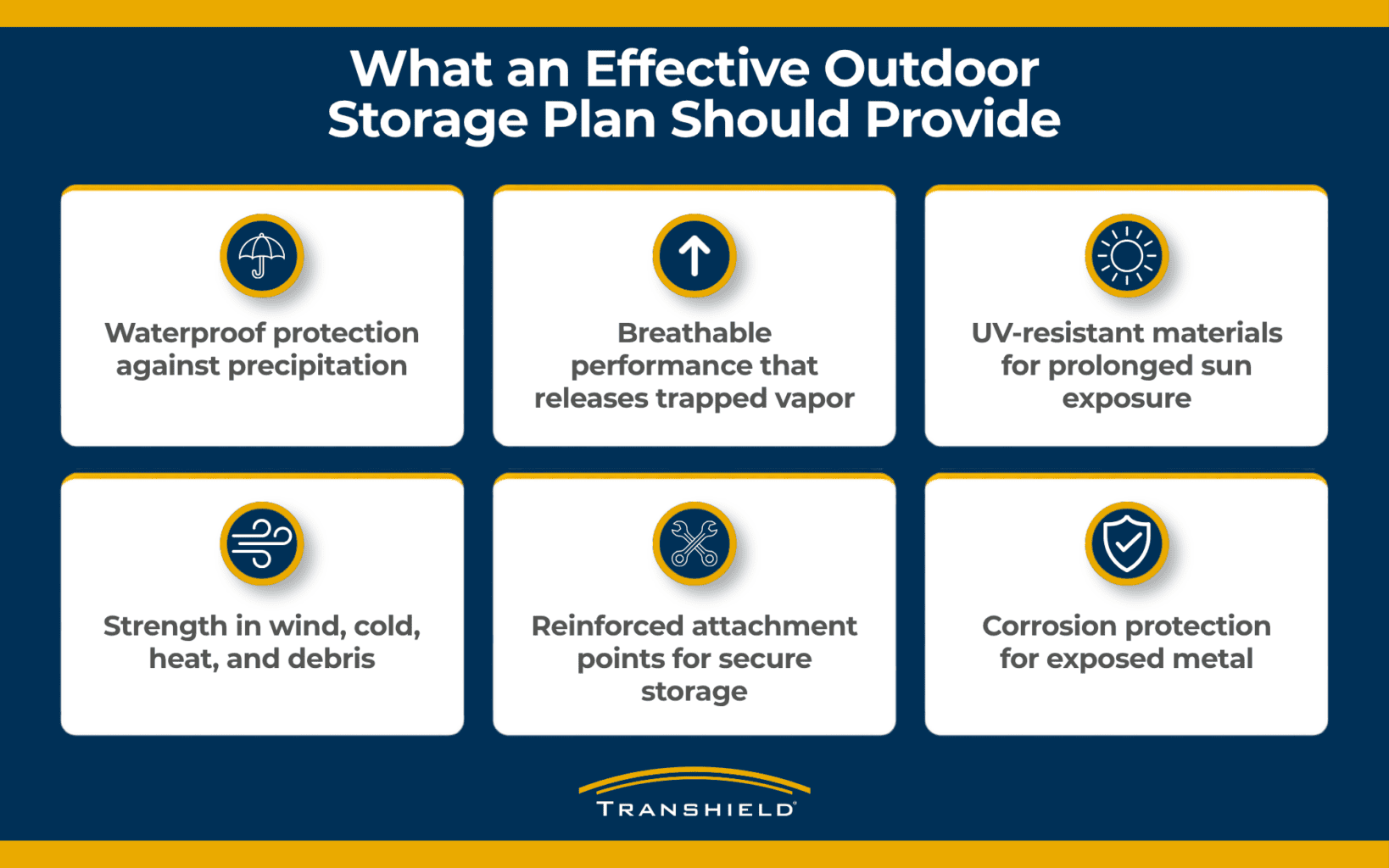
An effective outdoor storage solution should provide waterproof protection against precipitation while allowing trapped vapor to escape. It should also offer UV-resistant performance for prolonged sun exposure, durability in wind, cold, heat, and debris, reinforced attachment points for secure storage, and reliable corrosion protection for exposed metal.
A secure storage approach outdoors should meet specific needs without slowing operations. The right system helps preserve valuable assets while keeping equipment accessible when conditions change quickly.
Choosing the Right Protective Cover System
Not every storage solution performs the same way. For industrial equipment storage, material design, fit, and corrosion-control capabilities all influence how well equipment holds up over time.
The best protective solutions balance strength, moisture management, and usability. They should support specific requirements across indoor storage, outdoor storage, transit staging, and secure storage facility environments.
Key Material Features to Evaluate
- Tear resistance for demanding industrial storage conditions
- Waterproof outer protection
- Breathable layers that help reduce condensation
- UV-blocking performance for outdoor storage
- Reusability for a more cost-effective solution
- Flexible handling for faster installation and removal
Vapor Corrosion Inhibitor (VCI) technology adds another layer of value by helping protect metal components from corrosion during storage. That makes it especially useful for heavy equipment, industrial machinery, and large machinery stored for extended periods.
Why Fit Matters
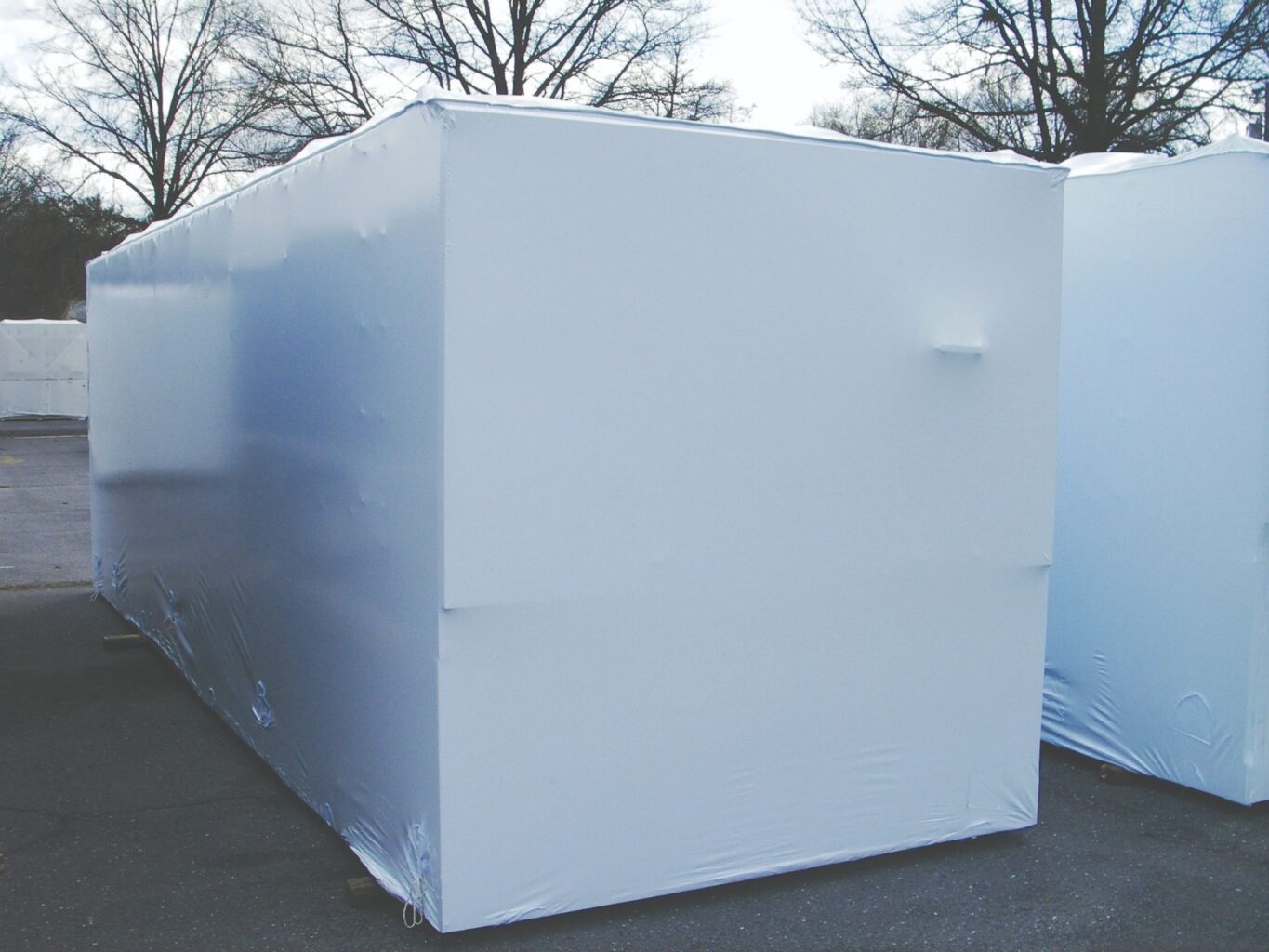
Universal covers often leave gaps where moisture, debris, and wind can enter. A custom-fit cover conforms closely to the equipment, improving secure storage and reducing abrasion from loose material movement.
For equipment with complex shapes or sensitive access points, reinforced tie-downs, access zippers, venting, and inspection-friendly designs can improve usability without sacrificing protection.
A Smarter Storage Solution for Demanding Equipment
Transhield supports industrial equipment storage with custom-fit cover systems designed for moisture control, durability, and corrosion protection. For heavy machinery, industrial and oversized equipment, the goal is preserving readiness and reducing avoidable lifecycle costs.
Transhield solutions are built to support indoor storage and outdoor storage environments, short-term storage and long-term storage programs, and secure storage for valuable machinery and valuable assets.
Where These Solutions Fit Best
- Manufacturing yards and plant overflow areas
- Outdoor storage facilities near active job site operations
- Climate-controlled storage programs for sensitive equipment
- Secure storage facility environments handling high-value inventory
- Metal building spaces with varied access constraints
When organizations need a dependable storage option for equipment storage and protection, the right cover system helps close the gap between exposure risk and operational readiness.
Protecting Your Equipment for the Long Haul
The most effective equipment storage programs protect equipment from corrosion, weather, and avoidable wear while keeping operations flexible. Whether the need is indoor storage, outdoor storage, or a hybrid storage solution, organizations get better results when protection methods match their unique needs and specific requirements.
For companies across the United States, a well-designed storage option can extend equipment life, protect valuable assets, and support faster return to service for essential equipment. If you need a more reliable way to protect machinery in storage or transit, Transhield protective covers offer a durable, custom-fit solution built to help reduce damage, control moisture, and keep equipment ready for use. Contact us today to receive a free quote.