
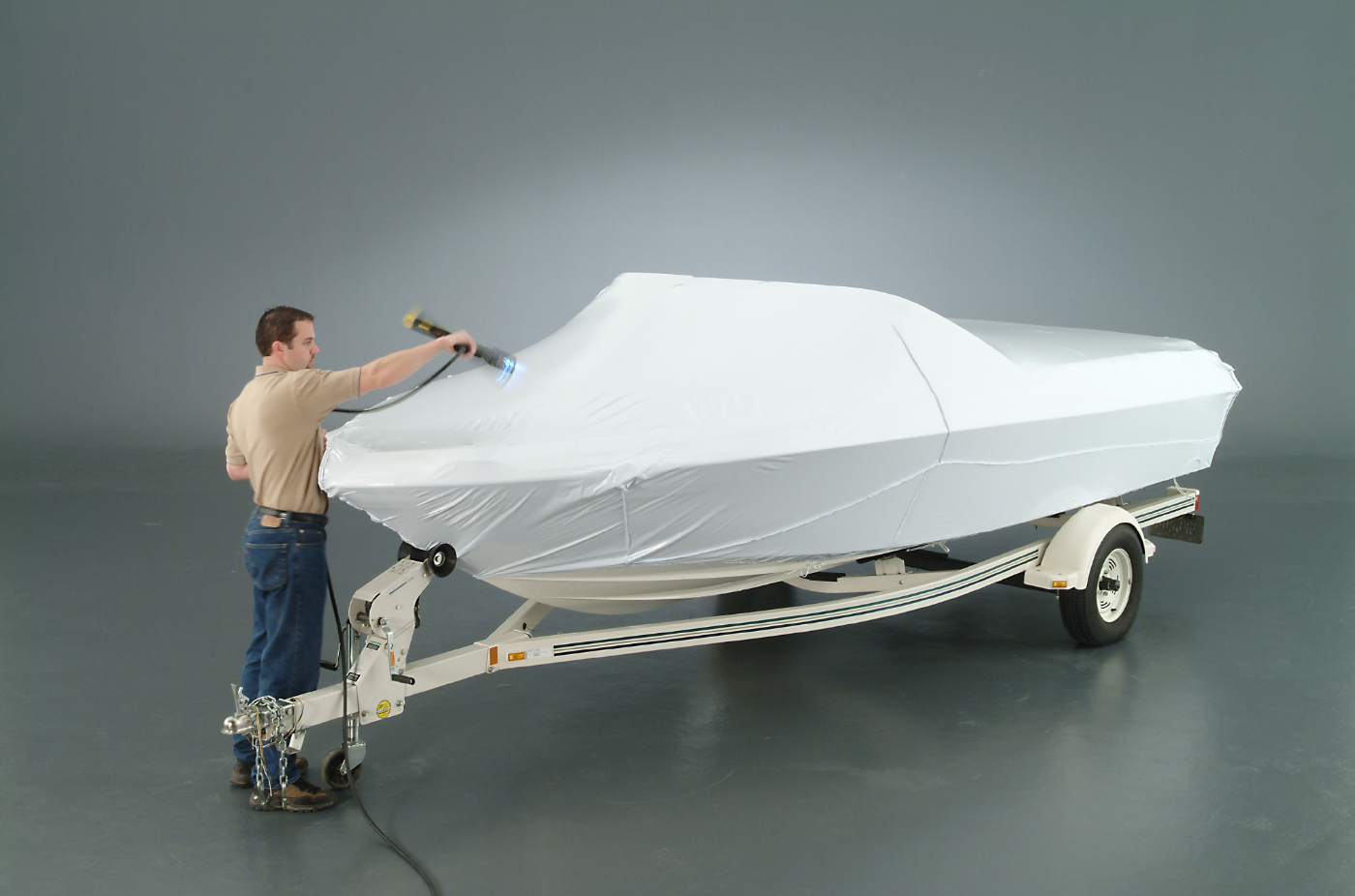
A finished boat has to reach the dealer in the same shape it left the line, and it has to survive months of storage and long hauls of transport to get there. Most builders and distributors turn to shrink wrap to make that happen. What often gets overlooked is how much the type of shrink wrap changes the result, because a thin sheet of film and a fitted, engineered cover protect a hull in very different ways.
How Boat Shrink Wrapping Works
Boat shrink wrap starts as a plastic film, usually low-density polyethylene, laid loosely over a support frame and heated with a heat gun until it draws tight around the hull. Done correctly, the finished shrink wrap sheds snow and rain and blocks direct sunlight through winter storage. The materials for a standard in-house job are straightforward.
| Material | Purpose |
| Shrink wrap film (LDPE) | Single-layer barrier over the hull |
| Support frame and strapping | Builds a peak near the water line so snow and rain run off |
| Heat gun | Draws the film tight to the shape |
| Vents | Cut in by hand to release trapped humidity |
| Preservation tape and shrink wrap tape | Seal seams and cover strap contact points |
| Zip tie fasteners | Secure strapping and access flaps |
This process protects the outside of the boat, but the film itself is one thin layer of plastic with no built-in defense for the finish or the metal underneath.
Where Single-Use Shrink Wrap Film Falls Short
A film wrap handles the basics, but a manufacturer or distributor protecting finished boats needs more than a plastic shrink wrap shell. Single-use film carries real limits.
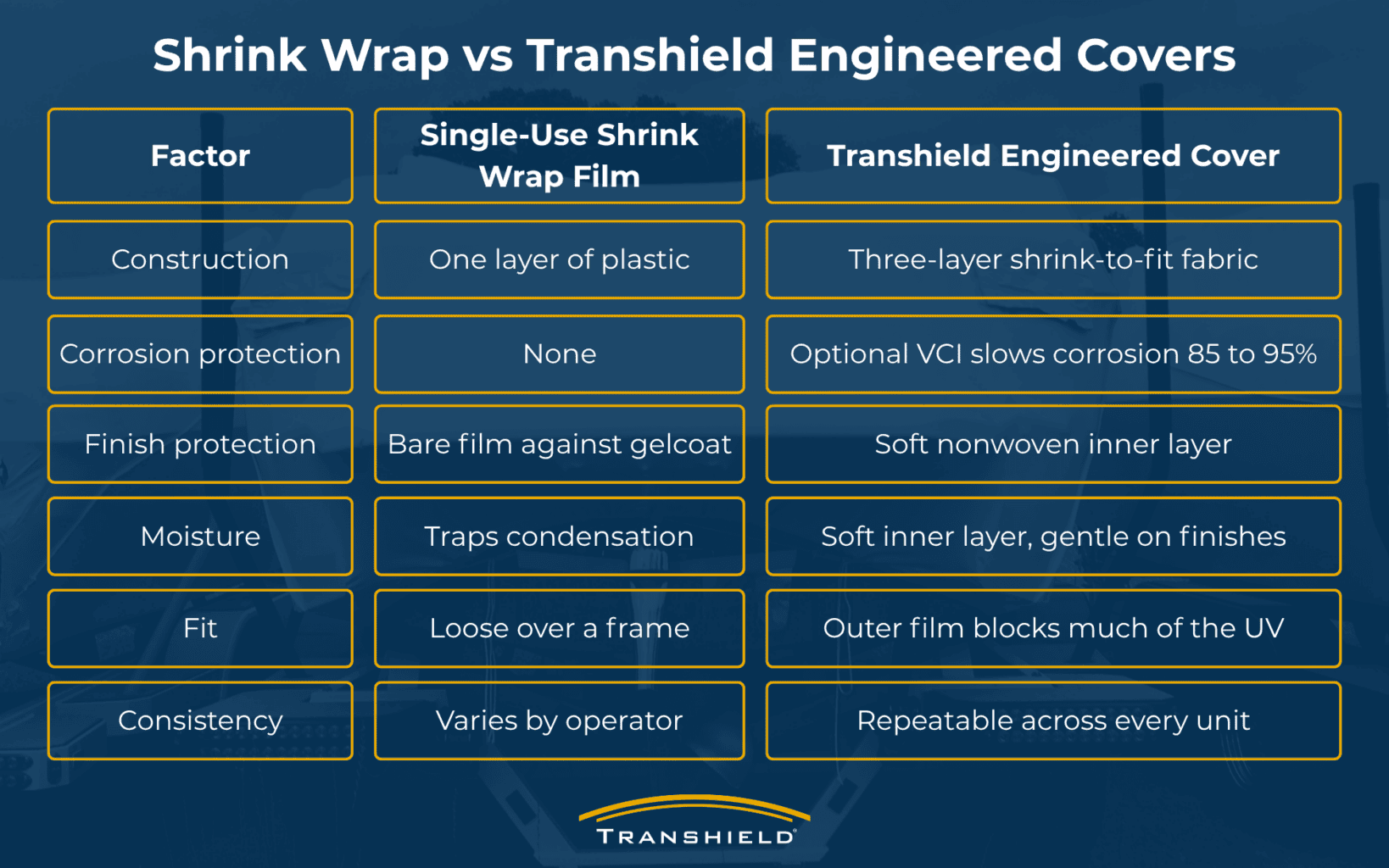
- One layer of plastic gives no corrosion protection, so engines, trailers, and hardware sit exposed to the moisture that causes rust.
- The film traps condensation against the hull as temperatures swing, which invites mildew unless vents are cut in by hand.
- Bare film can shift and mark gelcoat or paint, because nothing soft sits between the plastic and the finish.
- Thin film blocks little UV, so sunlight reaches the gelcoat and fades or chalks the finish over a long stretch in the yard.
- Every wrap is cut away and thrown out at the end of the off season, and a production run generates tons of shrink wrap and plastic waste bound for the landfill unless a boat shrink wrap recycling program is nearby.
- Results vary with whoever runs the heat gun, so quality is hard to hold consistent across a full line of boats.
What an Engineered Custom Fit Cover Adds
A Transhield Custom Fit Cover is not a plain sheet of film. It is a shrink-to-fit fabric engineered to protect the finish and the metal, not just shield the outside of the hull. The same heat that tightens film also draws a Transhield cover to a snug, wrinkle-free fit, but what it protects is where the two part ways.
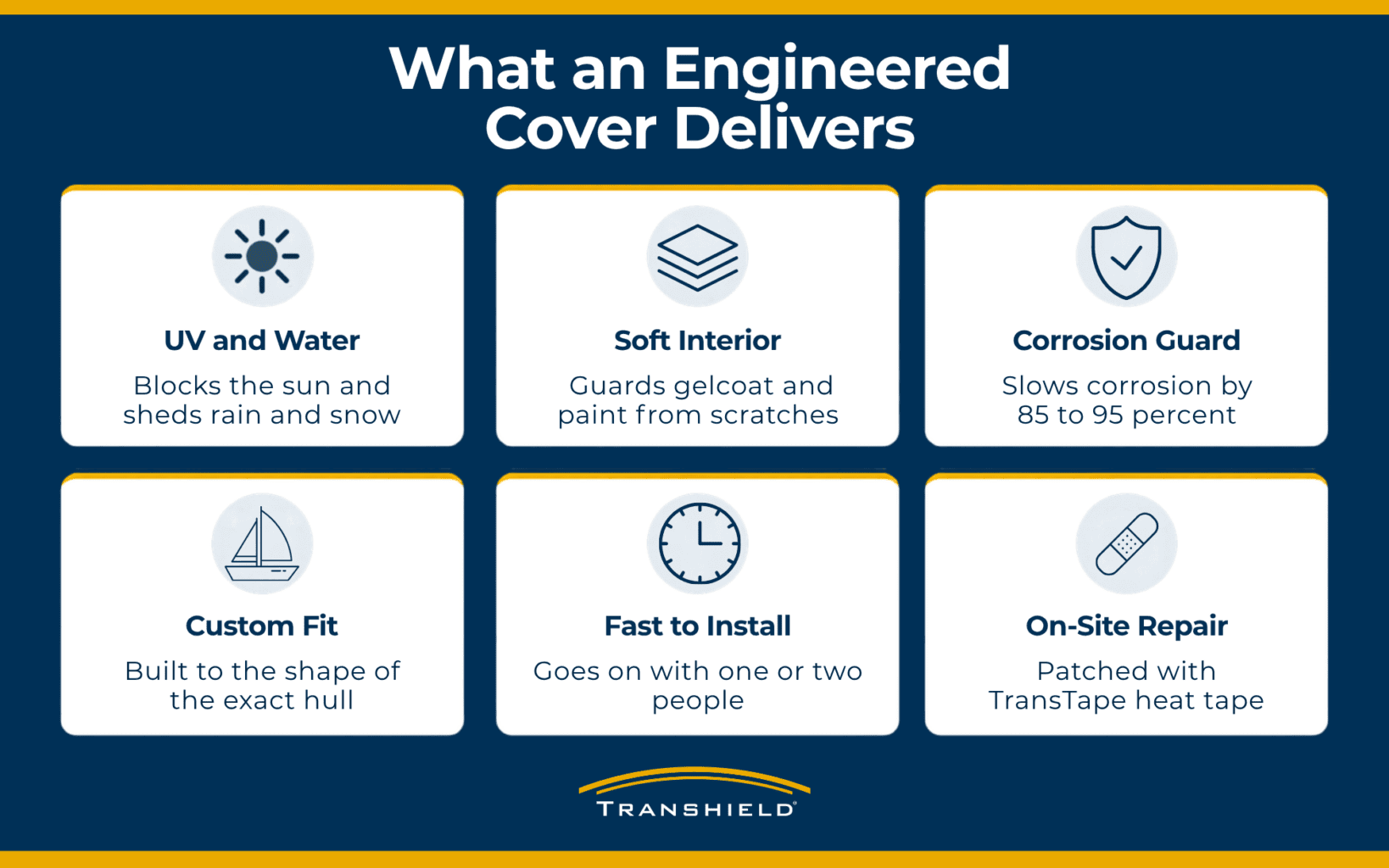
- The fabric blocks UV rays and repels rain and snow, and a water-resistant build keeps the interior dry to cut the risk of corrosion.
- A soft nonwoven interior guards gelcoat and paint from scratches and pulls moisture away from the hull, which prevents the condensation that leads to mold and mildew.
- Optional VCI additives form a protective barrier on the metal and slow corrosion by 85 to 95 percent, reaching the engines, trailers, and hardware that bare film leaves exposed.
- Each cover is designed to the exact hull with reinforced wear points, and vents, zipper access doors, and labeling are built into the design.
- One or two people can install most covers, which keeps labor low and holds a consistent, professional result across a full production run.
- If a cover takes a snag or a burn from the heat gun, a crew can patch and reinforce it on the spot with TransTape heat shrink tape, keeping a small tear from pulling the cover out of service.
Keep Covers in Service with TransTape
Even a well-made cover can take a hit. A snag during loading, a scuff in transit, or a burn from the heat gun during install can open a hole that lets moisture in. Instead of pulling a cover out of service over a small tear, a crew can patch it on the spot with TransTape, a heat shrink adhesive tape made to repair and reinforce shrink wrap covers.
TransTape goes on fast and holds up in the same conditions the cover faces.
- It patches holes, rips, tears, and the burns left behind during the heat shrink process.
- It reinforces high-stress areas and seals seams against water before a cover ships or goes into storage.
- The water-resistant backing keeps moisture off the metal underneath, which guards against corrosion.
- Application takes no special tools or training, because a crew wipes the area clean and dry, presses the tape in place, and heats it with a heat gun to conform and bond.
For a manufacturer or distributor covering boats in volume, a damaged cover gets back to protecting the hull in minutes instead of being scrapped, which keeps every unit sealed through storage and transport.
Why the Difference Matters for Manufacturers and Distributors
For a manufacturer or distributor, the cover is the last thing standing between a finished boat and the weather it faces through winter storage and long-term transit. An engineered cover keeps each hull in factory-fresh condition all the way to the dealer lot, which protects both appearance and warranty. It also holds one consistent standard across a full production run, rather than leaving quality to the operator and the roll of film. Corrosion drains an estimated $2.5 trillion from the global economy each year, which is why keeping moisture and rust off the engines, trailers, and hardware in storage and transit protects the value of every finished boat. Fewer marked hulls and less corrosion mean fewer rework hours and fewer warranty claims once boats reach the floor.
Choose the Cover That Protects More Than the Surface
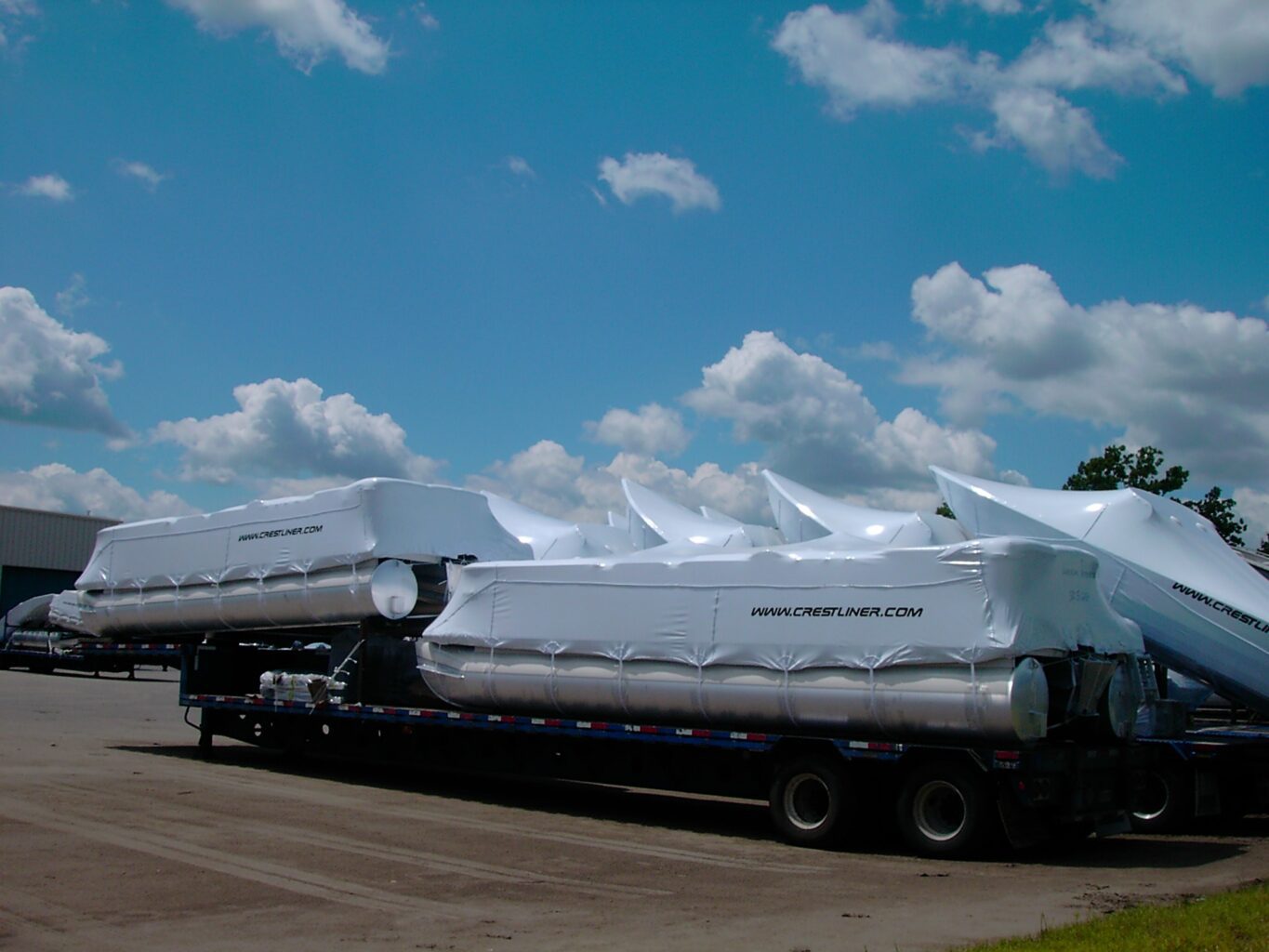
Shrink wrapping a boat comes down to two very different choices. One is a single sheet of throwaway film that shields the surface and little else. The other is an engineered cover that fits the hull, protects the finish, and slows corrosion on the metal that matters most. For finished boats moving through storage and transport in volume, that gap decides the condition each unit is in when it arrives.
Transhield builds custom shrink wrap covers designed to the shape of your hulls, layering UV and water protection over a soft interior and optional VCI corrosion defense. Contact Transhield to spec a shrink wrap cover for your production and distribution operation.