
Getting the most out of heavy equipment and industrial machinery starts with how you store it. A consistent approach to equipment storage keeps machines organized, accessible, and ready to perform. It also reduces maintenance headaches and helps you get more years out of your investment.
This guide walks through the best practices that manufacturing operations, contractors, and fleet managers use to keep their storage systems running smoothly.
Start with a Storage Plan
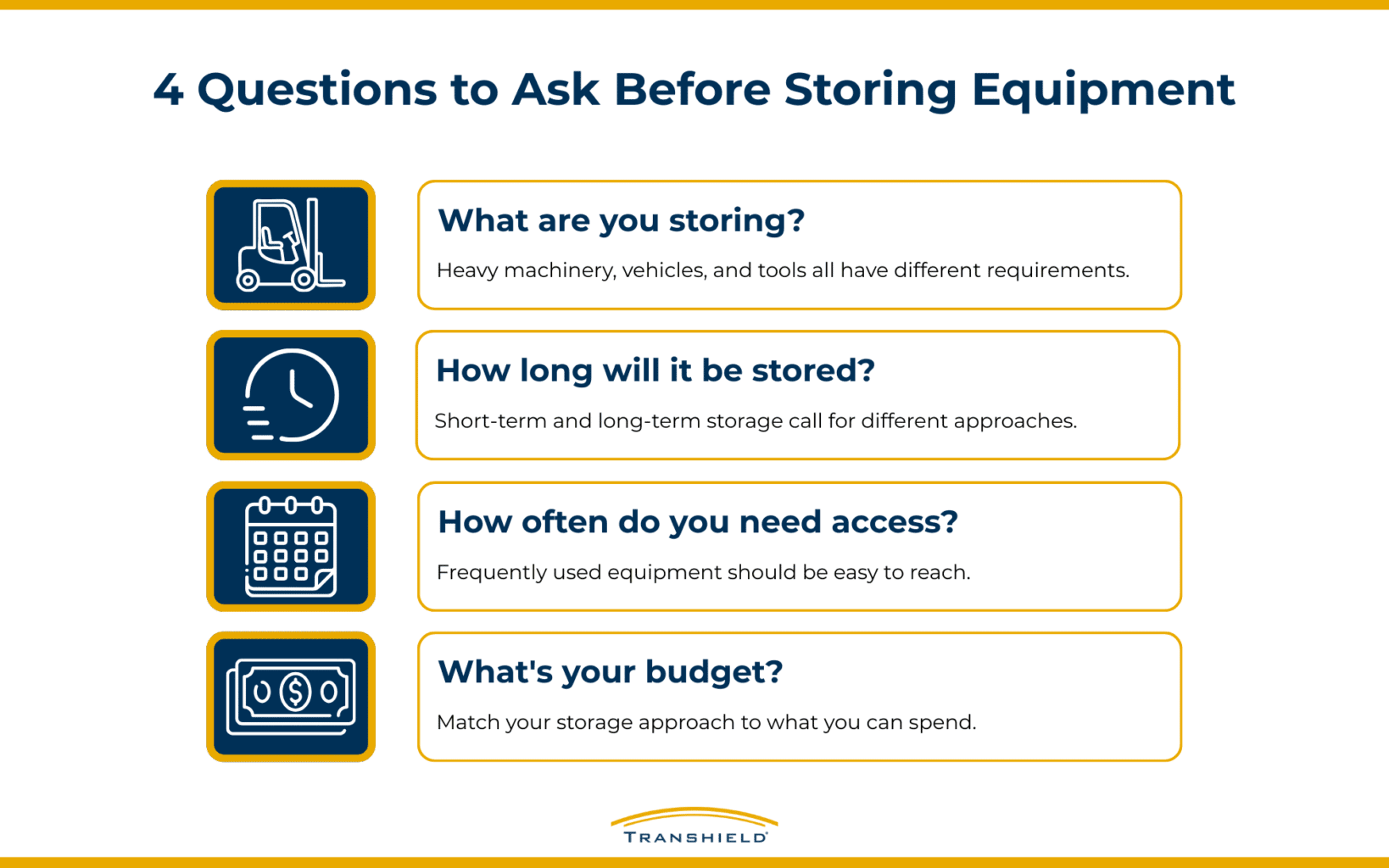
Before parking equipment in the nearest open storage space, take time to think through what you actually need. A good storage plan considers several factors.
1. What Are You Storing?
Heavy machinery, material handling equipment, vehicles, and smaller tools all have different storage requirements. An overhead gantry crane has different needs than an order picker or a fleet of service vehicles.
2. How Long Will It Be Stored?
Short-term storage between jobs calls for a different approach than long-term storage over an off-season. The longer the equipment sits, the more preparation matters.
3. How Often Do You Need Access?
Equipment that rotates frequently should be easy to reach. Machinery going into long-term storage can go further back.
4. What’s Your Budget?
Storage solutions range from outdoor storage on your own property to climate-controlled storage at a secure facilities. Matching your approach to your budget keeps costs manageable.
Choose the Right Storage Location
Your storage option depends on what you have available and what your equipment needs.
On-Site Storage
Many manufacturing operations keep equipment on their own property. This gives you direct access and control without paying for outside warehouse space. The tradeoff is that you’re responsible for security, organization, and protection.
If you’re storing outdoors, designate specific areas for different equipment types. Keep the space clear of debris and ensure the ground is level and well-drained. An outdoor storage solution works fine for many types of heavy equipment as long as you take steps to protect it from the elements.
Warehouse Storage
Indoor warehouse storage offers protection from the weather and often includes security cameras and access control. This works well for sensitive industrial machinery, electronics, or high-value assets. The cost per square foot adds up, so most operations reserve indoor storage for equipment that truly needs it.
Third-Party Facilities
A secure storage facility can fill the gap if you lack space on-site. Many facilities cater specifically to industrial storage and offer flexibility for both short-term and long-term needs. Look for a facility with the security features and access hours that match your operations.
Prepare Equipment Before Storage
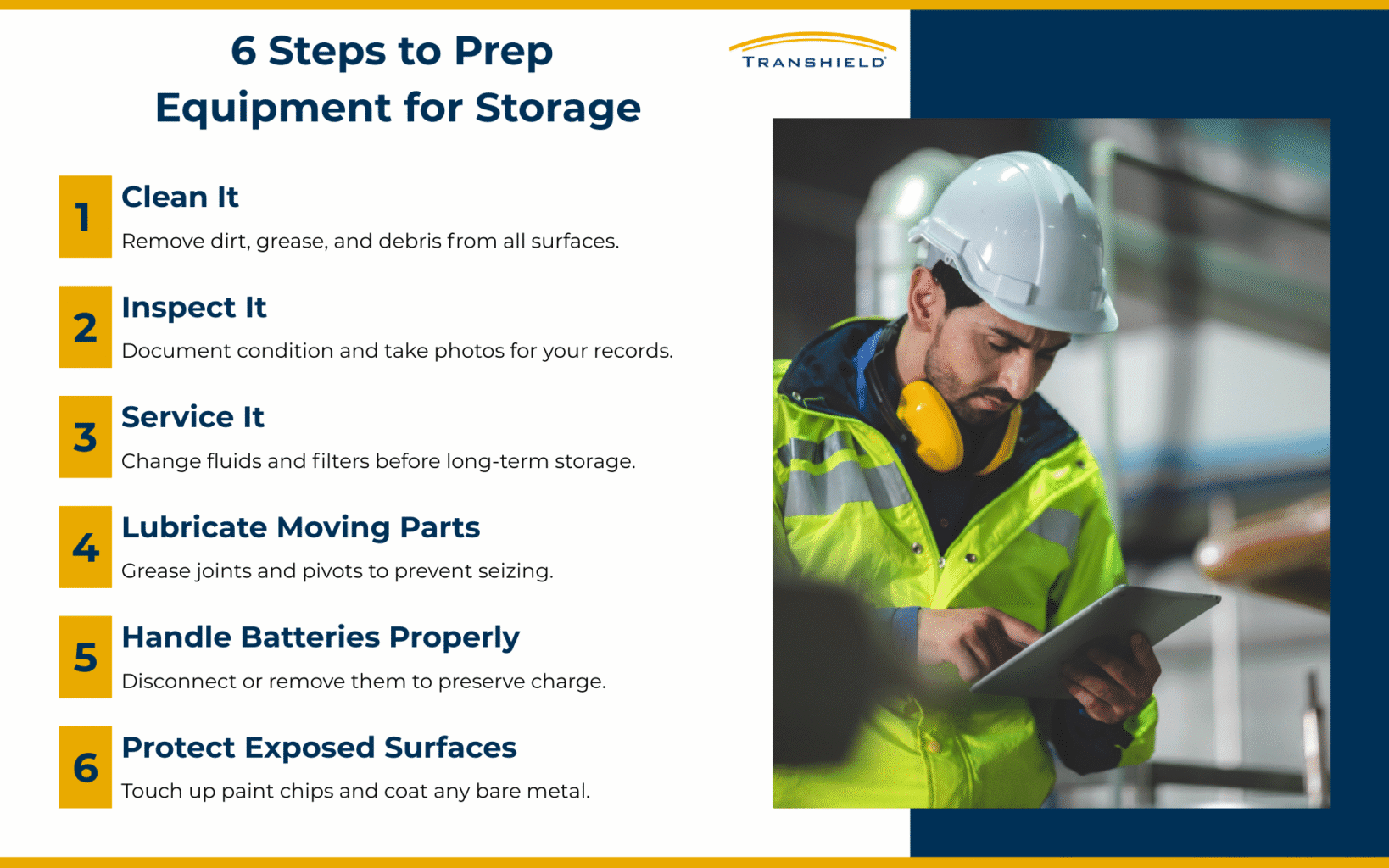
Preparation is one of the most overlooked best practices. Taking an hour to prep a machine properly can prevent weeks of repair service later.
1. Clean It
Remove dirt, grease, and debris from all surfaces. Buildup traps moisture and hides damage you should know about.
2. Inspect It
Walk around the equipment and document its condition. Note any existing wear, leaks, or issues. Take photos if needed. Documentation keeps you covered if you need to file a warranty claim or prove when damage occurred.
3. Service It
Change fluids and filters if the equipment is going into long-term storage. Fresh fluids protect internal components better than old ones that have been sitting for months.
4. Lubricate Moving Parts
Grease joints, pivots, and other moving components to prevent them from seizing up.
5. Handle Batteries Properly
Disconnect or remove batteries to prevent them from dying during storage. Store them in a cool, dry place if you’re pulling them out entirely.
6. Protect Exposed Surfaces
Touch up paint chips and apply protective coating to any bare metal.
Organize for Efficiency
For those storing more than a few machines, proper organization turns your storage space into a system that supports your operations rather than just a parking lot.
Group by Type or Use
Keep similar equipment together: heavy equipment in one area, material handling equipment in another, vehicles in a third, etc. This makes it easier to find what you need and keep track of inventory.
Create Clear Paths
Leave enough room to move equipment in and out without shuffling everything around. Blocked access slows you down and increases the risk of accidental damage.
Label and Document
Use a simple tracking system to record what’s stored, where it is, and when it arrived. This doesn’t have to be complicated; A spreadsheet or even a whiteboard works for smaller operations.
Prioritize by Frequency
Equipment you access often should be near the front. Machinery in long-term storage can go in the back.
Use Protective Covers
Covers are a cost-effective solution for equipment stored outdoors or in indoor spaces. They protect against dust, moisture, UV exposure, debris, and pests.
Not All Covers are Equal
Generic tarps are cheap but trap moisture underneath, which can cause more problems than it solves. They also blow off in the wind and leave gaps where water and pests can enter.
Custom covers designed for your specific machinery provide better results. At Transhield, we build custom equipment covers that fit precisely, eliminating gaps and pooling. Our three-layer system blocks UV rays, resists water, and wicks moisture away from surfaces. Features like zipper doors, vents, and secure fastenings can be tailored to your unique needs.
For operations storing equipment outdoors, custom covers offer a practical long-term solution that protects your assets without ongoing facility costs.
Maintain a Regular Check-In Schedule

Storage doesn’t mean “forget about it.” Build regular inspections into your routine to catch problems early.
Weekly or monthly checks work for equipment in short-term storage. Walk through and look for obvious issues like shifted covers, pooling water, or signs of pests.
Quarterly checks make sense for long-term storage. Do a more thorough inspection, check tire pressure on wheeled equipment, and run engines briefly if manufacturer guidelines recommend it.
Document everything. Keep records of each inspection. Note the date, what you checked, and any issues found. This creates a paper trail for warranty purposes and helps you spot patterns over time.
Plan for Equipment Delivery and Retrieval
How equipment goes into and comes out of storage matters too.
Prepare Before the Equipment Arrives
Have the storage space ready, covers on hand, and your documentation system updated. Being prepared makes this process go as smoothly as possible.
Inspect on Arrival
Inspect equipment before it goes into storage and note any existing damage. This gives you a clear baseline to compare against when it comes back out.
Inspect Before Returning to Service
When equipment comes out of storage, do a full inspection before putting it back to work. Test all systems, check fluid levels, and address any issues that developed during storage.
Match Your Approach to Your Specific Needs
Heavy machinery and industrial equipment storage looks different for every operation; A small contractor with three machines and a large manufacturing operation with a full fleet of equipment won’t have identical setups.
However, the best practices stay the same: plan ahead, prepare equipment properly, stay organized, protect your assets, and inspect regularly. Protecting your assets is where Transhield can help, no matter the size of your operation.
At Transhield, we have spent over 30 years helping operations across the United States protect heavy equipment and industrial machinery during storage and transit. As a trusted partner for manufacturers, contractors, and fleet managers, Transhield can help you find the right solution for your specific needs. Our custom covers are designed to fit your equipment precisely, providing reliable protection without the complexity of other storage solutions.Contact us today to learn how custom covers can fit into your storage plan!