
Every piece of equipment a company owns spends part of its life in storage. Some of it moves between jobs, some goes unused through an off-season, and some stays in reserve until the next deployment. How you handle that downtime affects how long the equipment lasts, how ready it is when you need it, and how much you spend on repairs. For manufacturers, distributors, and fleet operators, a consistent approach to storage protects a large investment.
This guide walks through the best practices that keep high-value equipment organized, accessible, and protected.
Why High-Value Equipment Storage Deserves a Plan
Equipment that sits without a proper storage plan faces real risks. Moisture leads to corrosion, UV exposure breaks down rubber and paint, dust works into moving parts, and pests find their way into anything left uncovered. Each of these shortens equipment life and raises maintenance costs.
Poor storage also creates operational problems. Assets that are hard to find or reach slow down daily operations, and equipment that was not prepped correctly may fail its first inspection back in service. Treating business storage as a process rather than an afterthought prevents both the physical damage and the wasted time.
Build a Storage Plan First
Before moving anything into place, think through what your equipment actually needs. A few questions guide the rest of your decisions.
What Are You Storing?
Inventory every asset by type, size, and material. A lift truck, a fleet vehicle, a set of power tools, and sensitive electronics all have different storage needs. Good inventory management here also feeds your records, so you always know what you hold and where.
How Long Will It Be Stored?
Short-term storage between jobs calls for less preparation than long-term storage over months. The longer an asset sits, the more corrosion and UV exposure become concerns.
How Often Do You Need Access?
Equipment that supports daily operations should stay near the front of the yard or storage facility with easy access. Assets headed into long-term storage can go deeper into the facility or yard.
What Is Your Budget?
Storage solutions range from open outdoor space on your own property to climate-controlled warehouse space at a secure facility. Matching your approach to your budget keeps costs in line without leaving assets exposed.
Choose the Right Storage Location
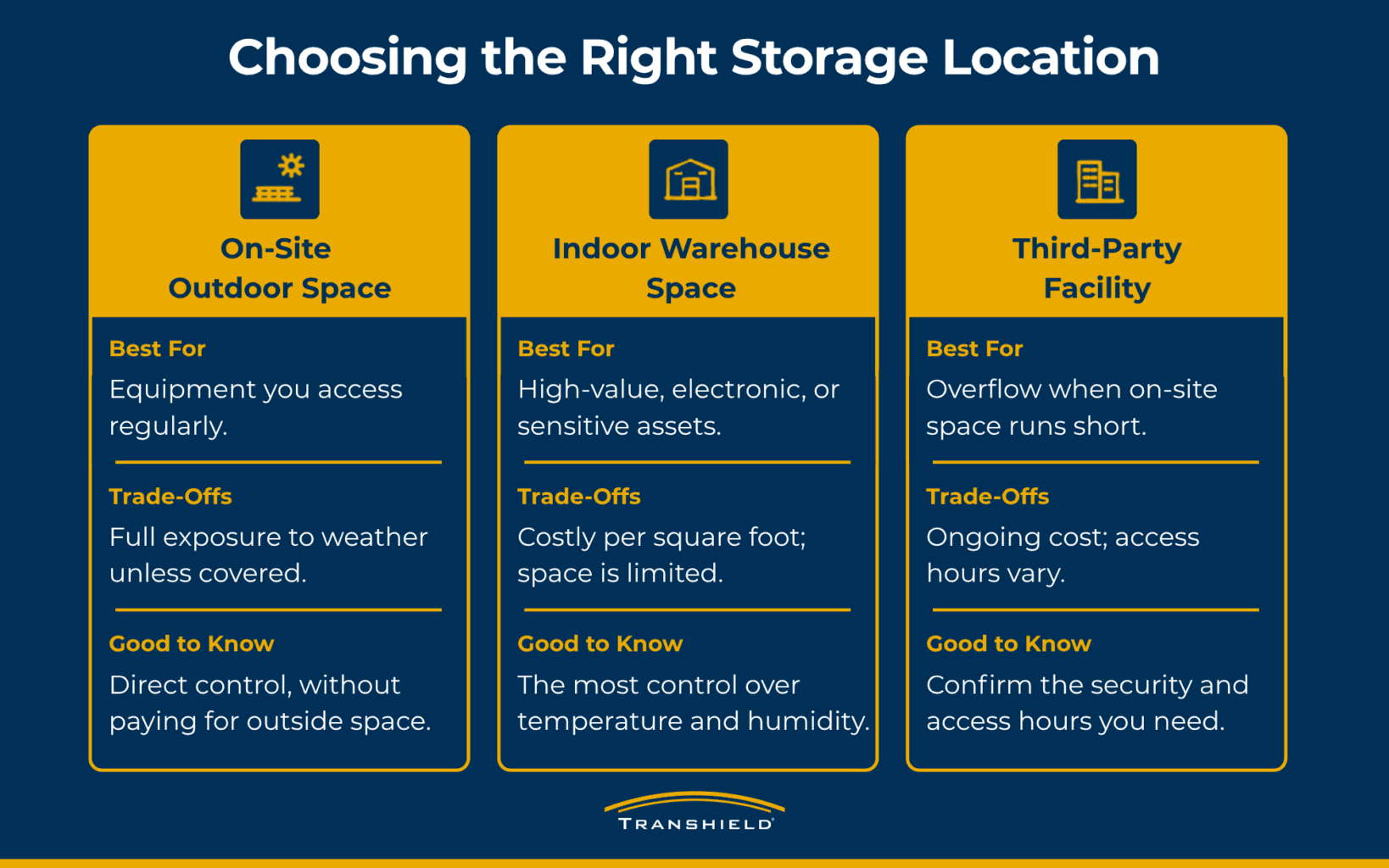
Where you store equipment shapes how much protection it gets and how much you spend. Most operations in the U.S. work with three broad options.
On-site storage suits equipment you access regularly and gives you direct control without paying for outside warehouse space, though the assets sit fully exposed to weather unless covered, and you take on security and protection yourself. Indoor storage is the better fit for high-value, electronic, or sensitive assets, since it offers the most control over temperature and humidity, but it costs more per square foot and space is limited. A third-party facility can fill the gap when your own space runs short, at an ongoing cost and with access hours that vary. Whichever you choose, confirm the location offers the secure storage and safety features your operational needs require.
Prepare Equipment Before Storage
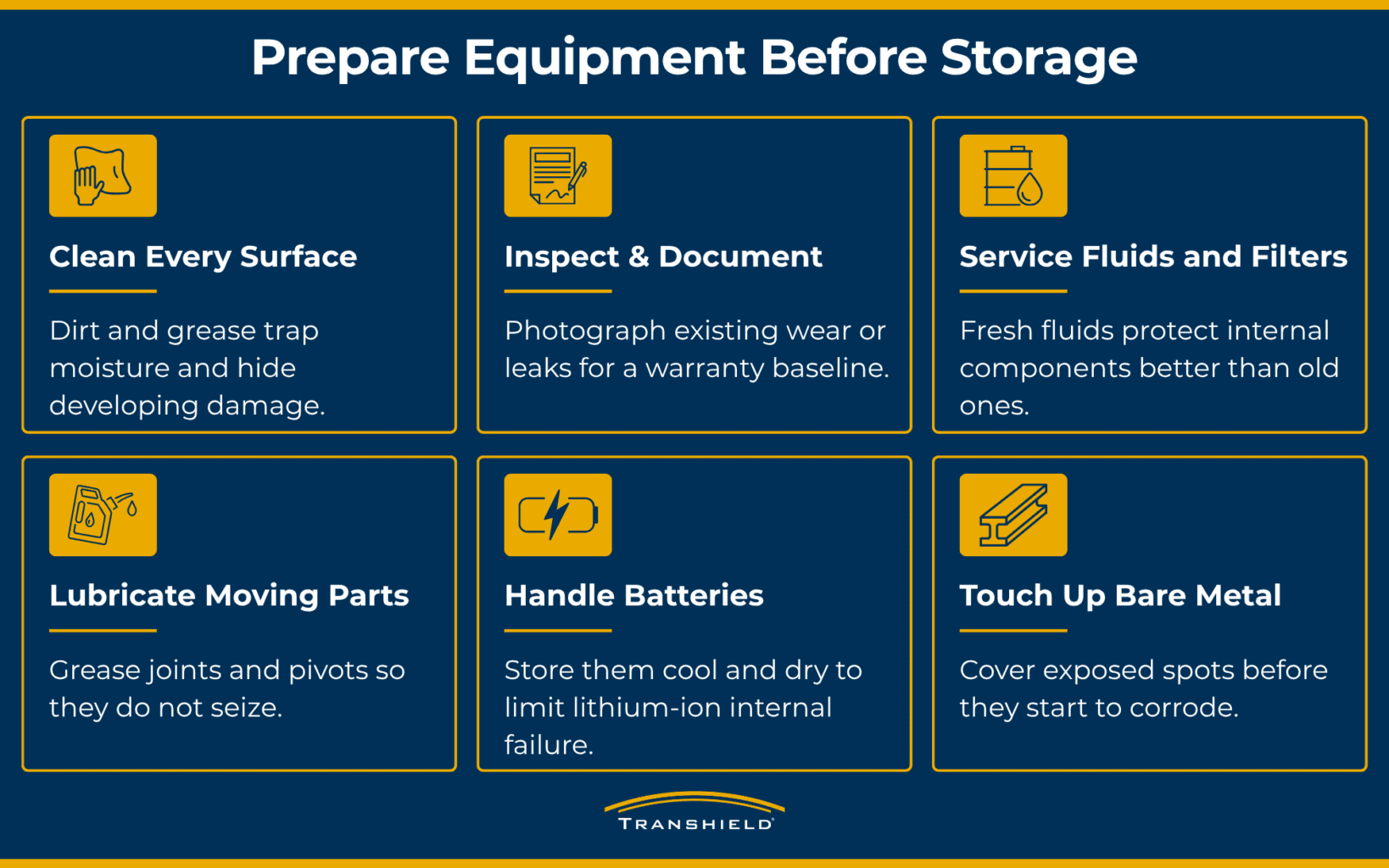
Preparation prevents most storage damage. Time spent prepping an asset now saves repair work later.
- Clean every surface: Dirt and grease trap moisture and hide developing damage.
- Inspect and document: Photograph existing wear or leaks, so you have a baseline for warranty claims.
- Service fluids and filters before long-term storage: Fresh fluids protect internal components better than old ones.
- Lubricate moving parts: Grease joints and pivots so they do not seize during storage.
- Handle batteries with care: Disconnect or remove them and store them in a cool, dry place, where a lithium-ion battery is less prone to internal failure.
- Touch up bare metal: Cover exposed spots before they start to corrode.
Organize for Operational Efficiency
For operations storing large volumes of equipment, organization turns a storage area into a system that supports the business rather than a place where equipment piles up.
- Group similar equipment together so it is easier to find and track in your inventory.
- Leave clear paths so you can move assets in and out without shuffling everything around.
- Label and document what is stored, where, and when it arrived, even if that is just a spreadsheet.
- Use a high-density storage system for smaller items and tools to make the most of limited warehouse space.
Protect Equipment From Corrosion and the Elements
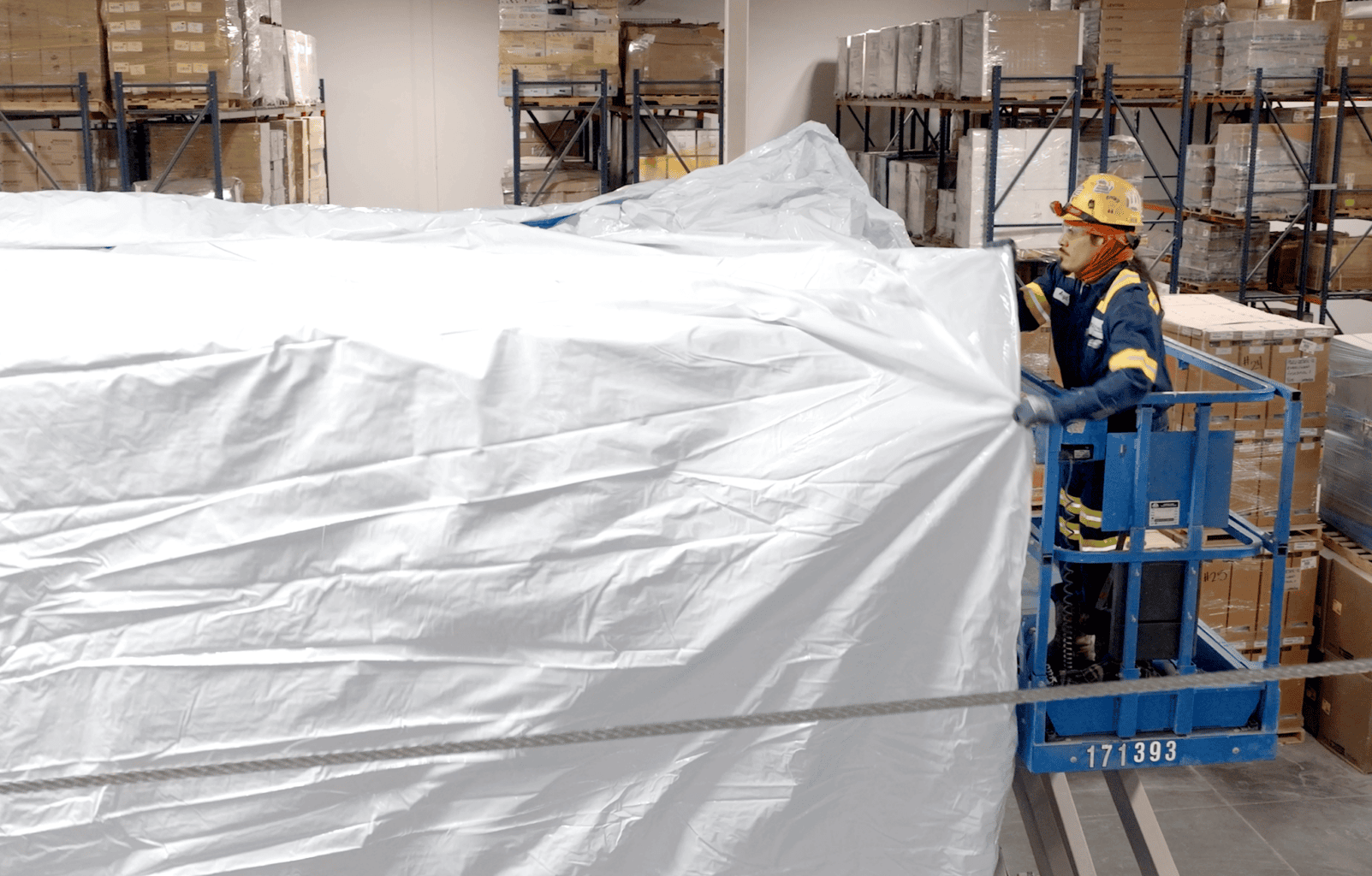
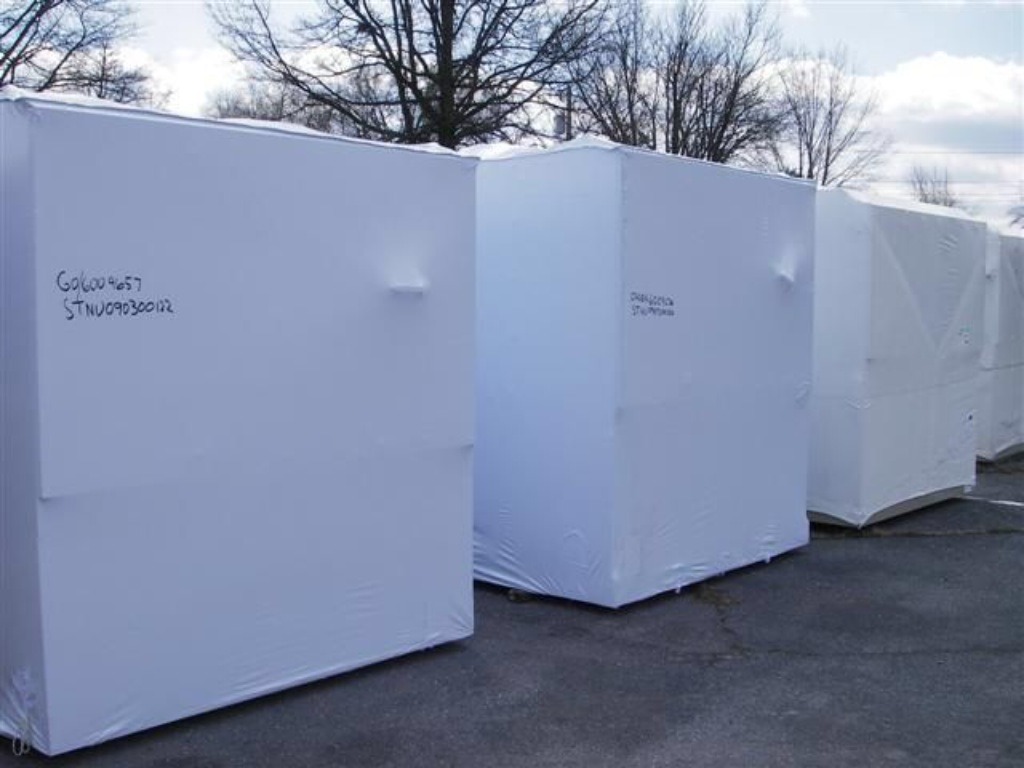
Once equipment is prepped and placed, it needs a barrier against moisture, UV rays, dust, and pests. Generic tarps fall short here: they trap moisture underneath, leave gaps where water and pests enter, and blow loose in the wind. Transhield’s custom covers fit a specific asset with no gaps or pooling, which keeps out the elements and makes them a sound choice even inside a facility.
Corrosion is the quiet threat during long storage, so for metal equipment, a vapor corrosion inhibitor (VCI) belongs in your plan. VCIs work by maintaining a concentration of protective molecules in the space around the metal, where they settle on surfaces and form a thin barrier that slows corrosion and reaches areas a coating cannot.
Inspect on a Regular Schedule
Secure storage does not mean you can start ignoring equipment. Build inspections into your routine so small problems get caught early.
- Weekly or monthly checks work for short-term storage: look for shifted covers, pooling water, or signs of pests.
- Quarterly checks suit long-term storage: inspect more thoroughly, check tire pressure, and document what you find.
How Transhield Protects High-Value Equipment
Transhield builds custom covers for equipment across a wide range of industries, from manufacturing and distribution to logistics and industrial operations. These are quality products built for the toughest jobs, designed around your specific equipment and unique needs, with no limitation on shape or size. Covers containing VCI additives pair physical protection with corrosion control, so a single solution guards against both the elements and rust.
Our covers use a three-layer system with a patented adhesive that can emit VCIs: a UV-resistant polyethylene outer film that blocks sunlight and repels water, a hot-melt adhesive middle layer that can carry VCI additives, and a soft, non-woven inner layer that wicks moisture away and protects painted surfaces. In testing, covers with VCI additives have reduced corrosion by up to 95 percent, and the protection lasts as long as the cover stays in place.
Build Storage Into Your Operation
Operational equipment holds up when you plan for it: inventory each asset, match it to the right location, prep it well, organize for access, and cover it for the long term. Handled this way, storage protects both your equipment and the efficiency of your wider business.
With over 30 years of experience protecting company assets across the United States, Transhield’s experts can help you build reliable protection into your storage plan with covers made to fit. Contact Transhield today with your questions about a custom cover solution for your equipment.